Transformer Condition Health Monitoring and Predictive Maintenance of HVDC Converter Stations
The Technical Brochure (TB) of WG B4.89 gives a broad review of current condition monitoring and diagnostic methods and outlines recommendations to support the transition of HVDC substations toward predictive maintenance.
The TB covers HVDC Voltage Source Converter (VSC) substations, with a particular focus on the VSC valves and cooling systems. Monitoring the health of the VSC valve components, i.e. power semiconductors, capacitors, valve-level power electronics and the cooling system, is essential, as any unexpected failure could lead to converter shutdowns, costly maintenance interventions, and contractual penalties.
The TB emphasises that predictive maintenance depends on an integrated process from condition monitoring, diagnostics to prognostics, where a health index (HI) and remaining useful lifetime (RUL) serve as key inputs for optimising maintenance planning and spare parts management.
Members
Convenor (FR)
Nadine CHAPALAIN
Secretary (UK)
Harry EVANS
Rick VALIQUETTE (CA), Christian RAUSCHER (DE) Huai WANG (DK), Gowdhaman GANESAN (SE) Guy CLERC (FR), Samy AKKARI (FR) Lyle CROWE (CA), Faiva WADAWASINA (UK) Guillaume GALLET (FR), Angus BRYANT (UK), Jin ZHENG (CN), Luis GUIMARAES (PT), Hongfei MA (DK)
Introduction - Current Maintenance Practices and Industry Survey Findings
To establish a comprehensive understanding of current maintenance practices of HVDC substations, WG B4.89 conducted a questionnaire involving HVDC manufacturers, transmission system operators (TSO), and asset owners.
The survey showed that HVDC substations use a mix of traditional, time-based preventive and emerging predictive maintenance, with preventive maintenance dominating in line commutated converters (LCC) and more traditional approaches applied to VSC substations. A shift from annual to biennial outages is being considered to improve availability and reduce costs. Converter valves are the most critical components requiring continuous monitoring, together with its cooling system due to their essential role in thermal management and safe operation.
Overall, the survey highlights an industry need to transition toward condition-based and predictive maintenance, supported by enhanced monitoring capabilities, diagnostics, and data analytics.
Operation, Reliability and Failure Mechanisms
Chapter 2 describes the VSC converter station, the possible configurations (i.e. symmetric, asymmetric monopole, bipole) and applications (offshore and onshore). As throughout their service life, VSC substations operate under varying electrical, operational and environmental conditions that put stress on the equipment. The main stress factors are identified along with the VSC valves components that are prone to failure.
Chapter 3 presents the relationship between condition monitoring (CM), diagnostics, and prognostic in the context of HVDC systems. It first provides an overview of potential failure modes affecting VSC valve components, including valve submodules, capacitors, gate driver units, and cooling subsystems. These components are subjected to electrical, thermal, and mechanical stresses that may lead to two categories of failure: single-event failures (hard failures) and progressive degradation (wear-out failures).
The Figure 1 gives an overview of the information flow from power semiconductor devices and capacitors to the required variables, HI and RUL, for diagnostic and prognostic respectively.
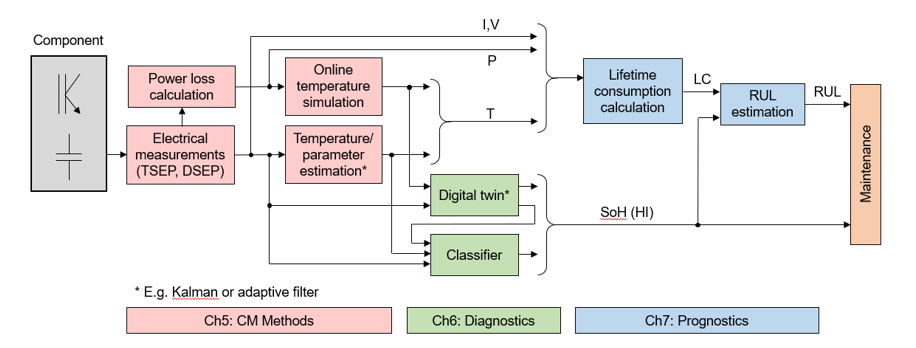
Figure 1 - Flow of information between the Condition Monitoring, Diagnostics and Prognostic
Condition Monitoring (CM) and Health Indicators
Chapter 4 identifies the sensors within VSC valves to monitor parameters indicative of potential failures (health indicators) and reviews the main CM methods.
CM aims to assess equipment state of health (SoH) using sensors and monitoring systems that collect electrical, thermal, and environmental data. These measurements enable early detection of component degradation, abnormal operating behaviour, and wear mechanisms.
Health indicators are classified as electrical, thermal, or environmental parameters. Their effective interpretation is complex as values are affected by operating conditions such as temperature variations, load profiles, and measurement uncertainties.
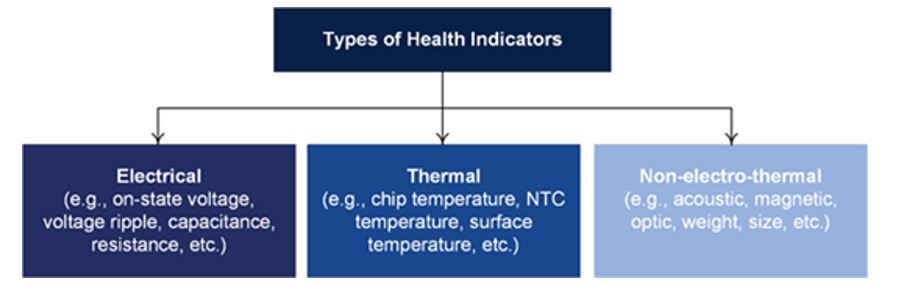
Figure 2 -Types of health indicators reported for power electronic converters
For VSC valves, particular attention is given to Damage Sensitive Electrical Parameters (DSEPs). For semiconductors, DSEPs include parameters related to junction temperature such as on-state voltage, threshold voltage, thermal resistance, and power dissipation. For capacitors, equivalent series resistance (ESR) and capacitance represent key health indicators.
Diagnostic and Prognostic Techniques
Chapter 5 reviews the various diagnostic methods that evaluate equipment health conditions through the analysis of monitored parameters and generate a HI. Diagnostic techniques include signal processing, current waveform analysis, and machine learning algorithms such as neural networks. The root cause of failure of the VSC valve components are also described.
Chapter 6 provides an overview of the prognostic methods. Prognostic techniques track the health indicators, historical operational data, and additional contextual information over time to predict the RUL or anticipate performance issues of VSC valves. Those methods typically rely on physics-of-failure models, knowledge-based approaches, and data-driven models. Several methodologies are described, including physical model-based, machine learning-based, knowledge-based, and data-driven approaches.
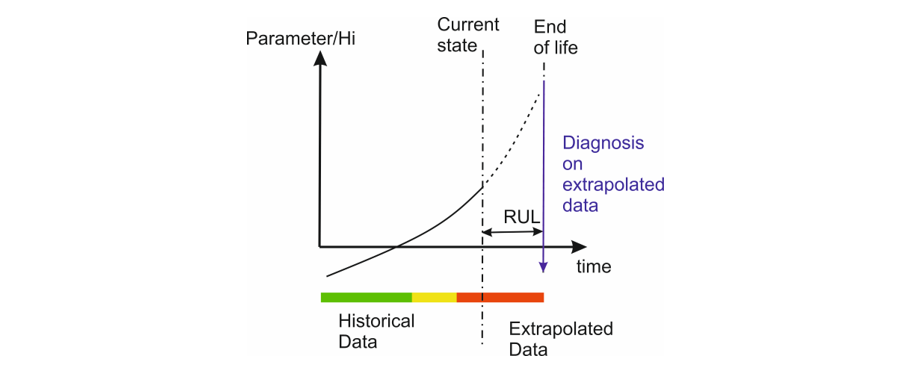
Figure 3 - General description of the prognosis
The effectiveness, challenges and future needs of CM, diagnostics and prognostics applied to VSC valves are identified.
The Different Maintenance Strategies
Chapter 7 describes the various maintenance strategies, the traditional maintenance approaches such as "run to failure" and "maintenance at regular time", as well as more advanced methods such as reliability-centered maintenance (RCM) and predictive maintenance. The Chapter outlines...
ELECTRA, is the digital magazine of CIGRE, you can obtain access as part of a CIGRE membership. Find out more about joining options here.
Other Technical Brochures