CIGRE Innovation & Education Fund and its First Grant Awards
What amazing progress for the CIGRE Fund in 2026!
The CIGRE Innovation and Education Fund made rapid progress in 2026. In its first year, the Fund moved from establishment to the selection of 11 projects spanning innovation, education and humanitarian initiatives. The response to its inaugural call demonstrated both the breadth of ideas within CIGRE’s international network and the demand for financial support to put them into practice.
In early January, CIGRE President Konstantin Papailiou announced the start of the formal process to establish the Fund [1].
The statutes were subsequently filed with the French authorities, with formal establishment scheduled for the end of March 2026.
The first call for proposals followed in April. National Committees received information explaining the application process, enabling them to identify projects and help applicants prepare their submissions.
Over the following three months, 24 National Committees, one Regional Council and two Study Committees each prepared between one and seven applications. Their involvement gave the first call an international reach and brought forward proposals reflecting a range of technical, educational and humanitarian needs.
Despite the tight timetable, the Fund received 64 applications, of which 62 were valid. The two remaining applications arrived after the deadline and were not accepted.
The response exceeded the expectations of those who initiated the Fund. It also created an immediate challenge for the first selection round: how to choose among a wide range of proposals while working within a limited budget and a short assessment period.
The initial budget for grants in 2026 was €400,000. With applications competing for these resources, the selection process had to identify projects that aligned with the Fund’s objectives and could be supported within the available funding.
The assessment took place throughout July. The Executive Committee, comprising eight prominent members of CIGRE, led the process under the guidance of Michael Heyeck. Competition was strong, and the available budget could not support every eligible proposal.
A few days before the CIGRE 2026 Session in Paris, the Fund’s Board of Directors recognised the exceptional quality of the proposals and decided to increase the total grant allocation for this call. Eleven projects were selected for 2026, with combined funding requests of €866,000 over the following three years.
A further 40 projects were placed in a portfolio for possible future funding, in recognition of the quality of their proposals. Inclusion in this portfolio keeps promising applications available for reconsideration; it does not constitute a commitment to fund them.
The purpose of the CIGRE Fund
CIGRE Innovation and Education Fund extends CIGRE’s mission beyond its traditional technical activities. As an endowment fund, it provides a dedicated structure for supporting research, education and humanitarian initiatives in electrical power systems and the energy transition.
The Fund aims to advance power system technology and expertise worldwide. The Bylaws provide for support in the following areas:
- Research and development in electrical power systems and the energy transition, with grants distributed across countries over a reasonable period of time;
- Graduate scholarships linked to these projects and programmes;
- Educational initiatives for CIGRE members and programmes that encourage future membership in science, technology, engineering and mathematics (STEM);
- Humanitarian projects in electrical power systems and the energy transition, particularly those that provide sustainable electricity to underserved populations;
- Other projects and programmes aligned with CIGRE’s mission to promote innovation and education in electrical power systems and the energy transition.
The Fund is legally separate from and independent of CIGRE, while its priorities remain closely aligned with CIGRE’s mission. This relationship allows the Fund to pursue its own charitable objectives while drawing on the technical knowledge and international participation that characterise CIGRE.
Governance and financial support
The Fund operates through three governance bodies, supported by administrative, financial, legal and communications functions. Their responsibilities distinguish overall oversight from the day-to-day administration of projects and the management of the Fund’s capital.
The Board of Directors, chaired by the CIGRE President, is responsible for the Fund’s overall governance. The Executive Committee manages its operations and project administration, while the Investment Committee oversees investment of the Capital Fund. Together, these bodies provide the organisational framework for selecting projects, administering grants and managing the resources available to support future activities.
CIGRE contributed an initial €1.5 million to establish the Capital Fund and expects to make further contributions every two years, subject to its financial performance. Fundraising and donations will be essential to supplement these contributions and develop the Fund’s capacity to support projects over time.
The first grant recipients
On behalf of Konstantin Papailiou, Chairman of the Fund’s Board of Directors, Michael Heyeck, Fund President, announced the results during the Opening Ceremony of the CIGRE 2026 Session in Paris [2].
The 11 selected projects fall into three categories: four in innovation, four in education and three in humanitarian activities. They reflect the Fund’s broad remit, combining research into future power systems with educational opportunities and sustainable access to electricity.
Innovation
- “From Molecules to Power Transformers” — University of Tokyo, supported by CIGRE Study Committee D1.
- “Low-carbon transition pathways and standardization for rural energy systems” — University of Wuhan, supported by CIGRE China.
- “Novel theory for a whole-system concept for the energy transition” — University of Cape Town, supported by CIGRE South Africa.
- “Virtual power plants for reliable energy in South Asia” — University of Edith Cowan, supported by CIGRE Australia.
Education
- “Empowering rural schools on renewable energy education” — Montenegrin Professional Association for Energy, supported by CIGRE Montenegro.
- “Whole energy system planning for the energy transition” — University of Birmingham, supported by CIGRE United Kingdom.
- “Empowering women for sustainable community development” — CIGRE West Africa.
- “Forecasting for emerging grid demands and AI data centers” — University of Calgary, supported by CIGRE Canada.
Humanitarian
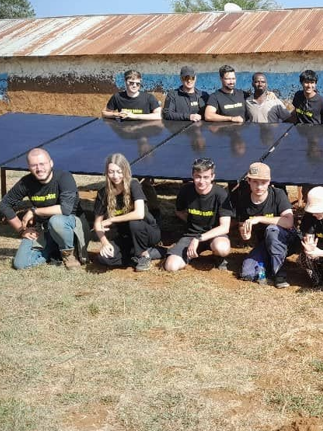
- “Rural electrification & training in Ethiopia” — Sahay Solar, supported by CIGRE Switzerland.
- “Sustainable electricity for isolated rural populations, Madagascar, Benin and Togo” — Electriciens sans frontières, supported by CIGRE France.
“Sustainable electricity for rural villages” — Universidad del Valle, supported by CIGRE Colombia.
Next steps
Grant agreements with the beneficiaries are being drafted ahead of the project launches, which are scheduled for late 2026 or early 2027. This next stage will turn the selection decisions into funded activities and begin the practical work proposed by the successful applicants.
Throughout 2027, ELECTRA will keep readers informed about the Fund’s activities and begin presenting the 11 funded projects in detail, featuring one or two projects per issue. These articles will give readers a closer look at the work supported through the first call and its relevance to innovation, education and humanitarian needs.
We are planning for 2027 an update of the 40 projects in the CIGRE Fund portfolio, through the National Committees, to confirm their continued interest and whether their original applications remain valid. This will help establish which proposals remain available for consideration in the next funding round. New proposals will await the progress on these and the 11 projects funded.
In the meantime, the CIGRE Fund will continue its fundraising campaign and provide prospective donors with further information. Additional contributions will help strengthen the financial basis for future calls and the Fund’s ability to respond to the demand demonstrated in its first year.
Supporting future work
The first call has shown that CIGRE’s international community has a substantial pool of ideas ready for development. The Fund provides a means to turn financial reserves and donor contributions into support for research, education and humanitarian electrification. Its long-term success will depend on careful project selection, sound governance and sustained financial support. The immediate priority is to help the first recipients launch their work and share what these projects achieve.
As Konstantin Papailiou puts it:
“The CIGRE Innovation and Education Fund represents more than a financial instrument. It is a statement of confidence in our collective future. Through it, CIGRE strengthens its unique role across generation, transmission, distribution, demand, and the grid edge, while investing in research, education, and humanitarian impact.”

References
- CIGRE Powertalk – 9 January 2026 - CIGRE Innovation and Education Fund - Powered by CIGRE, announcement by CIGRE President Konstantin Papailiou
- CIGRE news – 26 August 2926 - CIGRE Innovation & Education Fund announces its first 11 grant recipients
Suggested content