From two pilots to sixteen Study Committees: WiE’s cross-Study Committee knowledge bridge towards Paris 2028
Two Women in Energy pilots at the 2024 and 2026 Paris Sessions show how sharing expertise across Study Committees opens new perspectives. The aim now is to extend the format to more Study Committees in 2028.
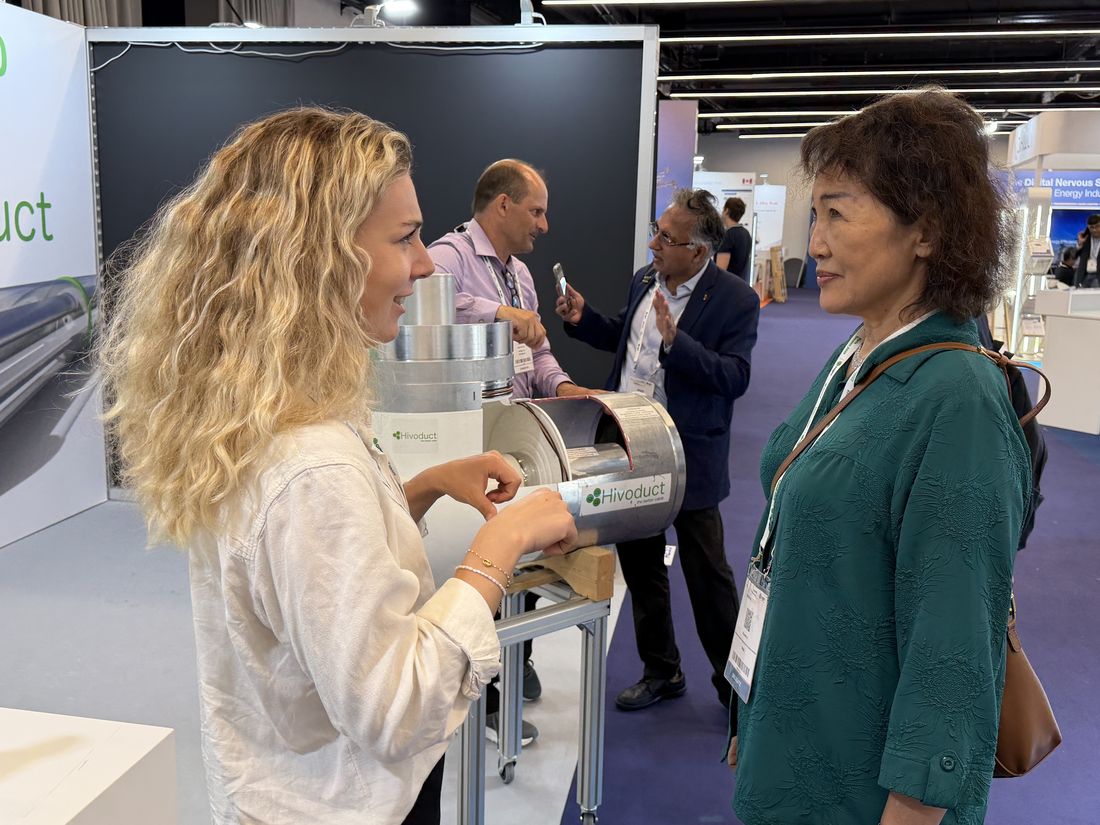
Speaker Christine Schönbächler with exhibition visitor Ruomei Li (first international WiE Chair at CIGRE)
by Christine Schönbächler, Hivoduct AG, Switzerland – WiE speaker, 2026 Session (A3 topic in the B1 GDM)
Priyanka Gugale, Hitachi Energy Ltd, Switzerland – WiE speaker, 2024 Session (A3 topic in the A1 GDM), Chair of CIGRE WiE Switzerland
& Marcel Stöckli, Electrosuisse, Switzerland – Secretary of CIGRE Switzerland
on behalf of CIGRE Women in Energy (WiE)
Connecting expertise across Study Committees
CIGRE develops its knowledge in 16 Study Committees (SCs), each with deep expertise in one part of the power system. This structure is one of CIGRE’s greatest strengths. Yet the challenges of energy transition rarely stay within one discipline. Grid expansion, for example, involves planning, insulation, materials, thermal and mechanical design, operation, economics and, increasingly, social acceptance.
Joint Working Groups already connect SCs in their technical work. The Women in Energy (WiE) initiative described here adds a complementary, lightweight format to the Paris Session: a WiE expert from one SC presents a relevant topic in the Group Discussion Meeting (GDM) of another SC. The receiving SC gains an outside perspective, and the expertise of women engineers becomes more visible across the CIGRE community by presenting technical content. The format does not replace the work of the SCs – it builds bridges between them.
2024: First pilot – A3 topic in the A1 GDM
At the 2024 Paris Session, Priyanka Gugale brought a topic from SC A3 (Transmission and Distribution Equipment) into the SC A1 GDM, supported by SC A1 Chair Kevin Mayor.
Her presentation addressed generator circuit-breakers (GCBs):
“As we navigate the energy transition, the flexibility of power generation is becoming increasingly crucial. This session highlighted how evolving trends in power plant operation, design, and layout are creating new challenges for Generator CircuitBreakers (GCBs). While GCBs fall within the scope of Study Committee A3, many of the drivers behind these challenges originate from developments in the A1 domain, including flexible plant operation, synchronous compensator applications, and new generation configurations. This demonstrates the increasing interdependence between technical disciplines and the need for stronger collaboration across Study Committees.”
The pilot demonstrated the potential of using the WiE platform to create a structured bridge between technical communities and was well received by the SC A1 audience, leading to numerous interactions and discussions in the following break.
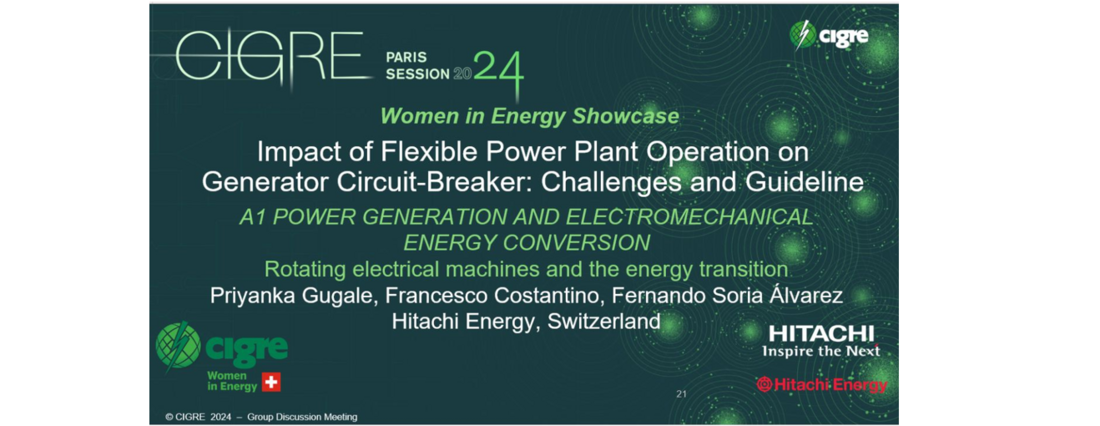
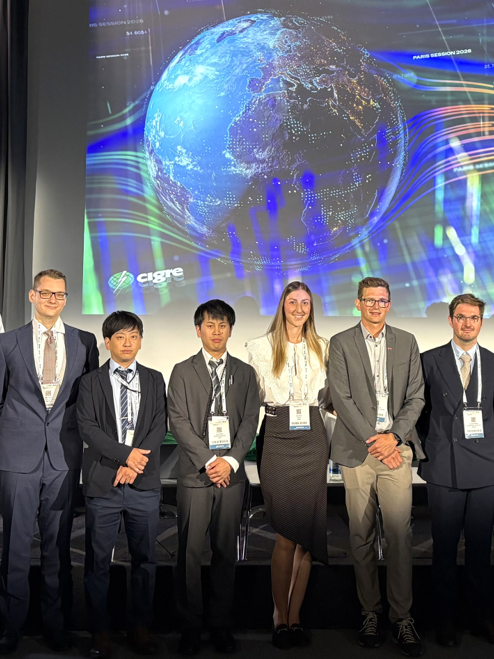
Figure 1 - The 2024 pilot: Priyanka Gugale’s WiE Showcase on generator circuit-breakers in the SC A1 GDM, CIGRE Paris Session 2024
2026: Second pilot – A3 topic in the B1 GDM
At the 2026 Paris Session, Christine Schönbächler presented an A3 topic in the SC B1 (Insulated Cables) GDM as part of the WiE Showcase, supported by SC B1 Chair Geir Clasen and his team. The starting question was: how can more power be transmitted through a given corridor while keeping the system compact, robust and free of SF₆ and PFAS?
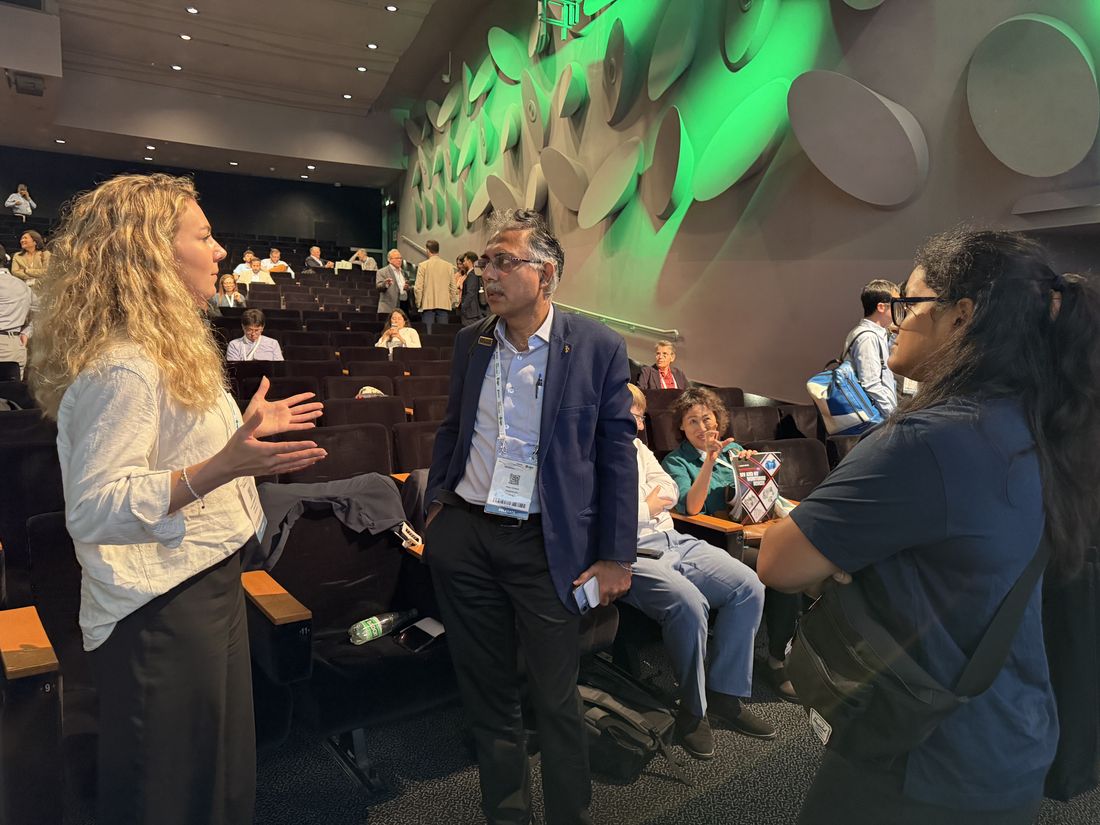
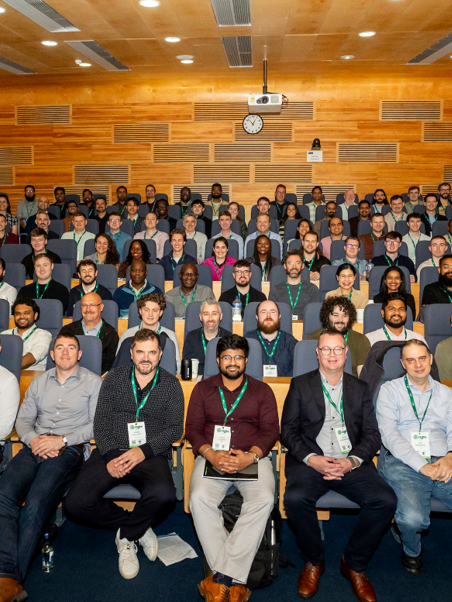
Christine Schönbächler in discussion with SC B1 GDM delegates after her presentation, CIGRE Paris Session 2026
The presentation focused on pressurized air cables, a technology that complements XLPE cables and overhead lines. As in gas-insulated lines, a conductor is enclosed in a grounded metallic enclosure, but pressurized air replaces SF₆ as the insulating medium. Because air has a lower dielectric strength, larger insulation gaps are needed. This increases the dimensions, but the larger volume also creates room for optimization:
- Three-phase encapsulation, already applied in gas-insulated systems up to 245 kV, can reduce corridor width and material use.
- An elliptical conductor shape makes better use of the internal space for the electric field and doubles the conductor cross-section within the same enclosure.
Combined with electromagnetic and thermal optimization, this offers an option to double the power density. The key message was not that one geometry is universally best, but that combining the equipment (A3) and cable (B1) perspectives leads to better solutions for a specific application. The talk again prompted lively discussions with B1 delegates (Figure 3).
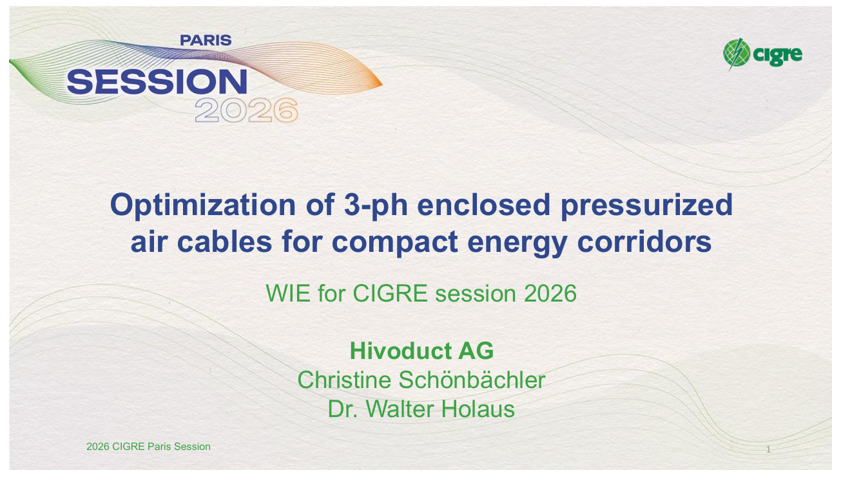
Figure 2 - The 2026 pilot: Christine Schönbächler’s WiE contribution on three-phase enclosed pressurized air cables in the SC B1 GDM, CIGRE Paris Session 2026
What the two pilots demonstrated
Together, the 2024 and 2026 pilots showed that:
- the format works with different topics and different receiving SCs;
- it requires little additional organization: one speaker, one slot in an existing GDM and the support of the receiving SC Chair;
- audiences value an outside view, as the discussions after both talks confirmed;
- it gives a stage to experts who would normally not present outside their own community, including next-generation engineers, and so supports CIGRE’s commitment to diversity and inclusion.
The pilots also showed that a good cross-SC talk needs “translation” – not between languages, but between areas of expertise – so that specialists from another field can see the relevance for their own work.
Next steps towards the Paris Session 2028
The aim for 2028 is to turn the two pilots into an established format involving more SCs and, in the longer term, possibly all 16. The goal is not for every SC to present to every other SC, but to identify meaningful pairs whose work overlaps in practice.
The CIGRE Technical Council and WiE will cooperate on how to take the initiative forward towards the Paris Session 2028. The practical steps envisaged are:
- Agree the approach with the Technical Council and the SC Chairs, including how many GDM slots can be offered.
- Identify SC pairs and cross topics: each SC can propose topics, challenges or emerging developments that would benefit from discussion outside its own community.
- Call for WiE cross-knowledge speakers through the WiE network and the National Committees, and match them with receiving SCs.
- Prepare the speakers with support from the pilot teams, focusing on making each topic accessible to the receiving community.
- Collect feedback after the 2028 Session to refine the format for future Sessions.
CIGRE WiE Switzerland will share its experience from both pilots to support this ramp-up.
One power system. Sixteen Study Committees. One opportunity to connect the knowledge between them.
Get involved
SC Chairs, WiE representatives and CIGRE members interested in contributing to the 2028 cross-SC format – as a receiving SC or as a cross-knowledge speaker – are invited to get in touch.
Suggested content