Rural Electrification & Training
A hands-on 2027 project combining solar training and infrastructure with local capacity building in rural Ethiopia

By Marcel Stoeckli & Roger Buser
Reliable electricity can make a big difference in a rural school, a health center or a community water system. Yet a solar installation alone is not enough. Systems need to be planned for local conditions, installed safely, understood by the people who use them and maintained after the project team has left. The 2027 Rural Electrification & Training project in Ethiopia is designed around exactly this combination: practical solar infrastructure and practical knowledge transfer.
A practical model for rural electrification
The project is organized through Sahay Solar in collaboration with Swiss and Ethiopian academic and local partners. In this context, Sahay Solar acts as the link between training, technical implementation and community needs. The central educational format is the Advanced Solar Training (AST), a two-week program that connects photovoltaic theory directly with real installations. Rather than separating classroom teaching from field work, the program uses the planned rural systems as the learning environment.
The 2027 project will install four stand-alone photovoltaic systems in rural Ethiopia. Each installation is planned at approximately 5 kW of photovoltaic capacity with around 10 kWh of battery storage, together with the inverter, mounting structure, electrical protection and wiring required for an off-grid system. Depending on the selected sites, the systems will supply schools, health centers or solar-powered water pumping applications. The goal is not only to deliver electricity, but to build local competence for operation, maintenance and troubleshooting.
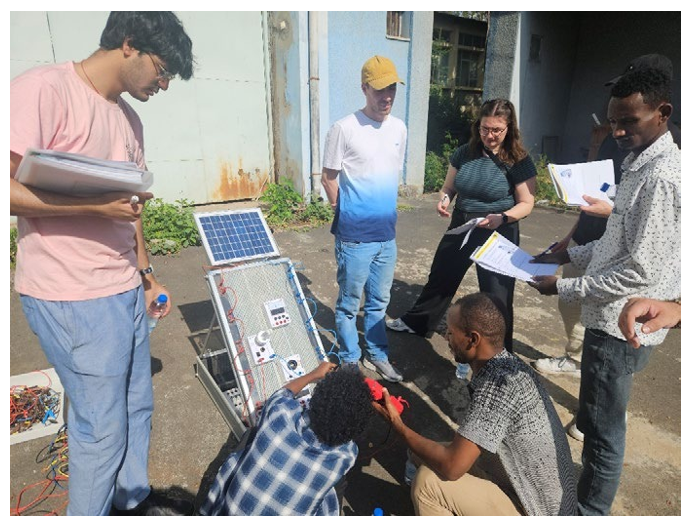
Figure 1 – Practical solar training links measurements and system understanding before field installation. Photo from a previous AST activity; used here to illustrate the training approach
Preparation begins long before the installation
Although the visible part of the project will take place in February 2027, much of its success will be determined in the months beforehand. The twelve-month project starts in September 2026. During September to November, the project team and Ethiopian partners will confirm the implementation framework, prepare the training material and coordinate responsibilities. Site planning is scheduled for October, followed by equipment ordering at the latest in November.
The selection of the four project sites is particularly important. A technically suitable installation must also answer a clear local need and have people who can take responsibility for it. Therefore, Sahay Solar has a LOI (Letter of interest) of the AMU (Arba Minch University) and the local Government. The Government knows the needs of the people and chooses the sites which are fare away from the electrical grid. For each location, the team will therefore consider the intended electrical loads, the available building or borehole infrastructure, accessibility, mounting possibilities, local installation conditions and the future maintenance organization. This preparation phase also reduces the risk of arriving with equipment that does not fit the actual situation on site.
Procurement is another key task. The equipment package for each system must be robust, understandable and serviceable in the local context. Essential installation tools and materials are included in the project budget so that practical training does not stop at theory. Logistics, local transport and coordination with the participating institutions like Government and University are planned alongside the technical work.
Two weeks: learn, plan, build
The main training and installation phase is planned for February 2027. During the first week, participants will work through the fundamentals needed to understand and design off-grid solar systems. Topics include photovoltaic principles, system dimensioning, batteries, inverter operation, electrical protection, installation planning, maintenance, theoretical and practical exercises. The intention is to create a common technical basis among participants before they move to the field. We also discuss a lot of possibilities and try to find understandable solutions.
The second week shifts the focus to implementation. Trainees will participate directly in the installation of the real systems, applying the concepts from the first week to mounting, cabling, protection, commissioning and functional checks. Working on real infrastructure distant form any electrical grid creates a different level of understanding from a laboratory exercise: unexpected site conditions, limited materials and practical decisions become part of the learning process. Trainers can revisit the relevant theory immediately before each installation step, so that participants understand not only what to do, but why it is done that way.
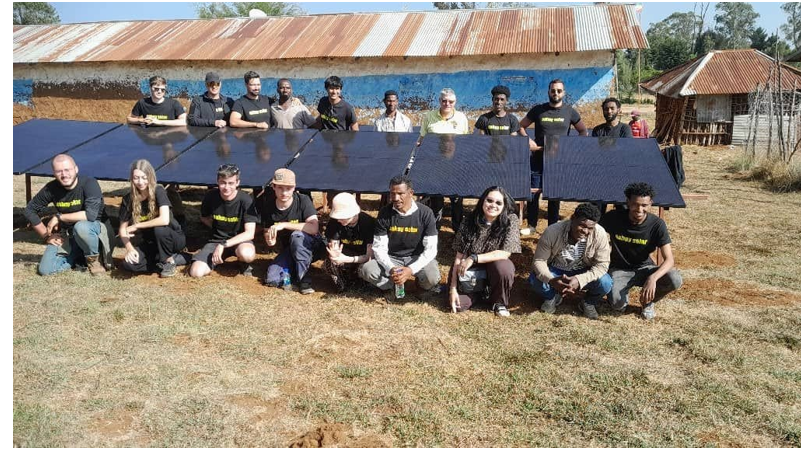
Figure 2 – A completed rural PV installation provides both useful infrastructure and a real learning platform. Photo from an earlier implementation activity
Local skills are the second infrastructure
The project deliberately treats knowledge as an output equal in importance to the four photovoltaic systems. Participants are expected to complete the program with practical experience and certification, while local universities and technicians gain a stronger basis for supporting the systems after commissioning. Mixed teams encourage knowledge exchange between Swiss and Ethiopian participants and make the training relevant to the conditions in which the systems will actually operate.
This local ownership is essential for sustainability. An off-grid system may operate for many years, but batteries, protective devices, connections and loads still need attention. A minor fault can become a long outage if nobody nearby understands the system. By combining installation with training, the project aims to leave behind people who can inspect performance, identify common problems and organize repairs without depending on repeated international intervention.
After the field work
The project does not end when the last system is switched on. Evaluation and reporting are planned for June to August 2027. Progress will be reviewed through technical documentation, financial tracking, milestone reviews, system-performance verification, participant feedback and sustainability indicators. The final phase will also record lessons learned from different viewpoints: what worked well, where planning assumptions had to be adapted and which parts of the training should be improved for future programs.
For the communities involved, the most immediate outcome should be reliable access to electricity for essential services. In a school, that may mean lighting and the dependable use of computers or other learning equipment. In a health center, electricity can support basic clinical and administrative needs, like the decrease in the mortality rate of children born at night, simply because there is light. Where an existing borehole is selected, solar pumping can turn available groundwater into a more reliable water supply without the recurring fuel requirements of a generator.
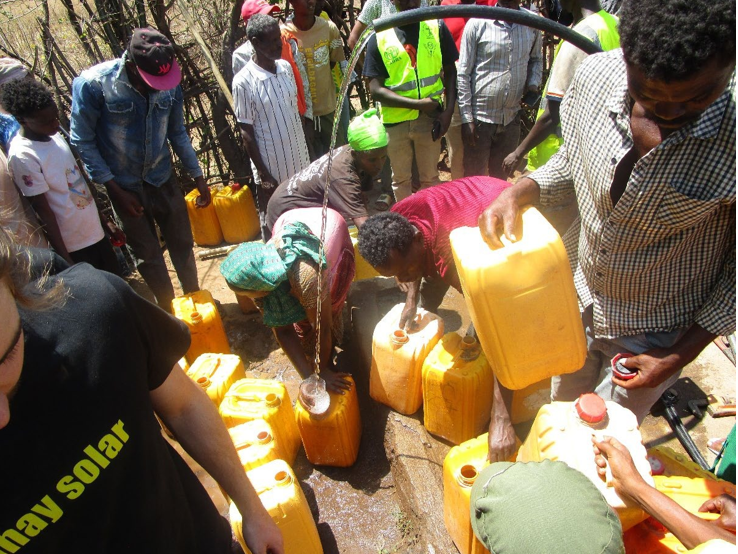
Figure 3 – Solar-powered water pumping can translate electrical infrastructure directly into improved access to water. Photo from a previous project activity
A project designed to be repeated
The 2027 project is intentionally manageable on a scale: four installations, one concentrated training program and a defined evaluation period. That makes it possible to test a model in which education and humanitarian electrification reinforce each other. If the approach proves effective, the value is not limited to the installed kilowatts. The training format, local partnerships, documentation and maintenance experience can be reused for further sites and by local institutions. We can even imagine that further developed CIGRE countries could copy this knowledge transfer project into other destination countries with similar needs as we can see from Switzerland in Ethiopia.
The project also creates a platform for stronger professional exchange around power systems and renewable energy in Ethiopia, including possible future links with the wider CIGRE community and Women in Energy Ethiopia (eWiEn). These are secondary opportunities; the immediate objective remains clear. By the end of the project, four rural facilities should have operational photovoltaic systems, and a group of trained local professionals should be better equipped to keep those systems working. Rural electrification and training are therefore not two separate activities in this project. They are two parts of the same infrastructure for long-term impact.
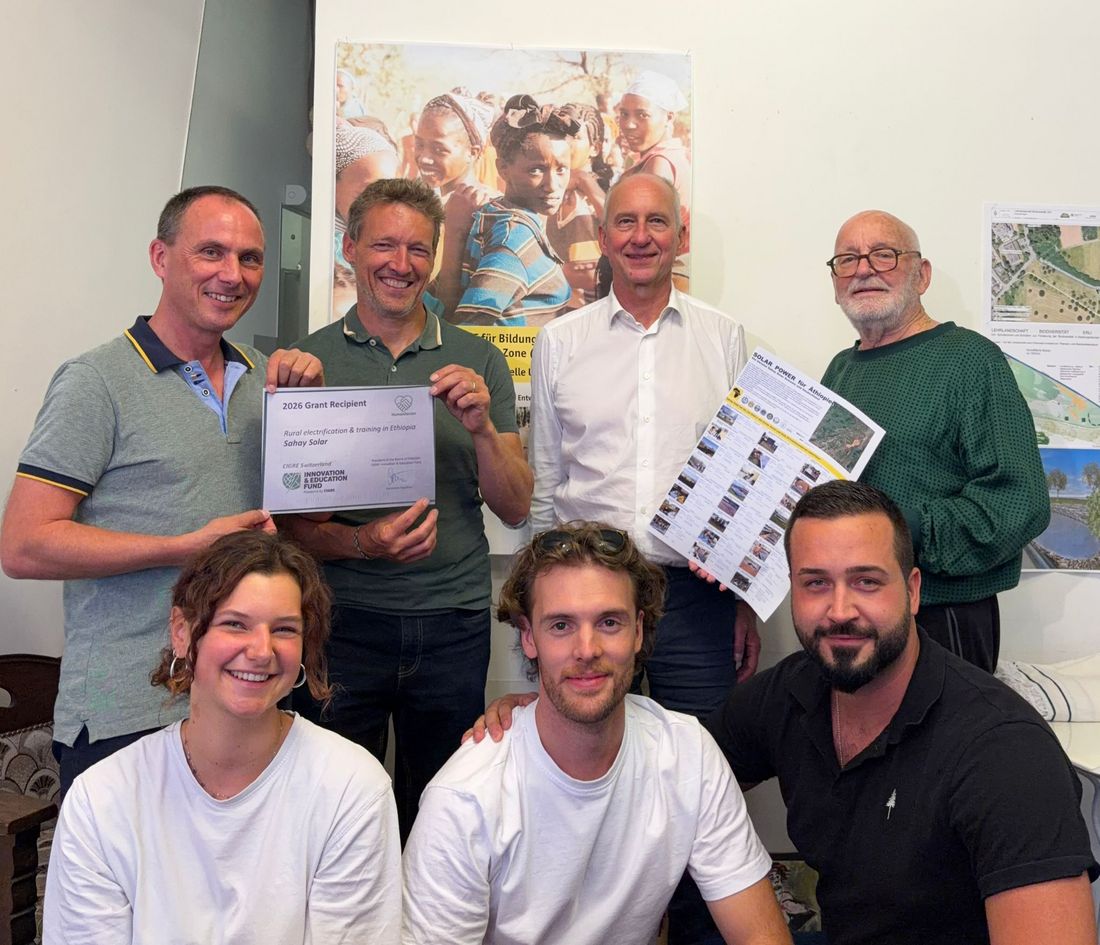
CIGRE I&E FUND 2026 grant recipients from Sahay Solar Switzerland receive their official certificate from the National Committee Secretary during their BoD meeting on 31 August 2026 in Basel.
Upper left to lower right: Marcel STOECKLI (CIGRE NC Secretary), Roger BUSER (Project Applicant), Dominik GALLIKER (BoD President), Ruedi TOBLER (Founder of Sahay Solar), Enya KELLERMANN, Nicolas STEINER, Mirza BUZIMKIC (absent/online BoD: Max POHL).
Suggested content