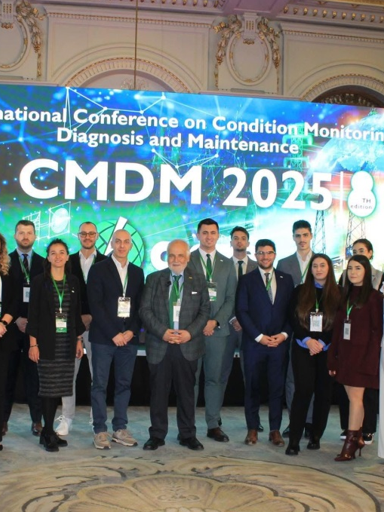
CIGRE SC D2 Webinar: Telecommunications Technology for Critical Networks
The CIGRE Study Committee D2, in collaboration with The South African Institute of Electrical Engineers (SAIEE), recently hosted a significant webinar titled "Telecommunications Technology for Critical Networks," focusing on the crucial topic of migration from Synchronous Digital Hierarchy (SDH) to meet the evolving technological requirements in power grids. This initiative speaks directly to the pressing need for modernization in the electricity sector's communication infrastructure, especially given the demands of operational technology (OT) in power utilities across Africa.
by Thuthukani Nduduzo Biyela – CIGRE D2 Southern Africa Representative
& Pitso Sekhoto – CIGRE D2 and SAIEE
Over the past decade, the sector has been actively discussing the shift away from traditional Synchronous Digital Hierarchy (SDH), a Time Division Multiplexing (TDM) based transport technology long used in utilities. While SDH has provided deterministic performance essential for applications like tele-protection, emerging use cases require the flexibility that packet-based transport technologies offer. Consequently, there is an industry-wide effort to evaluate and implement packet-based mechanisms while maintaining the reliability that OT applications demand.
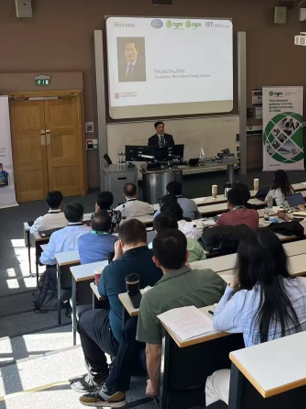
The webinar attracted more than 160 professionals globally and featured expert speakers from leading companies such as CISCO, Huawei, and Belden/OTN. It was further supported by CIGRE D2 Chair Victor Tan and Kurt Dedekind, Chair of CIGRE C6 and Secretary of the Africa Task Force, who emphasized the importance of this topic for power utilities worldwide.

Slido highlight
Kurt Dedekind highlighted Africa's unique challenges and opportunities, noting that over 600 million people in Sub-Saharan Africa lack access to electricity. He stressed that "lack of access" encompasses both no grid connection and affordability issues. With the continent experiencing substantial demographic and economic growth, reliable power is essential for development. Digitalization alongside renewable energy sources (RES) and microgrids presents an opportunity for Africa to leapfrog traditional development stages by applying the latest technology and control systems for enhanced electricity services. Kurt emphasized CIGRE’s critical role in systematically disseminating knowledge and results to African utilities and encouraged collaboration with development banks and national authorities to finance and support these advancements.
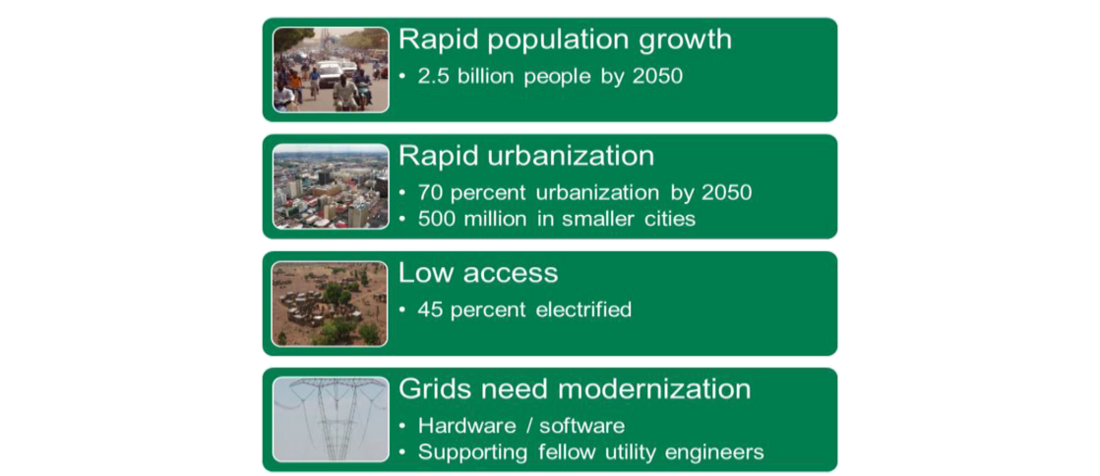
Challenges faced by Africa Continent
The webinar presentations covered a range of pioneering topics:
CISCO’s Abubakar Maaroof introduced Software Defined Wide Area Network (SD-WAN) technology, detailing its architecture, operation, and security features suitable for utility operators. SD-WAN, leveraging software-defined networking principles, separates the control, data, and management planes to support all transport technologies. This flexible, scalable, and programmable technology automates network implementation and day-to-day support, integrating security measures for granular control of network services. SD-WAN's growing adoption in utility networks promises improvements in network management and operational security.
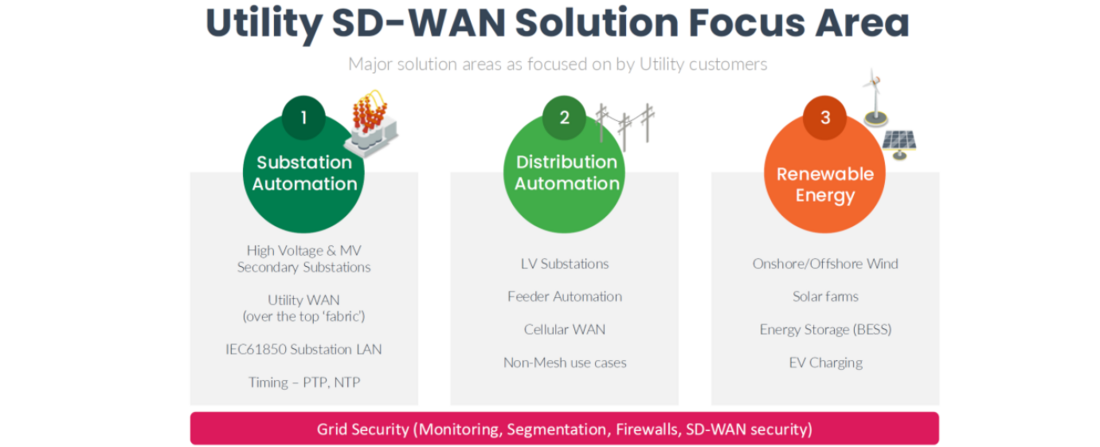
Software Defined WAN and its use in Utility Operators
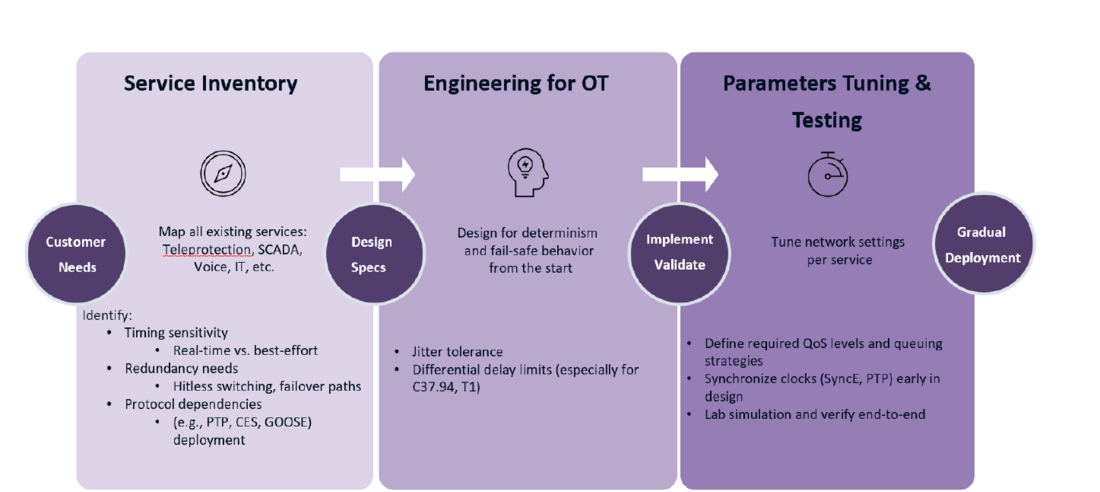
Emmanuel Waegebaert from Belden delivered an insightful talk titled “Building on Legacy Resilience, Packet Networks for the Modern Substation.” Emmanuel outlined why modernization is imperative, noting the obsolescence of SONET and the pressing need for maintenance cost reduction and skill upgrades. Modern power systems rely increasingly on protocols such as IEC 61850, synchrophasors, and SCADA, which demand advanced transport networks with higher segmentation, authentication, and traceability. He introduced MPLS-TP (Multiprotocol Label Switching - Transport Profile), a deterministic, secure, and simple packet-based technology purpose-built for OT environments. Emmanuel also illustrated migration scenarios that allow gradual transition from rigid TDM to flexible packet architectures, ensuring coexistence with legacy systems and minimal operational disruption. Cybersecurity, segmentation, and network resilience were emphasized as core design pillars.
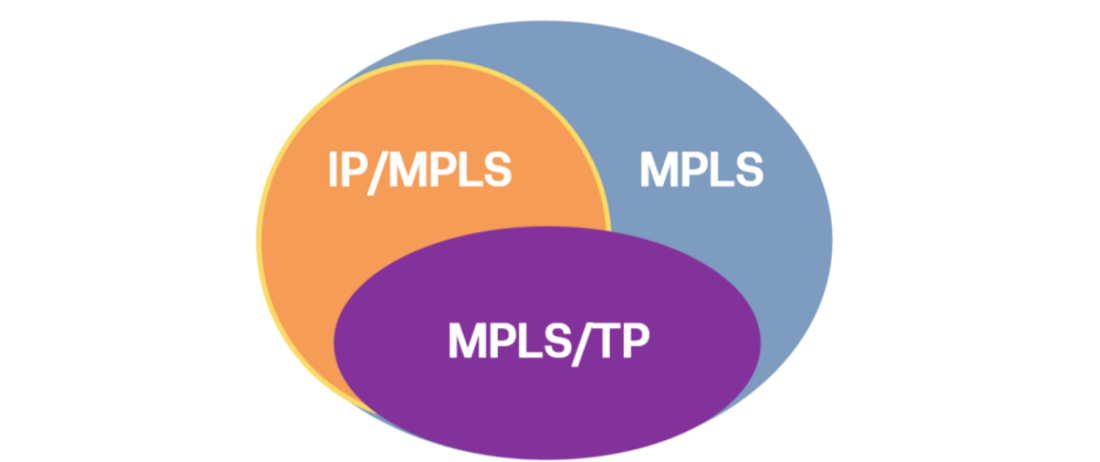
MPLS family
Success start with the right decisions
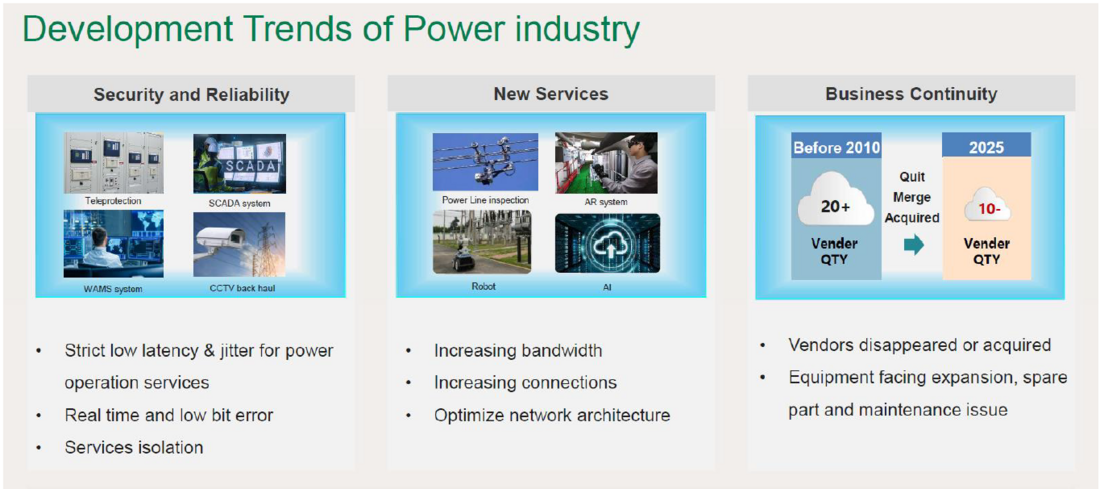
From Huawei, John Tan and Bert Klaps presented on "Optical Transmission Technology Evolution in Electric Power Utilities." Their presentation covered the evolution of TDM technologies including SDH, Optical Transport Networks (OTN), and fine grain OTN (fgOTN), likened to the progression from traditional trains to high-speed bullet trains. These technologies deliver guaranteed packet transport times critical for utility communication. Huawei emphasized three factors for new network deployments: compatibility with existing SDH for smooth upgrades; the advantage of hard pipe technology for communication service level agreements (SLA) and security; and the necessity for 100G+ bandwidth and long-range transmission capabilities. fgOTN/OTN protocols, standardized by ITU-T, meet these requirements and support multiple protocols to simplify network management. Bert Klaps highlighted Huawei’s participation in ITU-T standards development, reaffirming the company's commitment to advancing utility telecommunications.
Digital technologies — Essential to energy security, improve the resilience, security, reliability, and stability of energy systems”
The final presentation by Xinzhou Dong focused on enhancing Ultra High Voltage (UHV) grid resilience through advances in traveling-wave protection and communication infrastructure. Specialized protection technologies like Traveling Waves Based Differential Protection (TWDP) for transmission lines were examined. Xinzhou summarized that while fault location technologies are widely applied, TWDP represents an advanced protection method requiring high communication sampling frequency and fast data transmission—factors that the upgraded telecommunications networks must support.
The event was opened by Victor Tan, Chair of CIGRE D2, who provided an overview of Study Committee D2’s role in advancing telecommunications technology for critical electric power infrastructure. Thuthukani Biyela, a key organizer and presenter, concluded the webinar by thanking all contributors and participants for their engagement.
This webinar illustrates the collaborative efforts underway in Africa and globally to modernize power grid telecommunications. It underscores the pivotal role of evolving technologies like SD-WAN, MPLS-TP, OTN, and advanced protection communications in ensuring reliable, secure, and efficient electricity delivery. The deployment of these solutions is essential to meeting Africa’s growing electricity needs and supporting sustainable development through enhanced power system digitization.
The initiative by CIGRE D2 and SAIEE, coupled with the Africa WorkGroup and development partners, continues to enable knowledge transfer and capacity building essential for Africa’s energy future.
Thumbnail credit: Simon Abrams on Unsplash
Suggested content