100 Years High-Speed Resistor-Type OLTCs (Jansen Patent) – A Historical Survey
The successful commissioning of the first three-phase AC transmission system in Lauffen-Frankfurt in 1891 was a milestone in the development of electrical power transmission. This provided a decisive impetus for the worldwide development of electrical power generation and transmission, with the transformer playing a key role.

Retired Director of Technology representing the field of OLTCs, Reinhausen
Introduction
It became clear very early that the voltage needed to be regulated based on the operating conditions and the simplest way to compensate for voltage drops was to use transformers with a variable turn ratio.
At the beginning, tappings connected to bushings, which could be connected as needed were sufficient. However, these simple devices only allowed for occasional adjustments to the transformer's turn ratio. The idea of Dr. Jansen to solve this situation and allows for tap-changing whenever needed led to his several patents and has now 100 years anniversary.
What if...?
What would have become of worldwide electrification and its steady spread if Dr. Jansen’s had not made this invention, or if it had not been possible to implement the invention in a mechanical and reliable apparatus by the brothers Oskar and Richard Scheubeck with their Maschinenfabrik Reinhausen (now Reinhausen)?
At that time, tap-changers operating according to the reactor principle were already known. However, their design limited their use to applications in the lower high-voltage range. From today's perspective, the increasingly complex demands on the operation of high-voltage and distribution networks would hardly have been possible with the equipment available before Jansen's invention.
Had there truly been an alternative in the early days, it would surely have emerged over time and competed with the Jansen invention(s). From an economic perspective, this has not happened to this day. Consequently, tap-changers based on a patent that is 100 years old allow a safe regulation of one of the most complex technical networks ever created.
The birth of the on-load tap-changer
Going 100 years back in time. Initially, compensating for voltage fluctuations due to load changes in the grid could only be achieved by varying the generator voltage. With the progressive electrification after the First World War, the demand for on-load regulation grew as the need for constant voltage increased. The switching devices required for this had to allow the selection of the necessary taps on the transformer during operation – i.e., without interruption. The development of such “on-load tap-changers” (OLTC) has been accelerated over the years by the steady increase in transmission voltage and power, and interconnectedness of the power grids.
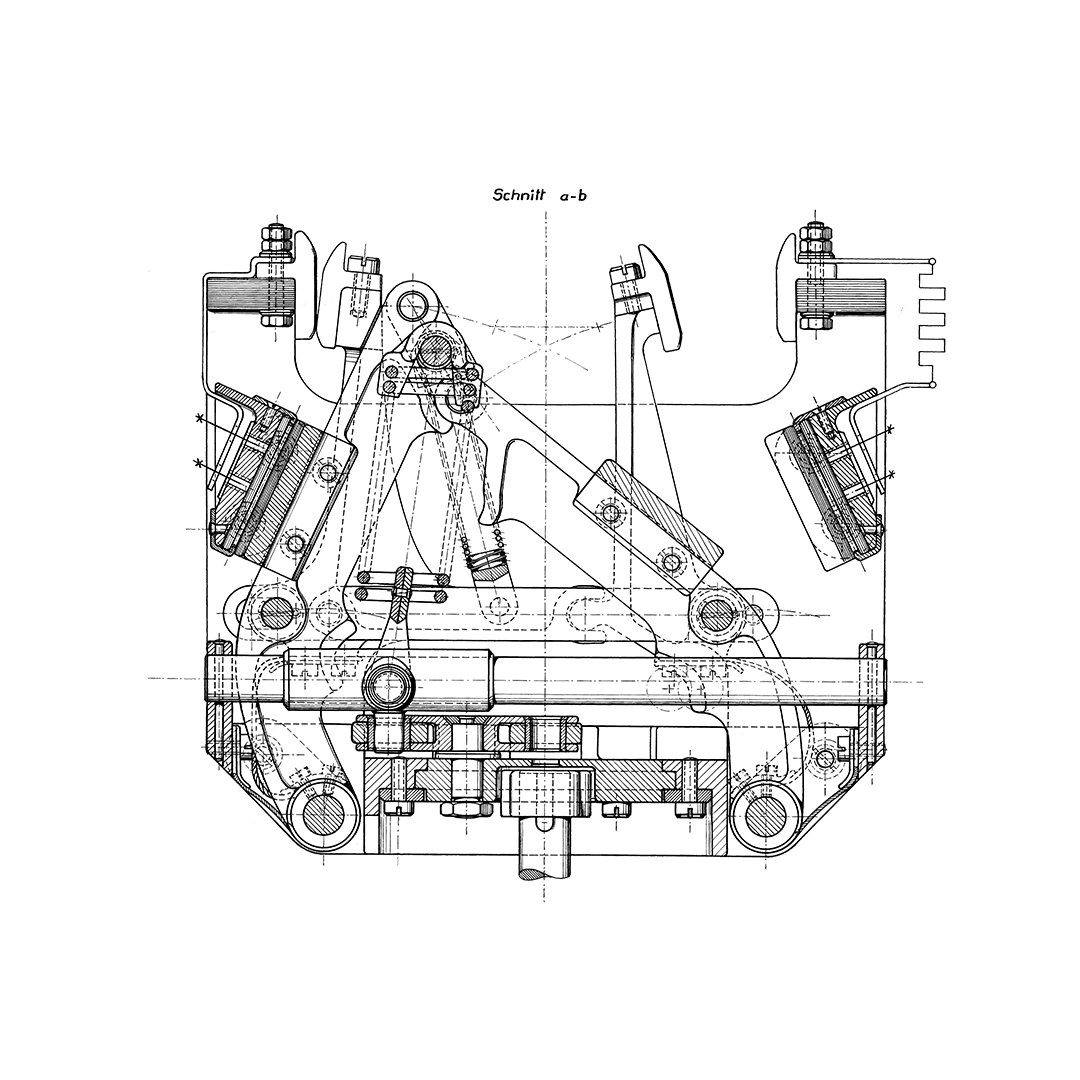
Dr. Jansen's groundbreaking invention in 1926 (Patent No. 474613) is based on the use of ohmic resistors as transition impedances, which are rapidly switched on and off (within tens of milliseconds) driven by a spring mechanism and has become established as the high-speed resistor principle.
Another fundamental patent by Dr. Jansen from 1926 (Patent No. 485959) describes a device for selecting transformer taps (tap selectors).
The implementation of both patents together results in an on-load tap-changer consisting of a diverter switch and a tap selector. This concept still is the base for most on-load tap-changers built today.
The first steps of the technical implementation
The first tap changers were installed separately from the transformers. As a result, the need to run a large number of tap leads from the transformer to the tap changer was accepted.
The next development step in the early 1930s was a diverter switch, with its own oil compartment, which was mounted on top of the transformer and connected to the tap selector inside the transformer tank via a multi-cable bushing (bushing design).
In 1936, Dr. Jansen filed another patent (Patent No. 649842) describing a device that implemented a completely new arrangement of OLTC and transformer: the selector switch. The selector switch's oil compartment was a hard paper cylinder suspended from the transformer cover, containing both the diverter switch and the tap selector function. Thus, the OLTC was located inside the transformer tank. Such a selector switch was first manufactured by Maschinenfabrik Reinhausen (MR) in 1936 and represented the world's first "in-tank" design.
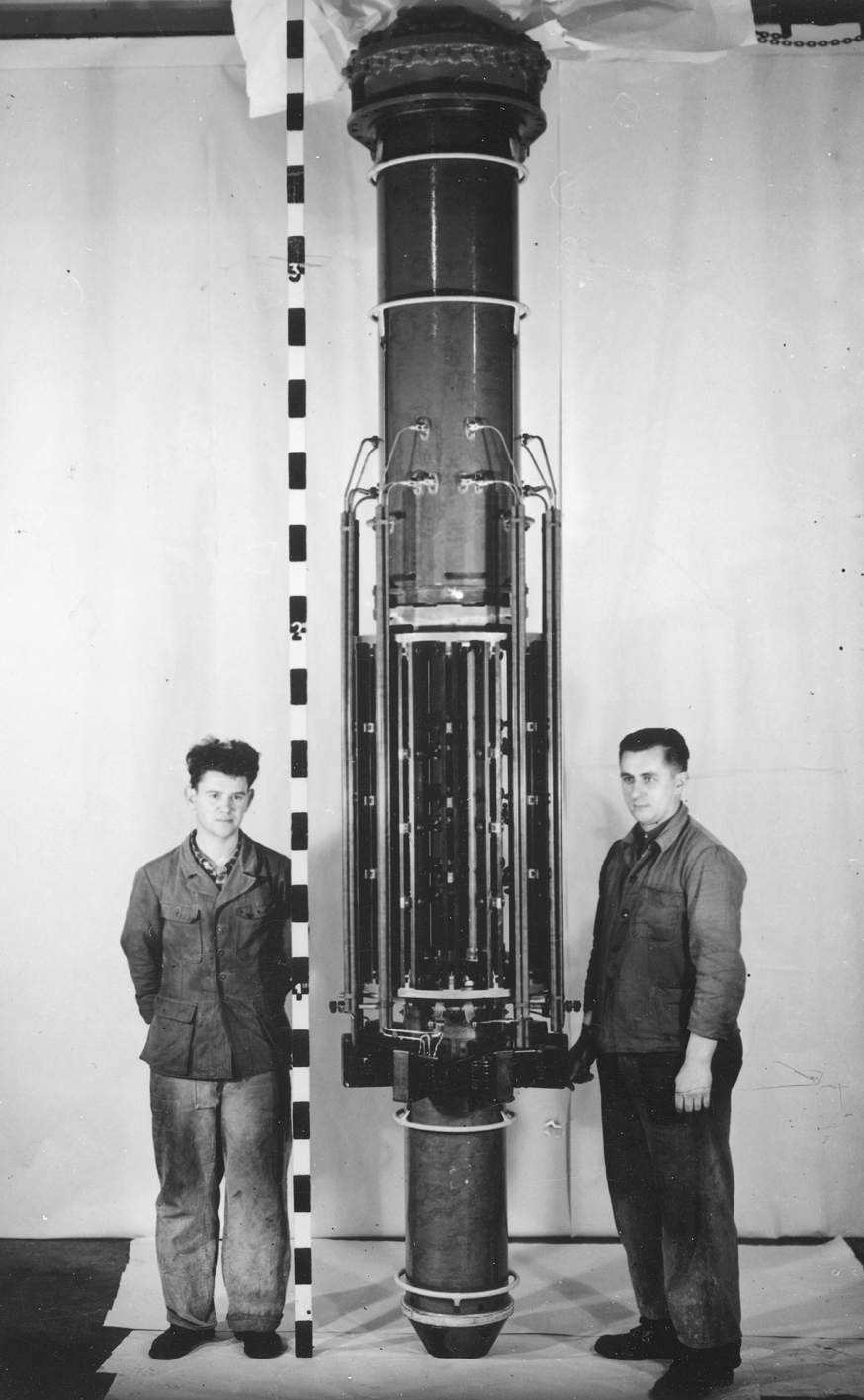
The "in-tank" design concept was pursued intensively by Dr. Jansen and led to design with a separate diverter switch and a tap selector. ELIN was the first transformer manufacturer to implement this concept, starting in 1942. The diverter switch was housed in an insulating cylinder which was attached to the transformer cover. The selector was mounted below this cylinder. The diverter switch was designed as a three-sector rotary switch and was based on another patent by Dr. Jansen (Patent No. 707188) from 1939.
The first steps of industrial implementation
The industrial development of OLTCs can be divided into two periods. The first period began with the production of the first regulating transformers around 1910 and ended in 1946. During this time, transformer manufacturers developed and produced the OLTCs for their own regulating transformers. This resulted in a wide variety of different OLTC designs. Dr. Jansen was the licensor for most manufacturers who used the high-speed resistor principle. A close relationship existed between MR and Dr. Jansen, who remained their licensor until his death in 1958.
The second period began after World War II, when several transformer manufacturers discontinued their own tap-changer production, primarily for rationalization reasons. Maschinenfabrik Reinhausen, the world's first independent manufacturer specializing in tap-changers, began series production of high-speed resistor-type tap-changers with its legendary Type D in 1946.
Milestones of modern tap-changers
In the beginning sixties of the last century there was a desire for OLTCs with higher load currents and switching capacities. The developed OLTCs were also good for transmission power transformers with the highest system voltages and were in every respect greater than anything that had come before.
In the 1970ies, the experience of the past 30 years gained with in-tank OLTCs have shown that a certain degree of variability regarding load current, voltage requirements, and number of tap-changer positions must be accommodated within one design. This was achieved by a new developed “modular system”.
In addition to the fundamental modern mechanical design, new insulating materials were also considered. Eventually, this design was the first step in a new era of using glass fiber reinforced composite materials as well as in OLTCs and in high-voltage power transformers.
40 years after its introduction the well-known selector switch was completely revised and the insulation materials of the oil compartment as well as the drive shaft was changed to fiber reinforced plastics (FRP).
Consequently, in the beginning 1990ies a new tap selector was introduced, whose insulating materials were made also from fiber reinforced plastics.
A new era
The ending 20th century brought new impetus to the time-tested Jansen operating principle. The use of vacuum interrupters in reactor-type OLTCs has recently become known. The introduction of vacuum interrupters as switching elements in the high-speed resistor-type diverter switch modernized the Jansen idea and made it fit for the next century. But only the active part in the diverter switch was exchanged. The general design of a diverter switch compartment and a tap selector mounted underneath was not changed.
With the rise of photovoltaics and wind turbines in commercial energy generation, a need for voltage regulation suddenly arose that had not been required before: voltage regulation in the distribution network. Economical solutions were also found for this challenge using the Jansen switching principle.
The newest and up to date last innovation of a high-speed resistor-type OLTC was introduced in the mid-2020ies: an in-tank design without the need of a diverter switch oil compartment – the so-called integrated tap-changer.
Dr. Bernhard Jansen (1899–1958)
Dr. Bernhard Jansen was born on 31 August 1899 in Wissen, Germany, as the son of a master watchmaker. After completing his secondary education, he studied electrical engineering at the Technical University of Hanover from 1919 to 1923. In 1925, he received his doctorate with a dissertation on the economic efficiency of interconnecting large power supply areas – at a time when the technical prerequisites for interconnected grids were still largely undeveloped.
On 13 July 1926, Jansen filed a patent for a device enabling the switching of transformer taps under load using resistor-based switching elements. Granted in 1929 (German patent no. 474613), this invention laid the technological foundation of the resistor-type on-load tap-changer and became a defining element in the regulation of power transformers worldwide. In the same year Dr. Jansen started the lifelong cooperation with the brothers Scheubeck and the Maschinenfabrik Reinhausen (today Reinhausen).

Alongside his inventive work, Jansen pursued a professional career in power supply companies. In 1928, he became Technical Director of Oberpfalzwerke AG in Regensburg, where he systematically developed regional electricity networks into an interconnected system. From 1956, he served as Chairman of the Board of Energieversorgung Ostbayern AG (OBAG), today Bayernwerk.
He died on 15 October 1958 in a traffic accident following a heart attack.

Want to go further? Discover related Publications on eCIGRE

Suggested content