Empowering Connections: Women Shaping the Energy Future
CIGRE is more than a hub of technical committees - it is a highly professional community where visibility, exchange, and collaboration may also shape careers. Drawing on the activities of Women in Energy (WiE) and the Next Generation Network (NGN), this article offers a look into how cross-hierarchical dialogue, peer support and joint preparation for CIGRE events supports the development and visibility of future female leaders in the power sector.
By Dr. Nicole Ahner, Chair CIGRE Women in Energy (WiE) Germany and TenneT TSO GmbH
Olga Oberländer, Projekt Manager, VDE Verband der Elektrotechnik Elektronik Informationstechnik e. V.
Lea Schäfer, Chair, German Network CIGRE NGN and Hitachi Energy
Professional networking is widely recognised as one critical driver of career advancement and visibility [1]. However, research demonstrates that networking practices are not always gender-neutral in either form or effect. Women and men tend to build and use professional networks in different ways, with, sometimes, tangible consequences for representation at senior levels. This also applies in traditionally male-dominated sectors such as energy.
It may be said that in the workplace women’s professional networks generally tend to be more relational and operational than strategical. They are typically built among peers, grounded in interpersonal trust, and closely linked to day-to-day collaboration and problem-solving. These networks foster reliability, knowledge exchange, and collective resilience. Men, by contrast, tend to engage more in strategic networking: more often across hierarchical boundaries deliberately cultivating upward connections, more often networks are treated instrumentally as career levers. It appears, that personal affinity or mutual sympathy plays a less decisive role. This divergence is well documented in social capital and organisational research [2–4].
The implications of these differences can be profound. While women more often build strong horizontal networks, men are more likely to benefit from vertical sponsorship and visibility. As a result, women may remain underrepresented in top management positions and expert-facing roles - even where they are numerically present at lower or mid-career levels.

Also in the energy sector such dynamics are recognisable. Despite incremental progress, leadership positions, expert panels, and visible representative roles remain predominantly male. Women are frequently present, but not always visible, sometimes appearing as isolated contributors rather than as a structurally embedded cohort.
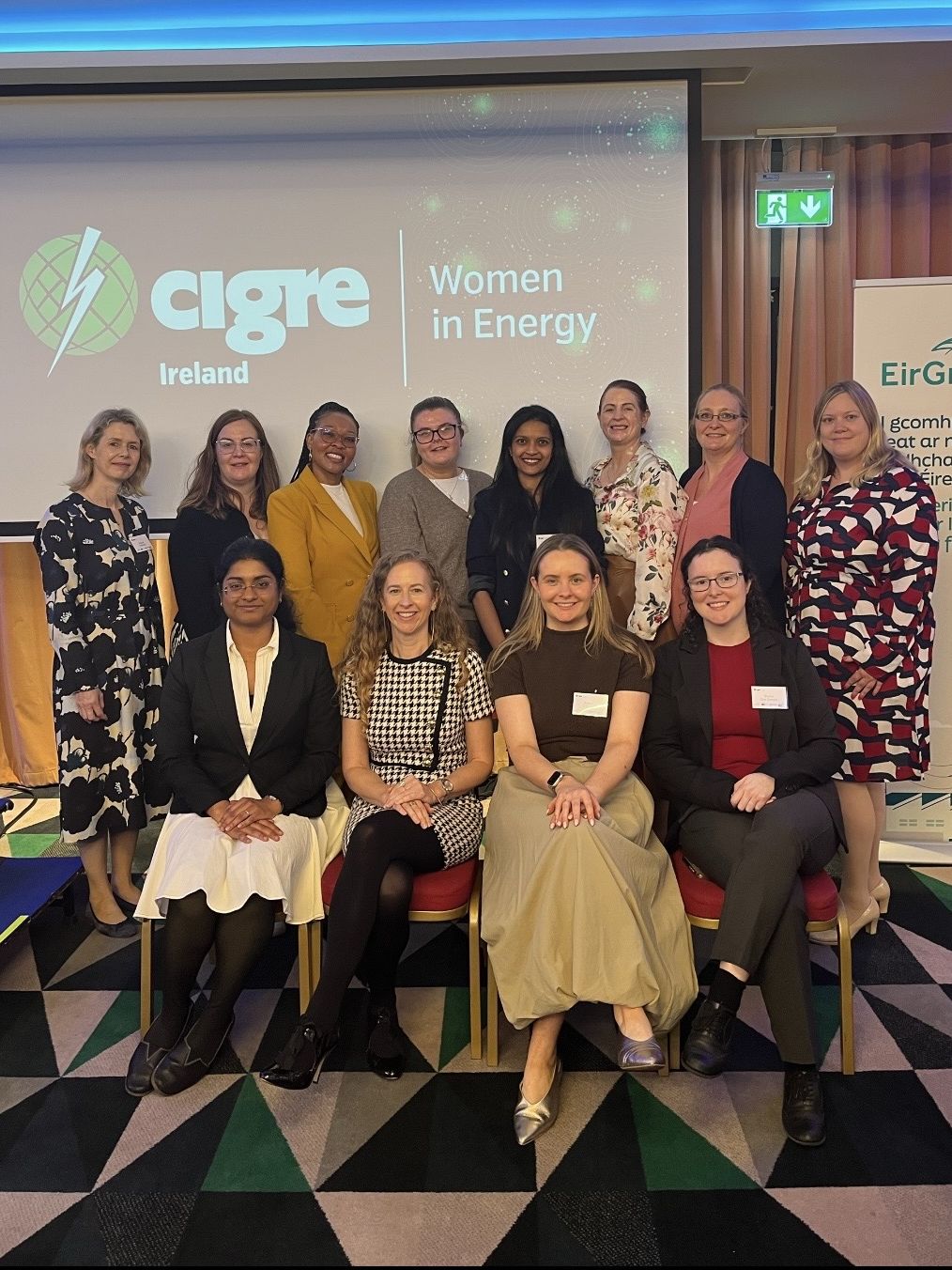
Against this backdrop, Women in Energy (earlier, Women in Engineering, WiE) Germany was established as a deliberately low-threshold networking initiative within CIGRE and VDE. Its objective is to connect women across functions, organisations, and seniority levels. WiE offers regular online lunches, providing continuity and accessibility. It also aims to jointly prepare participation in flagship events such as the Paris CIGRE Sessions or CIGRE/CIRED events. Preparation, peer coaching, mutual reinforcement, and role modelling are treated as integral components of professional presence.
One highlight in the initiative’s development was the 2025 session with Stefan Spiess [1], a recognised expert on executive presence and professional performance in Munich, where WiE together with the Next Generation Network (NGN) addressed the interplay between credibility, confidence, and public visibility in a one-day training. The cooperation with CIGRE NGN strengthens intergenerational connectivity and underscores the importance of early sponsorship. To institutionalise and expand these activities, in early 2026 a WiE Board consisting of five members has been established, with the mandate to pool resources and systematically broaden networking and development opportunities.
These sectoral efforts within CIGRE must be understood in light of broader governance and representation data. The “FidAR Women-on-Board Index” provides a comprehensive overview of female representation on supervisory and management boards of major German companies. The most recent data show that while women now account for approximately 38.9 per cent of supervisory board members (stagnation, 2024: 38.7 per cent), their share in top management boards is 30.7 per cent, with growth rates slowing markedly [5]. This indicates that legal quotas have been effective in altering supervisory board composition, but far less so in transforming organisational culture.
McKinsey/Lean In “Women in the Workplace” studies reinforce this assessment. The research identifies the persistent “broken rung” at the first step into management as a primary driver of cumulative inequality. It further shows that recent rollbacks of flexibility and hybrid work arrangements disproportionately affect women, particularly at mid-career stages where professional progression may intersect with caregiving responsibilities [6]. Flexible and hybrid work models are therefore not discretionary benefits but structural prerequisites for equal participation, and their discontinuation risks reversing already fragile progress.
From a labour market perspective, these findings are particularly consequential. Also the energy sector faces acute talent shortages, technological transformation, and heightened regulatory and sustainability demands. For instance, electrical engineering degree programmes face insufficient enrolment, so technical universities risk losing technical specialisation. Women constitute approximately half of the global talent pool. Underutilising this resource is not merely an equality issue, but a structural inefficiency with direct implications for organisational performance and resilience [7,8]. A society cannot claim to represent itself when women are excluded from the tables where decisions are made.
In this context, CIGRE WiE represents a type of institutional space necessary even if it remains a small initiative within the large structure of CIGRE. Alongside WiE, the NGN also constitutes an essential network within CIGRE, playing a crucial role in fostering diversity and supporting the next (not only female) generation of professionals. Both initiatives are not regarded as symbolic or ‘nice to have’ diversity measures within the CIGRE community. Rather, they are understood as indispensable to the organisation’s future viability.

References
- Ferrazzi, K.; Thal, R. (2020). Never Eat Alone. Penguin Books Ltd.
- Lutz, J. (2023). We-Mind vs. Me-Mind. Torrazza Piemonte: Amazon Italia Logistics S.r.L.
- Ibarra, H. (1993). Personal networks of women and men in management (Academy of Management Review, 18(1), pp. 56–87).
- Burt, R.S. (1992). Structural Holes: The Social Structure of Competition. Cambridge, MA: Harvard University Press.
- FidAR – Frauen in die Aufsichtsräte e. V. (2025). Women-on-Board Index. Berlin: FidAR.
- McKinsey & Company and Lean In (2024). Women in the Workplace. New York: McKinsey & Company.
- Herken, A.S.; Sontheim-Leven, C.; Weiguny, B. (2025). Machtgebiete. Frankfurt/New York: Campus Verlag.
- McKinsey & Company (2020). Diversity Wins: How Inclusion Matters. New York: McKinsey Global Institute.
Suggested content