Application of 5G Technology to Smart Grids
This Technical Brochure explores the integration of 5G technology into smart grids, highlighting its potential to enhance grid efficiency, reliability, and flexibility. It presents the latest applications across renewable energy, transmission, distribution, energy storage, generation, and intelligent inspection, emphasizing ultra-low latency, massive connectivity, and secure network slicing. Real-world pilot projects in China and Japan illustrate practical deployments of 5G-enabled differential protection, phasor measurement, precise load control, and industrial safety. By providing a comprehensive overview of 5G capabilities and challenges in power systems, this TB serves as a key reference for utilities, researchers, and technology providers driving the digital transformation of energy networks.
Members
Convenor
K. GAO
Secretary
Y. WANG
L. JIANG (UK), V. TAN (AU), K. SAWADA (JP), A. VIRO (FL), M. BURKE (US), P. RAUSSI (FL), A. MEHRIZI-SANI (US), H. LIAO (CN), T. GODFREY (US), J. NOUARD (FR), Y. WANG (CN), M. SHABALALA (ZA), G. PHILIPPE MBOUYAP (CA), B. PAMULAPARTHY (IN), D. GOVENDER (ZA), H. SHERIF (BH), B. LI (CN), A. CHOPRA (NZ), K. JHALA (US), Z. MBEBE (ZA), P. WU (CN), J. WU (CN), T. MEW (AU), K. PASAOGLU (DE), Y. GUO (CN), Q. GUO (CN), L. SHAO (AU), C. WANG (CN), C. ZHU (CN)
Power systems are entering a new stage of digital transformation. The rapid expansion of distributed renewable generation, energy storage, electric vehicles, flexible loads, intelligent terminals, and active consumers is making electricity networks more dynamic and more difficult to operate with conventional communication arrangements alone. Grid operators now require communication systems that can connect large numbers of devices, transmit operational data in real time, support precise control actions, maintain high reliability, and preserve the security of critical services. The Technical Brochure Application of 5G Technology to Smart Grids addresses this timely challenge by showing how 5G can become an enabling communication platform for future smart grid operation, rather than merely a faster mobile broadband technology.
The work carried out in this brochure has three main objectives. First, it explains where 5G can create value in power systems by mapping its capabilities to concrete grid applications. Second, it examines the communication requirements and deployment principles needed for 5G to support power system services with different levels of urgency, reliability, bandwidth, and security. Third, it presents practical experiences and demonstration projects that illustrate how 5G has already been applied in grid environments. The brochure therefore provides a bridge between telecommunications technology and electric power practice.
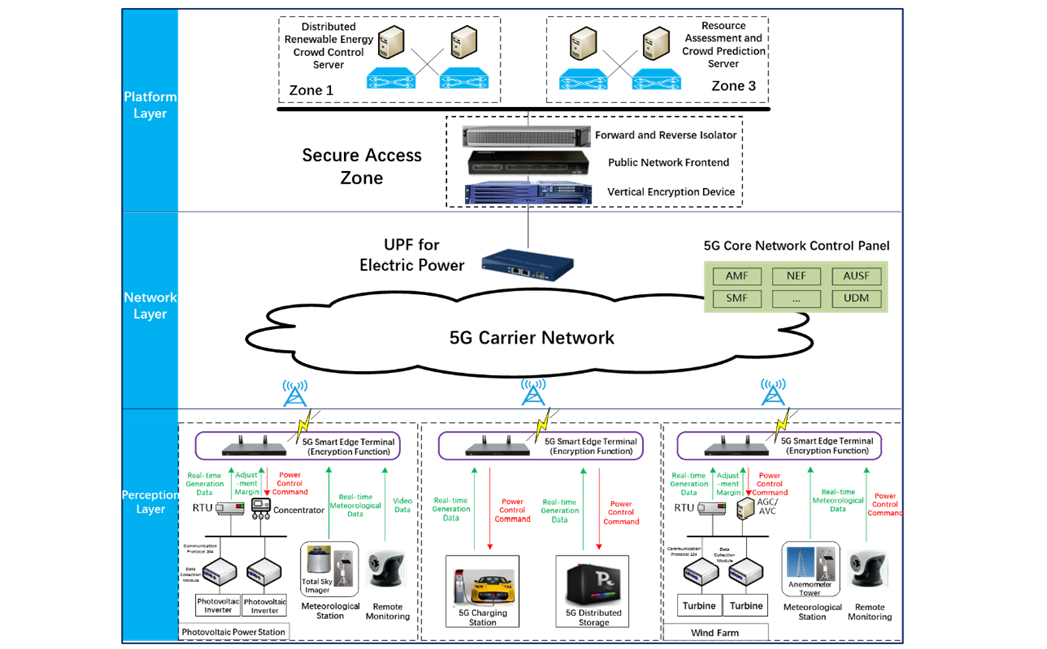
Figure 1 - 5G-enabled smart grid field application supporting real-time monitoring and control
A key result of the brochure is that 5G is shown to be relevant across the entire power system chain. For renewable energy integration, 5G can improve the observability and controllability of distributed energy resources. It can support the transmission of operational data, equipment status, and meteorological information, enabling better monitoring, forecasting, dispatching, and fault response. This is especially important as large numbers of small and geographically dispersed renewable energy sites become connected to distribution networks. 5G can help move these resources from limited data collection toward real-time interaction and coordinated operation.
For transmission networks, the brochure highlights the value of 5G in online monitoring, high-definition video inspection, unmanned aerial vehicle inspection, and construction-site management. Transmission assets often operate over wide areas and in complex environments where external damage, severe weather, icing, difficult terrain, and inspection workload create operational risks. 5G-supported monitoring and inspection can help improve situational awareness, reduce manual inspection pressure, and accelerate the identification of potential hazards.
Distribution networks represent one of the most promising areas for 5G application. As distribution systems become more active and complex, services such as distribution automation, differential protection, phasor measurement, advanced metering, and precise load control require communication with much stronger performance guarantees. The brochure shows that these services differ significantly in latency, bandwidth, reliability, connection density, time synchronization, and security requirements. Differential protection and precise load...
ELECTRA, is the digital magazine of CIGRE, you can obtain access as part of a CIGRE membership. Find out more about joining options here.
Other Technical Brochures