Reimagining System Protection for a Grid Dominated by Inverter-Based Resources
This article examines why widespread IBR adoption forces a rethink of how we design protection systems, explores cutting-edge technological solutions, and argues for an interdisciplinary approach to ensure grid reliability in our inverter-dominated future.

Principal Engineer and Manager – RMS Energy
Introduction - A Grid Transformed
The global energy landscape is witnessing an unprecedented transformation. According to the International Renewable Energy Agency (IRENA), renewable energy capacity reached 3,372 GW globally by end-2022, with solar and wind, both Inverter-Based Resources (IBRs), accounting for approximately 90% of new renewable additions. This rapid proliferation represents the most profound transformation in the power system landscape in over a century.
Traditional protection philosophies, from electromechanical relays to modern digital platforms, were built on the predictable behavior of synchronous machines. Distance elements estimate fault location from impedance under stable voltage-current relationships. Directional elements depend on consistent phase angles, and overcurrent protection assumes high short-circuit contributions from rotating machines. Widespread IBR adoption breaks these assumptions and requires a fundamental redesign of protection concepts, not just incremental changes to fault detection methods.

Figure 1 - Solar, battery energy storage system, and wind power – reflecting the rise of IBRs
The IBR Challenge: Fundamental Behavioral Differences
The protection challenges posed by IBRs arise from their fundamentally different fault response compared to synchronous machines. Traditional generators contribute substantial short-circuit current, typically 5 - 10 per unit in the subtransient period, driven by electromagnetic characteristics of the machine. In contrast, IBRs usually limit fault current to about 1 - 1.5 per unit at the utility scale, constrained by control strategies that protect power electronic components.
This represents a shift from natural electromagnetic behavior to software-controlled fault ride-through. The apparent impedance of IBRs varies dynamically with control modes and operating conditions, and their current contribution depends strongly on terminal voltage rather than network impedance. As a result, the relationship between voltage, current, and fault location that underpins traditional protection becomes less reliable.
In addition, IBRs can change their electrical behavior within a disturbance faster than many protection elements can track. Control mode transitions and current limiting can cause measured quantities to evolve in ways that make distance, directional, and overcurrent elements see a moving target instead of a stable fault signature.
Specific Protection Element Vulnerabilities
Distance relays used in transmission protection face major challenges in IBR-dominated systems. They calculate impedance from voltage and current measurements during faults, assuming predictable behavior from synchronous machines. But IBRs regulate current based on terminal voltage and internal controls, not system impedance, often distorting apparent impedance and providing limited negative-sequence current that compromises ground distance elements, especially under weak infeeds.
Directional elements face added complexity under IBR conditions, including misoperation from phase angle shifts and power flow reversals during fault ride-through. Traditional assumptions, about unidirectional power flow, break down when IBRs maintain controlled output to support grid voltage, confusing directional logic designed for synchronous generation.
Overcurrent protection suffers from inadequate fault detection due to limited current magnitude. Fault detection based on current increase may fail when IBR contributions resemble load levels, and instantaneous elements may respond too late or not at all.
Emerging Solutions: Next-Generation Protection Technologies
Traveling-wave protection (TW) offers a paradigm shift toward ultra-high-speed fault detection independent of source characteristics. By detecting electromagnetic transients initiated at fault inception (rather than relying on fundamental-frequency measurements), traveling-wave methods operate independently of fault current magnitude, making them inherently suited to weak-infeed conditions.
Experience from pilot projects shows fault location accuracy within 150 meters and operating times under 3 milliseconds. Several European and North American transmission operators have deployed traveling-wave schemes on IBR-connected lines, reporting reliable operation even during minimum conventional generation periods when distance protection would struggle with low short-circuit ratios.
Synchrophasor-based wide-area protection enhances visibility and coordination across IBR-dominated grids. Phasor Measurement Units (PMUs) provide real-time, time-synchronized data that allow protection schemes to adapt based on actual system conditions rather than fixed settings. Several utilities in North America and Europe are piloting or expanding PMU networks to improve wide-area monitoring and facilitate coordinated protection responses, particularly in regions with high IBR penetration.
Differential protection remains one of the most dependable schemes in IBR environments, particularly for transformer, buses, and transmission line. Line differential protection has proven especially valuable for IBR-connected transmission circuits where distance protection struggles with weak infeed conditions.
To address low and rapidly decaying fault current, modern differential relays use enhanced sensitivity, adaptive restraint, and filtering to remain secure. Some incorporate IBR-specific features that adjust thresholds based on fault duration or harmonic content, improving reliability under dynamic conditions.
The Grid-Forming Inverter Promise
Grid-forming inverters show promise for restoring more predictable system dynamics during faults, including improved voltage support and fault current behavior. Unlike grid-following inverters that respond to grid voltage and frequency, grid-forming inverters exhibit voltage-source behavior similar to synchronous machines. This characteristic provides more predictable fault characteristics, enabling conventional protection schemes to operate more reliably.
Advanced grid-forming inverters incorporate inertia emulation, improving system stability and protection coordination. By providing virtual inertia, these systems help maintain system frequency during disturbances, giving protection systems more time to respond appropriately. Enhanced fault current capability through advanced control algorithms enables grid-forming inverters to provide higher short-circuit contributions when needed.
IEEE Standard 2800 establishes performance requirements for utility-scale IBRs, including fault current contribution, frequency response, and ride-through behavior, with ongoing amendments addressing grid-forming capabilities.
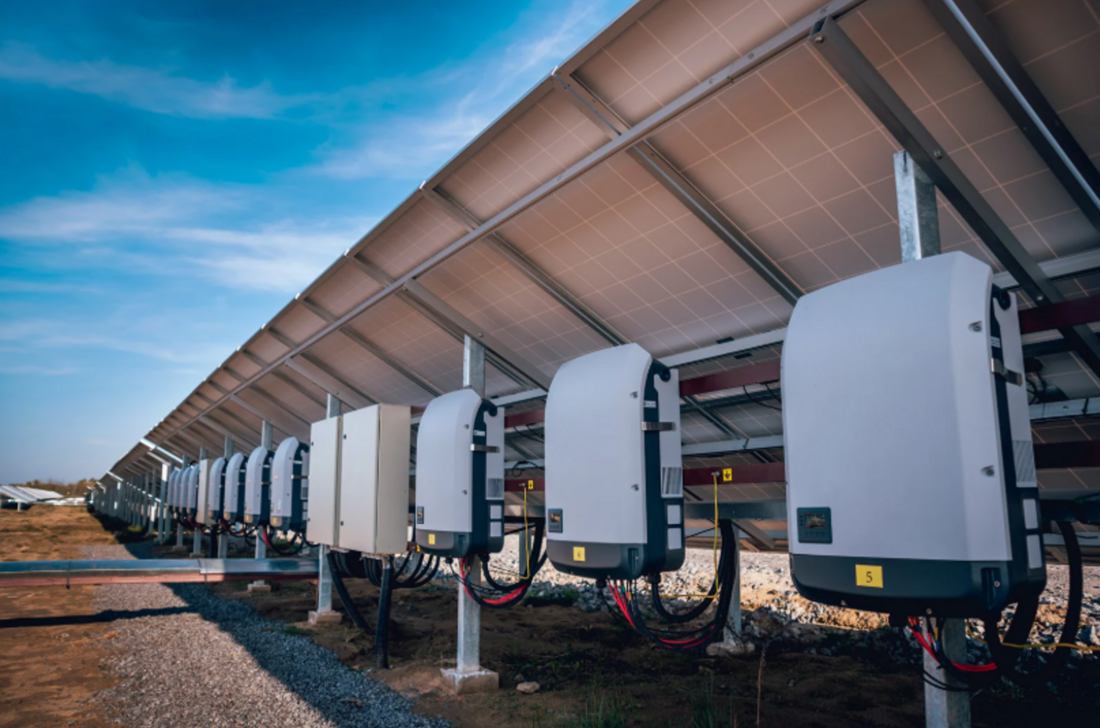
Figure 2 - Solar inverters converting PV DC to grid AC, linking IBRs with traditional protection
Adaptive and Intelligent Protection
Emerging research in machine learning is exploring how to identify subtle fault signatures in IBR environments. Data-driven algorithms can learn from historical records to distinguish between normal inverter control actions and true faults, which may reduce false operations and improve sensitivity to evolving conditions. For now, most applications remain at pilot or research stage, and broader adoption will require robust validation and operating experience.
Real-time parameter adjustment allows protection settings to adapt continuously to system conditions. As IBR penetration and network topology change throughout the day, protection devices can modify thresholds and characteristics based on live measurements, supported by communication-assisted schemes that coordinate responses across multiple terminals or substations.
As these approaches rely more heavily on communications and data exchange, cybersecurity becomes an integral part of protection design. When protection functions are implemented over IEC 61850 architectures or cloud-connected platforms, they must remain resilient to cyber threats without sacrificing the speed and dependability required for fault clearing.
Standards and Industry Response
The standards community has responded actively to IBR protection challenges. IEEE Standard 2800 defines utility-scale IBR performance requirements, while IEEE 1547 updates establish interconnection requirements for Distributed Energy Resources (DERs). These standards provide the foundation for consistent IBR behavior that protection systems can rely upon.
NERC initiatives include inverter-based resource performance standards and modeling guidelines that help utilities understand IBR behavior during system disturbances. These efforts focus on ensuring that IBRs contribute positively to grid reliability rather than creating new vulnerabilities.
CIGRE Working Group B5.48 specifically addresses protection of IBR-connected systems, developing technical brochures that provide practical guidance for protection engineers. International coordination through IEC 61850 communication protocols enables modern protection systems to share information across vendor platforms and geographic boundaries.
Industry Collaboration Imperatives
Utility–vendor partnerships support the joint development of IBR-aware protection, aligning emerging technologies with real-world needs. University–industry collaborations are also advancing protection algorithms through focused research.
Data sharing initiatives enable anonymous sharing of protection performance data for industry learning. These programs help identify common challenges and effective solutions without compromising competitive information. Testing and validation programs establish standardized procedures for IBR protection performance evaluation.
The Path Forward: Interdisciplinary Integration
Breaking traditional silos requires integration of protection, power electronics, controls, and communications expertise. Protection engineers must understand IBR behavior while power electronics specialists must consider protection requirements. This interdisciplinary approach ensures that protection considerations influence IBR design from the outset.
Holistic design integrates protection requirements early in the IBR development process, rather than as an afterthought. Industry-wide knowledge sharing helps translate individual lessons into broader improvements. Future-proofing means building protection systems ready for even higher IBR penetration in the years ahead.
Conclusion: Innovation and Collaboration
The transition to IBR-dominated power systems demands evolution in protection philosophy and technology. Traditional approaches remain valid for many applications, but protection engineers must now account for current-limiting behavior, voltage-dependent fault response, and rapid control dynamics that differ fundamentally from synchronous machine characteristics.
Our industry has reached a point where coordinated action on protection adaptation is no longer optional. As IBR penetration approaches 50% and beyond, each year without systematic updates to schemes, settings, and models reduces the margin for safe operation. Achieving robust, adaptive protection requires focused engagement from utilities, vendors, standards bodies, and researchers, together with wider use of Electromagnetic Transient (EMT) simulation tools to design and validate protection performance in IBR-rich networks.
Protection systems must act as enablers of the clean energy transition rather than constraints on it. Reimagining protection for the modern grid calls for strong interdisciplinary collaboration, sustained technological innovation, and EMT-based protection studies so that the rapid growth of renewable generation is matched by the reliability, security, and resilience demanded by today’s complex and interconnected power systems.
About the Author

With over 16 years of international experience in Power Systems Engineering, Madjer Santos has specialized in System Protection, P&C design, and HV substation engineering across transmission, distribution, renewable, and industrial sectors. His expertise includes protection coordination, system modeling, relay settings, and compliance studies for utilities and generation facilities in Canada, the U.S., and Brazil.
Throughout his career, Madjer has led major protection projects for utilities and renewable developers, integrating modern protection philosophies into evolving grid environments. He has trained engineering teams and delivered workshops on topics ranging from Protection Coordination to the Impact of inverter-based resources (IBRs) on System Protection.
Madjer is a licensed Professional Engineer across Canada and the U.S., with PMP and MBA credentials, and is an active member of IEEE and CIGRE. His sessions emphasize clarity, practicality, and mentorship, helping engineers build strong foundations in Protection & Control while adapting to the new realities of a modern grid.

Want to go further? Discover related Publications on eCIGRE
► TB 896: Protection for developing network with limited fault current capability of generation
► TB 832: Guide for electromagnetic transient studies involving VSC converters
► TB 977: Education, qualification and continuing professional development of engineers in protection, automation and control
► TB 847: Cyber Asset Management for HVDC and FACTS
► CIGRE Green Book: Power System Dynamic Modelling and Analysis in Evolving Networks
Suggested content