Guidelines for Site Acceptance Testing of DTS and DAS Systems
Distributed Temperature Sensing (DTS) and Distributed Acoustic Sensing (DAS) systems have become critical technologies for monitoring and maintaining power cable infrastructure. These advanced systems provide real-time temperature and acoustic data, enabling utilities and renewable energy producers to detect and address potential issues proactively. These Fibre optic-based DTS and DAS systems offer significant advantages over traditional monitoring methods.
Given their growing importance, comprehensive guidelines for Site Acceptance Testing (SAT) are essential to ensure reliable performance under diverse operational conditions. This Technical Brochure addresses a clear knowledge gap by defining a structured SAT process for commissioning of DxS systems and their related applications. It also lays the groundwork for future standardisation efforts by organisations such as IEEE and IEC.
Members
Convenor (CA)
Sudhakar CHERUKUPALLI
Secretary (NO)
Tony LUCIGNANO
Florian AINHIRN (AT), Sridhar ALAPATI (SE), Max BOHANA (US), Marco BRAMBILLA (IT), Matthieu CABAU (FR), Jeffree CAIRNS (AU), Lukas DOMURATH (DK), Johan HANSSON (NL), Alan HOEY (IE), Baojun HUI (CN), Krisztian JANI (BE), Mohsen KAVIAN (NL), Anqiang LV (CN), Landry MOLIMBI (US), Simon DE RIJCKE (BE), Etienne ROCHAT (CH), Davide SARCHI (IT), Henni SCHOLTZ (ZA), Jinron TAN (JP)
Introduction, Objectives of this Technical Brochure
Distributed Temperature Sensing (DTS) and Distributed Acoustic Sensing (DAS) technologies have become essential tools for monitoring and maintaining power cable infrastructures. These advanced systems deliver real‑time temperature and acoustic data, enabling utilities and renewable energy operators to detect emerging issues before they escalate. Compared to traditional methods, DTS and DAS offer significant advantages and have the ability to detect events that could otherwise go unnoticed.
DTS systems are instrumental in detecting and monitoring hot spots along underground and submarine transmission and distribution cables. DAS systems, widely used in the oil and gas industry, are now finding applications in power cable surveillance, providing early warnings of potential threats such as unauthorised excavation or offshore vessel activities over power cables. The evolution of fibre optic sensing technologies has brought about unprecedented precision and reliability in fault detection and monitoring. DAS systems, for instance, have demonstrated superior accuracy in locating cable faults compared to traditional Time Domain Reflectometry (TDR) techniques. The integration of these systems into power cable infrastructure promises enhanced asset utilisation and reduced risks of overheating and cable damage.
The need for comprehensive guidelines for Site Acceptance Testing (SAT) of these systems is paramount to ensure their reliable performance in diverse operational environments.
Despite the proven capabilities of DTS and DAS systems, field deployment poses unique challenges. Factors such as fibre differences, environmental conditions, and installation variables can impact system performance. Factory Acceptance Tests (FAT) typically demonstrate system capabilities under controlled conditions, but real-world environments require more rigorous and comprehensive SAT to verify performance.
The main objective of a SAT is to validate the operational performance of DTS and DAS systems in their installed environments. This involves confirming that the systems accurately reproduce temperature, strain, and acoustic signals along the cable length, and ensuring that these signals are reliably transmitted to the control centre. Several key parameters tested during SAT include:
- Temperature Measurement Accuracy: Ensuring the system accurately measures cable temperatures, which directly impact transmission capacity.
- Acoustic Signal Detection: Verifying the system's capability to detect and locate acoustic events, such as unauthorised excavation or cable faults.
- Spatial Resolution: Assessing the system's ability to pinpoint the exact location of detected events along the cable length.
- Data Integration: Ensuring seamless integration of data with the utility's control centre for real-time monitoring and decision-making.
- Validity of predictions by Real Time Transmission Ratings (RTTR) or Depth of Burial (DoB) software
Structure and Content of the Technical Brochure
The TB provides a comprehensive framework for conducting a SAT. It outlines the required planning and contractual obligations, details the procedures for performing the SAT, specifies the duration of the SAT, and defines the components of the handover and SAT documentation. Additionally, it addresses considerations for the end user's long-term strategy, such as including end-of-warranty testing in the contract, incorporating soak periods, and defining any post-SAT requirements.
Figure 1 presents an overview of the content within the Technical Brochure.
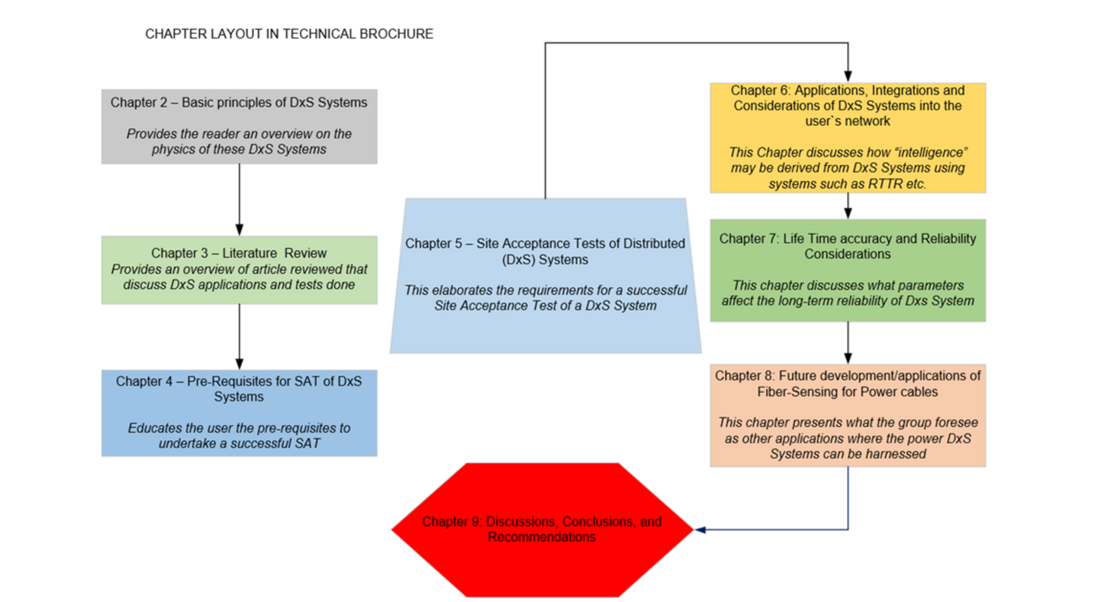
Figure 1 - General Layout of the content in the Technical Brochure
A section in Chapter 4 of the TB discusses the importance of the fibre location with respect to the power cable. The fibre location will have an impact on the monitoring system (configuration and output, especially in applications such as RTTR, DoB, intrusion/fault location).
DTS systems are increasingly offering advanced "intelligence" capabilities such as RTTR and DoB monitoring. This TB highlights methods for harnessing and verifying these features during the SAT. It also addresses best practices for data integration and flow verification to ensure that the deployed DTS systems consistently deliver reliable, continuous, repeatable, and accurate intelligence.
ELECTRA, is the digital magazine of CIGRE, you can obtain access as part of a CIGRE membership. Find out more about joining options here.
Other Technical Brochures