DC Systems and Power Electronics
by Joanne Hu, Chair, & Rebecca Ostash, Secretary
Scope of work
The scope of SC B4 covers DC systems and Power Electronics (PE) equipment in both transmission and distribution systems. The study committee also addresses DC Converters for the integration of renewables (WTGs and PVs) and energy storage as well as power quality control. SC B4 covers the full spectrum of DC systems and PE devices including specification, design, implementation, operation, maintenance, refurbishment of DC systems and FACTS devices. B4 also covers the new technologies/concepts of DC and FACTS needed for enabling the energy transition.
Current and trends
The DC market is growing even more rapidly, driven by energy transition to achieve net-zero goals in 2050 globally. The VSC HVDC is becoming the preferred DC technology for new HVDC systems with increased voltage and power ratings enabled by the higher power IGBTs converter and new configurations as well as the technical advantages it offers in the integration of renewables. Although renewable energy is marching its way to reach 2030 and 2050 milestones worldwide, the delivery of HVDC power capacity is presently constrained by the capacity of HVDC suppliers especially on the engineering and chain of sub-suppliers. Increased delivery capacity is required to achieve targeted DC market demand. The average number of planned/executed HVDC projects for the next 7 years is estimated to be about eight per year before the HVDC suppliers ramp up their capacity. Assuming doubled delivery capacity from year 2030 to 2040, and tripled capacity from 2040 to 2050, most likely the DC delivery capacity up to 1000GW can be achieved by 2050.
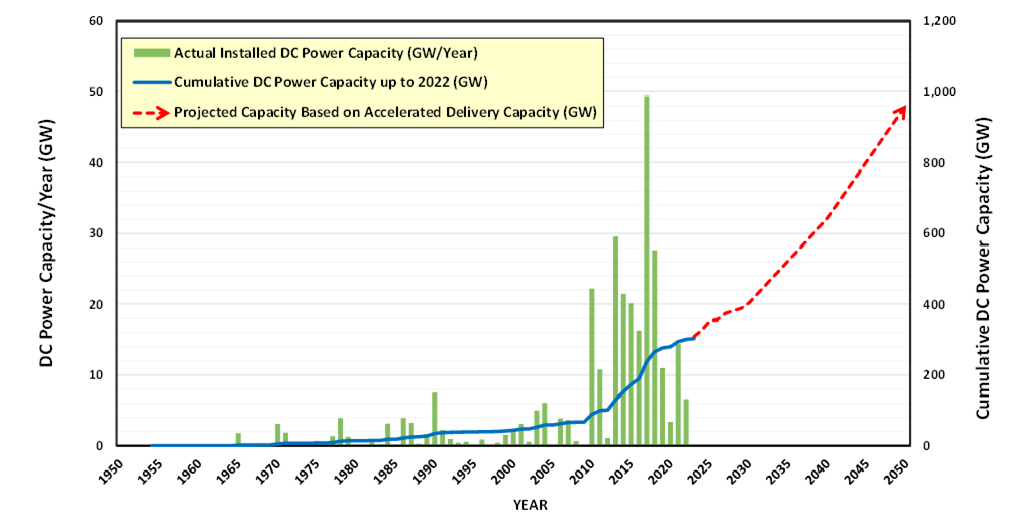
Figure 1 - DC Power Transmission Capacity (1970-2050)
In addition to the point-to-point DC connections, the technologies, standardized requirements and multi-vendor interoperability associated with multi-terminal HVDC and HVDC Grids are further advanced to provide flexible and reliable interconnection and integration of the existing and future power grids for power transfer and energy exchange, including those involving offshore wind farms and energy islands.
The Flexible AC Transmission System (FACTS) market is also growing with increased power rating of Static Var Compensator (SVC) and Static Synchronous Compensators (STATCOM) projects to support the transmission of AC power, improve voltage stability and support the change of generation patterns within the AC networks. PE devices are being more widely used in the distribution system for power quality control and voltage regulation.
Structure and membership of SC B4
SC B4 is organized with four advisory groups, NGN group, WiE group and twenty working groups as well as twenty-four regular members and twelve observers as shown in Figure 2. The members of SC B4 come from transmission system operators (TSOs), manufacturers, utilities, distribution system operators (DSOs), consultants, universities, and research institutes. In 2022, SC B4 welcomed twelve new regular members and four observers.
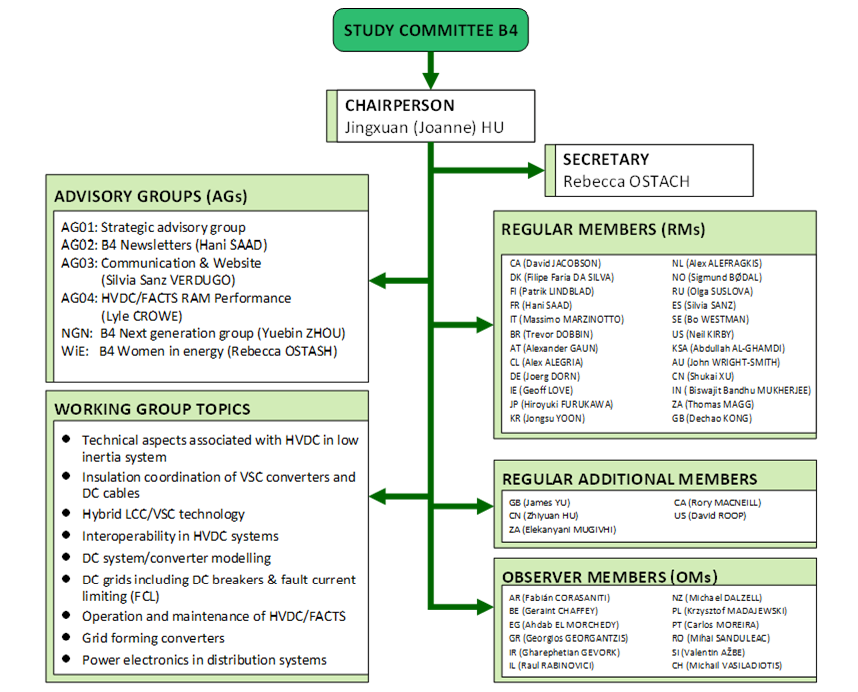
Figure 2 – Organization of Study Committee B4
Working Group focuses
The focuses of B4’s Working Groups include the following areas:
- Application of increased power and voltage rating of VSC HVDC for both offshore and onshore renewable energy interconnections
- Standardization and digitalization of Offshore platforms
- Implementation of Interoperability of HVDC systems constructed by various HVDC OEMs for flexible and reliable operation and control of largely interconnected power system through HVDC system
- DC interconnectors and establishment of DC grid(s)/multi-terminal HVDC systems to increase power transmission capacities and to reduce existing network congestions (AC network overlay), to enable power trading, to share spinning reserve, and to reduce energy costs
- Tackling the technical challenges associated with increasing penetration of power electronics system/devices in the power system
- Development of the technologies of inverters with Grid-Forming control capabilities to improve and enhance the reliability and stability of the PE dominated power system with integration of growing renewable generations and battery storage resources
- Application of higher power and voltage rating of FACTS device to support the flexible transmission of AC power, improve voltage stability and the change of generation patterns within the ac networks
- Application of DC technologies and PE in distribution system for better power quality control
- MVDC applications such as connection of large solar parks
- Operational experience and performance of VSC-HVDC systems
Completed Working Groups
Four Working Groups including two Joint WGs completed their work and published Technical Brochures in 2022:

Active Working Groups and Joint Working Groups
SC B4 has twenty active Working Groups including fifteen B4 WGs and four joint WGs with other SCs as well as one joint task force.
- WG B4.64 - Impact of AC System Characteristics on the Performance of HVDC schemes
- WG B4.69 - Minimizing loss of transmitted power by VSC during Overhead line fault
- WG B4.71 - Application guide for the insulation coordination of Voltage Source Converter HVDC (VSC HVDC) stations
- JWG B4/B1/C4.73 - Surge and extended overvoltage testing of HVDC Cable Systems
- WG B4.79 - Hybrid LCC/VSC HVDC Systems
- WG B4.81 - Interaction between nearby VSC-HVDC converters, FACTs devices, HV power electronic devices and conventional AC equipment
- WG B4.82 - Guidelines for Use of Real-Code in EMT Models for HVDC, FACTS and Inverter based generators in Power Systems Analysis
- WG B4.84 - Feasibility study and application of electric energy storage systems embedded in HVDC systems
- WG B4.85 - Interoperability in HVDC systems based on partially open-source software
- JWG C4/B4.52 - Guidelines for Sub-synchronous oscillation studies in power electronics dominated power systems
- JWG B4/A3.86 - Fault Current Limiting Technologies for DC Grids
- WG B4.87 - Voltage Source Converter (VSC) HVDC responses to disturbances and faults in AC systems which have low synchronous generation
- TF B4/B1.88 - Insulation coordination procedure for DC cable systems in HVDC stations with Voltage Source Converters (VSC)
- WG B4.89 - Condition Health Monitoring and predictive maintenance of HVDC Converter Stations
- WG B4.90 - Operation and maintenance of HVDC and FACTS Facilities
- WG B4.91 - Power-electronics-based transformer technology, design, grid integration and services provision to the distribution grid
- WG B4.92 - STATCOMs at Distribution Voltages
- WG B4.93 - Development of Grid Forming Converters for Secure and Reliable Operation of Future Electricity Systems
- JWG C2/B4.43- The impact of Offshore Wind power hybrid AC/DC connections on System Operations and System design
- WG B4.94 - Application of VSC-HVDC in a System Black Start Restoration

CIGRE active Working Groups / Call for experts
HVDC Green Book progress
The CIGRE Green Book on High Voltage DC Transmission Systems is taking shape. Ten Chapters out of the projected 53 total chapters have been published and are available at: High Voltage DC Transmission Systems: HVDC | SpringerLink. These chapters can be used as stand-alone reference documents.
An additional 7 chapters have been submitted for publication and should be published shortly. Two additional chapters are expected to be sent for publication shortly. The rest of the chapters are in various stages of being drafted but the issue is that those who are preparing the drafts are inundated with project work but many of the drafts are expected to be available for final review and sent for publication. Hopefully, this will be accomplished before the next B4 meeting in September 2023.
Tutorials and workshops in 2022/2023
| 2022 Paris Session | Aug. 29th 2022 | DC grid benchmark models for system studies |
|---|---|---|
2023 Muscat Symposium | Mar. 8th, 2023 | Guide to Develop Real Time Simulation Models (RTSM) for HVDC Operational Studies |
2023 Vienna Colloquium | Sept. 14th, 2023 | B4.81- Interaction between nearby VSC-HVDC converters, FACTs devices, HV power electronic devices and conventional AC equipment |
2023 Vienna Colloquium | Sept. 14th, 2023 | B4.84- Feasibility study and application of electric energy storage systems embedded in HVDC systems |
2023 Vienna Colloquium | Sept. 14th, 2023 | B4.87- Voltage Source Converters (VSC) HVDC responses to disturbances and faults in AC systems which have low synchronous generation. |
2023 Vienna Colloquium | Sept. 14th, 2023 | Solid state transformer |
2022 CIGRE Paris Session
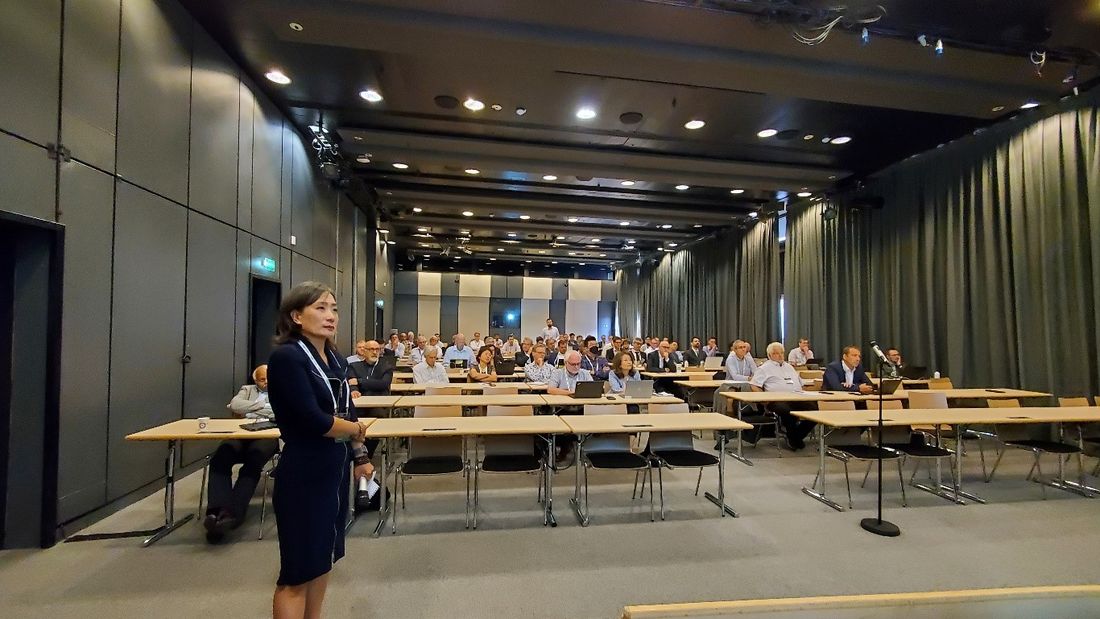
The 2022 Group Discussion Meeting (GDM) of Study Committee B4 was held on the 31st of August in the Grand Amphitheatre at the Palais des Congrès. B4 GDM session was attended by approximately 560 in-person delegates and by approximately 7-10 remote delegates. B4 received a large volume of papers which reflected the large interest in the preferential subjects and the area of HVDC and Power Electronics. The 67 papers, including two NGN papers, were accepted after intensive review by our three special reporters and B4 experts. 21 questions were prepared by the special reporters and were used as the basis for the discussion. The discussion included 60 prepared contributions, one invited presentation from CIGRE young (NGN) members as well as 32 spontaneous contributions.
52 papers were presented at the poster session on 30 August 2022. The poster session was very well attended.
CIGRE Session 2022 Materials
SC B4 Package available on eCIGRE
Free for Members and Delegates
Post and planned SC meetings
SC B4 held the SC meeting on September 1st 2022 at the Paris Session. A total of eighty four (84) members and guests attended the meeting.
SC B4 will host an SC meeting in Vienna, Austria in September 2023.
Participation in Regional Meetings, Colloquia and Symposia
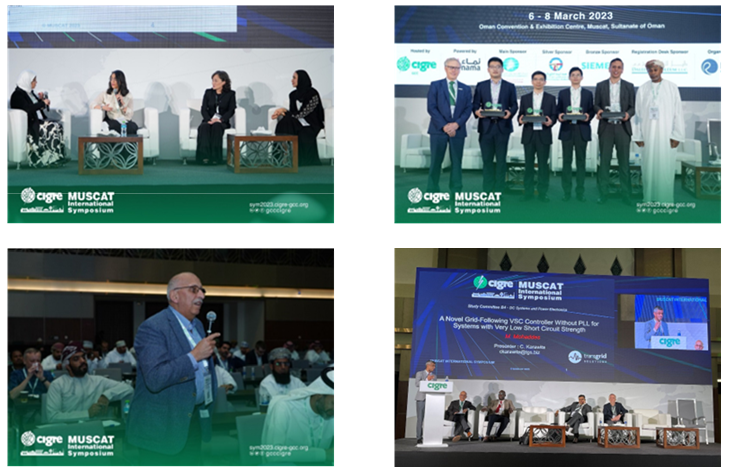
The 2023 CIGRE/GCC Muscat Symposium took place March 6-8, 2023. Joanne Hu and Mohamed Rashwan chaired two B4 sessions, which included 8 B4 papers. Joanne also participated in a WIE panel with several other distinguished women. B4 also presented a tutorial on “Guide to develop real-time simulation models for HVDC operational studies”.
Liaisons and relations with other CIGRE Study Committees and organisations
SC B4 actively collaborates with many Study Committees (A3, B1, B3, C4, D1, etc.) to promote joint effort and knowledge sharing to achieve the best outcome of the Study Committee work. SC B4 continues to cooperate with IEC TC115, IEC/SC22F, CENELEC and IEEE.
SC Website and newsletters
SC B4 actively updates the B4 website to post news and share the latest information of SC B4 activities.
We have published eleven issues of our B4 newsletter to date since October 2020. Our B4 newsletters are tailored to capture and share the latest activities from our B4 community at international/national levels, identifying opportunities, addressing challenges, sharing best practices and latest technologies in DC systems & Power Electronics. In addition, we also share our vision and insight into B4-associated topics/areas, particularly in the context of energy transition. B4 Newsletters are well received by our B4 members. You can read and download B4 newsletters here.
B4 Next Generation Network (NGN) Group
B4 established an NGN group in 2020. A lot of discussion was made during the B4 SC meeting on the NGN members in Paris. The significance of younger members’ participation and contribution to B4 has been well recognized and acknowledged by many working group conveners. The next step of B4 NGN group is to identify the roles for NGN members to play on how the NGN Group can make essential changes and improvements in daily B4 activities and what are specific objectives in the bridge between local/international NGN Groups to the B4 NGN group, aside from naturally promoting participation in SC B4 activities.
B4 Women in Energy (WiE) Group
Ten percent of B4 members are women. We initiated a WiE group within B4 and had a kick-off meeting in May 2022 and an in-person meeting on August 30, 2022 during Paris session. The goals of B4 WiE would be to increase women involvement in B4 through membership, working group participation (convenor or member), leadership, mentorship, knowledge and experience sharing as well as to participate in CIGRE WIE forums at Paris sessions and include WIE slot at all future B4 events. Presently, B4 has 48 women engineers and plans to meet during the Vienna 2023 Colloquium.
Since starting my carrer in academia, I have been a member of several B4 Working Groups over the past decade. Through those Working Groups meetings and workshops, I have been fortunate to interact with many passionate and talented members across the globe, each team member is driven by a continual desire to innovate and contribute. I personnaly have found B4 events excellent venues to learn from industry leaders, use valuable research resources, stay up to date on the latest technologies, and more
Contact
Suggested content