Substations and Electrical Installations
By Koji Kawakita, Chair, & Samuel Nguefeu, Secretary
Introduction
For CIGRE and SC B3 members around the world, the year 2022 has once again found its sparkle. The CIGRE Paris Session in August brought together many experts for lively discussions and networking.
Meanwhile, new ways of working under the New Norm have taken hold, with people making the most of online meetings and online tools to efficiently continue communication between members and technical activities such as working groups.
Substations continue to play a key role as nodes within electrical networks, providing the capability for the network to deliver safe, reliable energy with high availability under above circumstances.
To support the realisation of a sustainable society with energy transition, substations’ research & development continues to make advances in new technologies and applications that offer substation owners and operators the flexibility, security and stability they need to continue to expand their systems in an efficient and environmentally friendly manner.
The focus area for SC B3 is the coordinated design and operation between transmission and distribution to facilitate more flexible and active distribution networks. Facilitating this connectivity to support the integration of decentralised renewable energy resources, energy storage, and more active customer participation with bilateral power flow is increasingly essential. At the same time, these challenges need to consider asset management practices that can identify the best use of installed assets by optimising their functionality, interventions and lifetime.
The challenges mentioned above have resulted in several new initiatives:
- Dealing with the increased impact on substation design and new applications to support energy transitions such as integration of renewable energy resources, energy storage systems and other installations.
- Mitigating environmental, health, safety and security impacts, including the reduction of Green House Gas emission and the substation carbon footprint
- Substation design, operation and maintenance resilience against natural disaster, threat (terrorism, epidemic, physical/cyber, etc.)
- Optimising substation asset intervention (retrofit, uprating, upgrading, renewal, extensions).
- Increased substation operational efficiency and availability.
- Integration of intelligence for digitalisation.
- New set of skills for new technologies, knowledge transfer and high standards of education in development of engineering skills.
These solutions aim to include the needs of developing communities and emerging economies, as well as those of established industrialised countries.
The SC B3 mission is to:
- Facilitate and promote the progress of engineering and the international exchange of information and knowledge in the field of substations and electrical installations.
- Add value to this information and knowledge by synthesising state-of-the-art best practice and developing recommendations and guidance.
SC B3 has a keen focus on the rapid changes in the utility industry, with an eye on design concepts and new environmentally green and sustainable materials for energy transition.
Strategy and Direction
The SC B3 strategy and direction are continuously reviewed to ensure it meets our stakeholders' needs. Our current strategic plan covers the period from 2018 to 2028. The main technical directions are the following.
T1. New substation concepts
Development of new concepts including bus arrangements, hybrid solutions, new applications and functions. The impact from distributed generation and power flow control systems including specification of corresponding design/layout criteria for substations constituting integral parts of totally optimised networks. Reduction of carbon footprint impact through new technologies.
T2. Substation ownership issues
Organisational aspects including human resource and training needs, in-service support, software management including quality control and maintenance. Management of assets including environmental, health, safety, and security.
T3. Life cycle management
Monitoring in-service experience, substation condition assessment, aspects of maintenance outsourcing, short- and long-term needs, opportunities for cost reduction, spare parts. Increased utilisation (life extension, upgrading, and dynamic loading), refurbishment /renovation concepts, and investment strategies, principles for combining existing and new equipment, accounting for specific demands from network-reliability and customer demand-side points of view.
T4. Integration of intelligence for digitalisation on substations
New digital technologies (Artificial Intelligence, Internet of Things, 3-Dimensional technology etc.) and applications to be used in all aspects of substation design, operation and management. Identify the opportunities offered from the increased use of advanced information and communication technologies.
A key focus is considering how to improve the opportunities for younger member participation in connection with CIGRE “Next Generation Network” as well as increasing the involvement of women experts in our activities coordinating with the “Women in Engineering” initiative.
Membership and Experts
Our work continues through the support of our national committee representatives, substation specialists and experts from across the globe. We are working with country representatives, 24 regular members plus an additional 4 members representing electricity sectors other than transmission and 15 observer members. Strategic/Customer/Tutorial advisory group and Quality Assurance team also support our work in their respective roles.
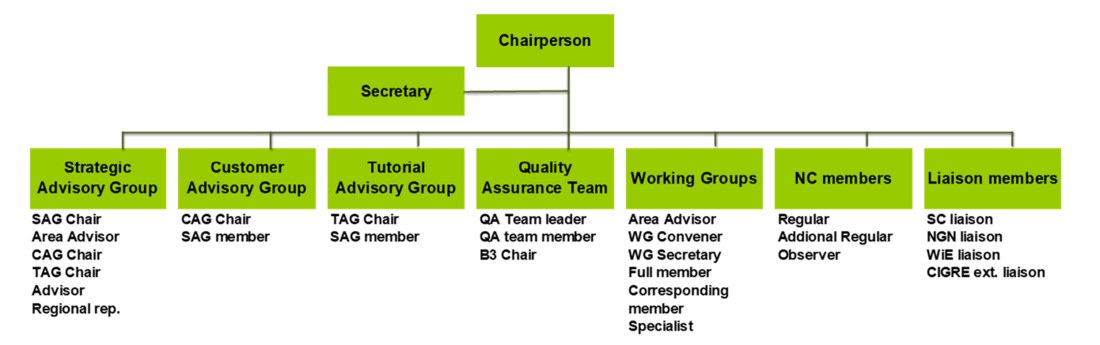
Figure 1 - Study Committee B3 Organisational Structure
2022 Paris Session and B3 annual meeting
The 2022 Paris Session and B3 annual meeting was held in person first time since COVID-19 pandemic. All delegates recognised the value of face-to-face communication at the meeting.
The preferential subjects for the 2022 Session, which demonstrates our commitment to assist asset owners and operators in adapting substations to meet the needs for energy transition but also to meet the ongoing challenge in managing substations throughout their life cycle, meeting community expectations for health and safety and the environment. The 2022 preferential subjects were:
Preferential Subject 1: Increased impact of clean energy transition on Substation Design
- On-Offshore wind, PV, Geothermal, etc.
- Energy Storage, Hydrogen, Synchronous compensators, etc.
- GIS/GIL application for DC network
Preferential Subject 2: Sustainability Management Challenges in Substations
- External drivers for substation intervention such as resilience, reliability, security of supply, life expectancy coordination, etc.
- SF6 alternatives and emission management, Circular economy of materials such as reuse, reduce, recycle.
- New set of skills for new technologies, Knowledge transfer and high standards of education in engineering skills
Preferential Subject 3: Integration of Intelligence on Substations (Joint PS with B5)
- Data analytics, remote supervising & monitoring and autonomy application
- IoT and Machine learning applications based on Protection Automation and Control data including asset management, monitoring and data analysis
- Expectations and benefits from digital substation, IEC 61850 Principles and applications to substations
The B3 Group Discussion Meeting was held on the 30 August 2022. It was exciting opportunity to set joint PS with B5 for PS3.
Assuming this reason, high number of attendees (740) was marked. 72 contributions including one NGN showcase in answer to the questions in the B3 special report were presented. The session questions and comments amounted to 28 (15 questions via the Sparkup app, plus 13 spontaneous contributions) were discussed.
CIGRE Session 2022 Materials
SC B3 Package available on eCIGRE
Free for Members and Delegates
The Study Committee B3 annual meeting was held on 1 September.
At the meeting, 2024 preferential subjects highlighted energy transition and sustainable substation management, member interests for new WG topics, and so forth were discussed. Daniel Stafford, B3 liaison of NGN and Khayakazi Dioka (leaving), Solange David (incoming) Chair of WiE were invited to the meeting to present each organisations activities and discussions with B3 members for mutual understanding.
The next annual meeting for Study Committee B3 will be held in person on 5 September 2023 during the Cairns Symposium 2023.
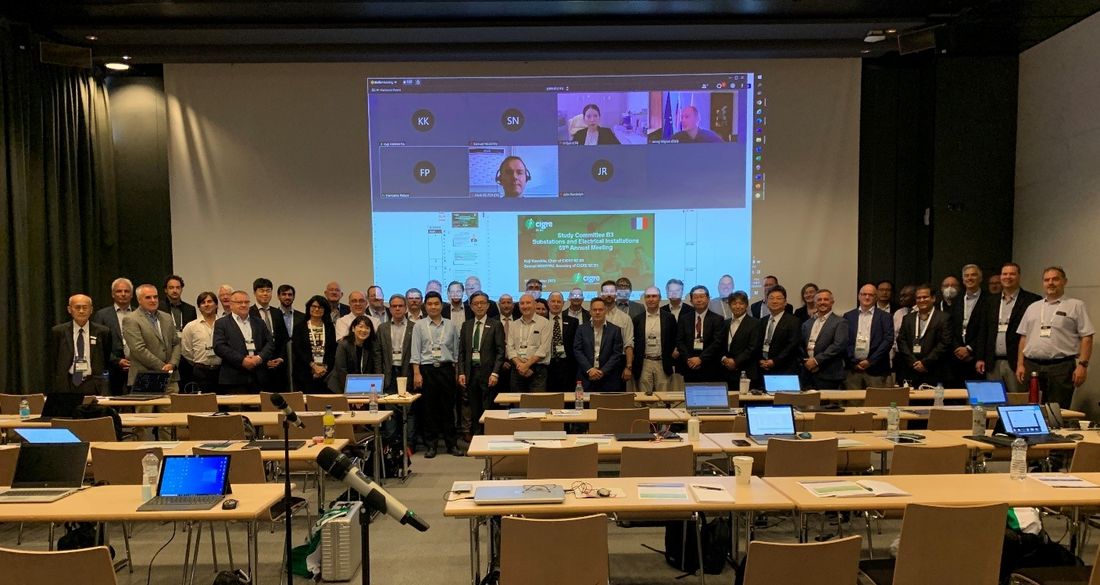
Study Committee B3 annual meeting group photo
Working Groups
The Working Groups (WGs) are the “engine room” of CIGRE technical work. Our WG are arranged in 4 key work areas, which facilitate how we organise our work, bringing together our global experts to focus their understanding to achieve our objectives. Area advisors coordinate and align Working Group activities to the SC B3 Strategy, with responsibilities to support SC B3 Chairperson. Young members are particularly encouraged to join WGs as supporting or active members.
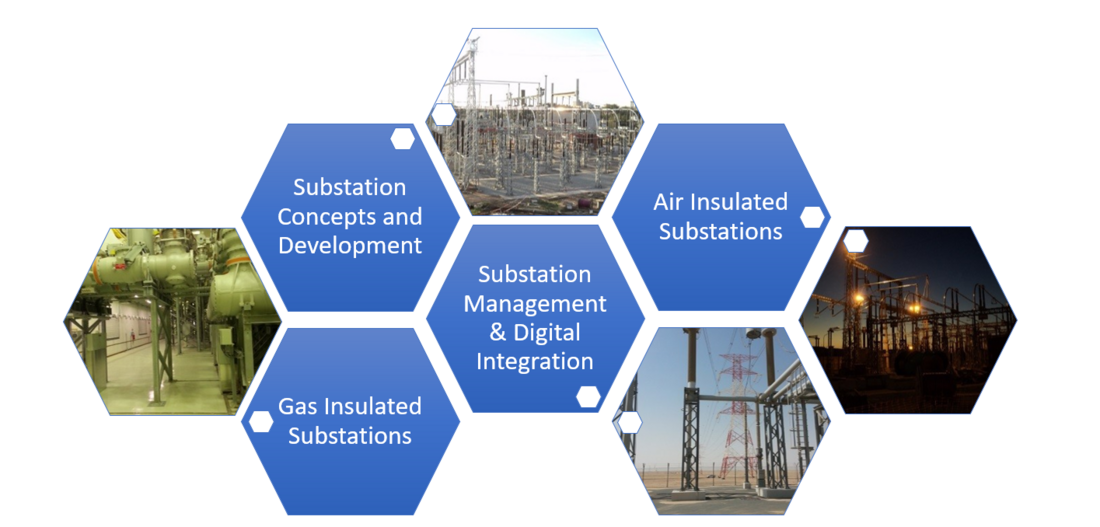
Figure 2 - SC B3 Work Areas
SC B3 has approximately 350 experts from across the globe from 43 countries are involved in 12 Working Groups plus 6 Joint Working Groups (4 B3 led and 2 led by other SCs) and 1 Green Book project as of 31th December 2022 (Figure 3).
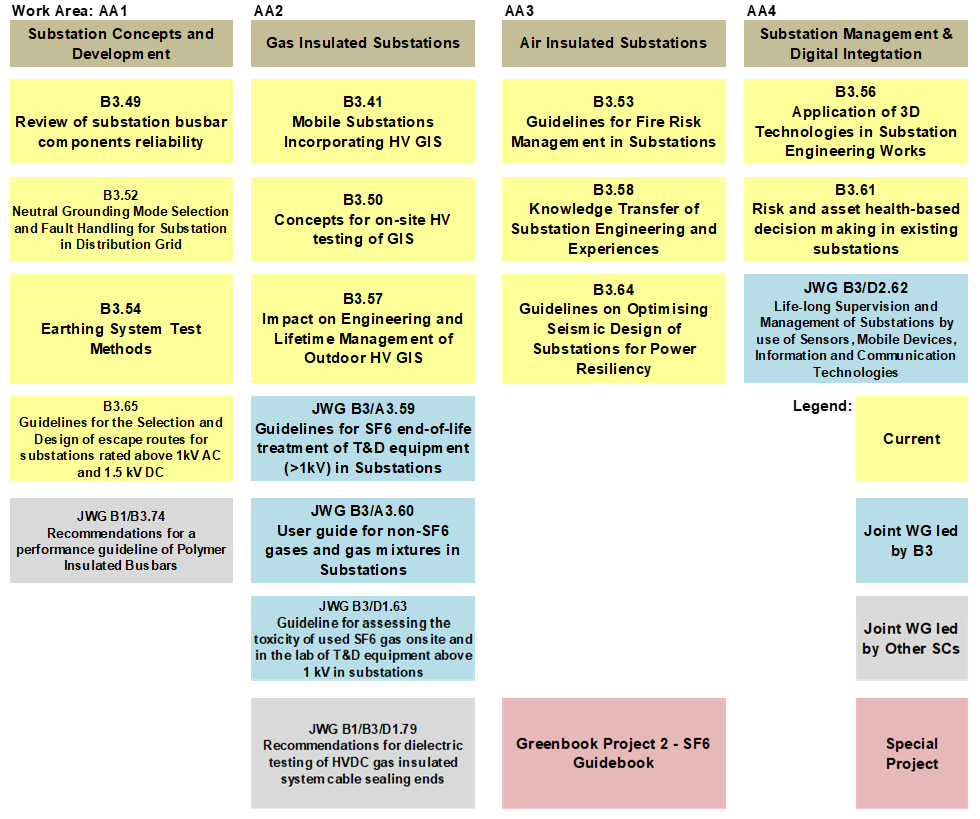
Figure 3 – Study Committee B3 WGs
New WGs that were recently approved include:
- JWG B3/D2.62 - Life-long supervision and management of substations by use of sensors, mobile devices and information and communication technologies
- JWG B3/D1.63 - Guideline for assessing the toxicity of used SF6 gas onsite and in the lab of T&D equipment above 1 kV in substations
- WG B3.64 - Guidelines on optimising seismic design of substations for power resiliency
- WG B3.65 - Guidelines for the selection and design of escape routes for substations rated above 1kV AC and 1.5 kV DC
Many new topics are currently under discussion such as:
- LCA focusing on carbon footprint impacts in substations
- Guidelines for managing black start resilience in substations
- Experience in offshore substation operation and maintenance
- LPIT (Low Power Instrument Transformers) with digital interfaces for revenue metering
- Earthing system design guidelines for high voltage substations
WGs are not possible without support from National Committees in nominating suitable experts and specialists to participate in the work. We value and encourage all National Committees to review each new terms of reference and to consider appropriate experts available to support them.

CIGRE active Working Groups / Call for experts
Publications
3 Technical Brochures (TBs) were published in 2022 for Study Committee B3 including:
Also, new Technical Brochures were published recently:
The following Working Group brochures are expected to be completed in 2023:
- B3.49 - Review of substation busbar components reliability
- B3.52 - Neutral grounding mode selection and fault handling for substation in distribution grid
- B3.54 - Earthing system testing methods
- B3.56 - Application of 3D technologies in substation engineering works
- B3/A3.59 - Guidelines for SF6 end-of-life treatment of T&D equipment (>1kV) in Substations
- Green Book: SF6 Guidebook - a Springer publication
Tutorials and Workshops
Tutorials and workshops are an important opportunity that shares new knowledge of substation concepts and developments, management and challenges. Tutorials are based on the outcomes of our study in WGs and their associated TBs. Tutorials can be arranged in association with any CIGRE event and are an excellent way for our experts to present their work and share knowledge. 4 tutorials and 2 workshops were held in 2022.
- Kyoto, Japan – CIGRE Kyoto Symposium 2022, 5 April 2022
- Application of Robotics in Substations (Remote)
- Application of Robotics in Substations (Remote)
- Vienna, Austria - CIGRE 3rd SEERC Conference, 31 May 2022
- Expected Impact of Future Grid Concept on Substation Management
- Expected Impact of Future Grid Concept on Substation Management
- Paris, France – CIGRE Session 2022, 31 August 2022, 2 September
- A3/B3 Joint Workshop - SF6 Alternatives for T&D substation and switchgear
- Asset Health Indices for Equipment in Existing Substations
- Workshop - Knowledge Transfer of substation engineering
- Saudi Arabia – CIGRE GCC 2022, 14 November 2022
- Management of Risk in Substations (Remote)
Follows are planned in 2023:
- Birmingham, UK – CIGRE B3&A3 Joint Colloquium, 9 May 2023
- Service Continuity Guide for HV GIS Above 52kV
- Impact on Engineering and Lifetime Management of Outdoor HV GIS
- Asset health indices for equipment in existing substations
- B3/A3 Joint plenary session: What's the future of SF6 and it's alternatives for use in Transmission & Distribution equipment
- Cairns, Australia – CIGRE Cairns Symposium 2023, 6 September
- Knowledge transfer of substation engineering and experiences
- Another tutorial: TBA
- Bucharest, Romania – 7th Edition CIGRE CMD 2023: TBD
- UAE - CIGRE GCC POWER 2023 Conference & Exhibition: TBD
Events
Upcoming special events for the SC B3 include:
- Birmingham, UK – 2023 SC B3 and A3 Joint Colloquium, 9-12 May 2023
- Cairns, Australia – CIGRE Cairns Symposium 2023, 4-7 September 2023
- Bucharest, Romania – 7th Edition CIGRE CMD 2023, 31 October-2 November 2023
- UAE - CIGRE GCC POWER 2023 Conference & Exhibition, November 2023
- Paris, France – 2024 CIGRE Session, 25 -30 August 2024
Award
CIGRE Technical Council Award
This award is granted to a few CIGRE Members as a reward for their active participation in the activities of the technical work of the Study Committees. In 2022, the award was delivered to Uwe Schichler (AT) in recognition of his outstanding contributions to the life and work of the study committee. Uwe was appointed B3 Special Reporter from 2018 to 2022 and B3 regular member from 2014 to 2022.
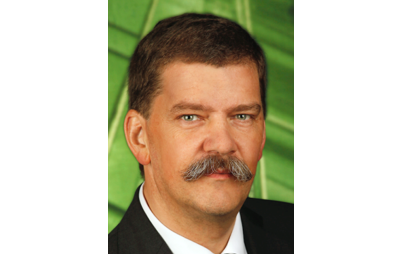
Uwe Schichler
CIGRE SC B3 Outstanding Service Award
The Outstanding Service Award of CIGRE SC B3 is granted by the SC Chair annually to two of its members in recognition of outstanding participation in and contribution to the SC's technical work. In 2022, this award was delivered to Piet Knol (NL) and Jan Bednarik (IE).
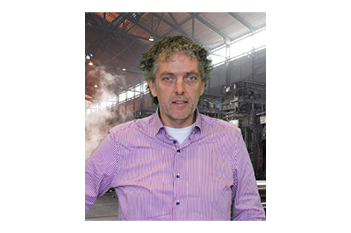
Piet Knol
Piet served as B3 regular member from 2010 to 2016 and Chair of B3 Tutorial Advisory Group (TAG) from 2012 to 2020. He participated in several WGs in the past and published Technical Brochure “802: Application of non-SF6 gases or gas-mixtures in medium and high voltage GIS”. Currently, he is the convener of JWG B3/A3.60 “User guide for non-SF6 gases and gas mixtures in Substations“.
Jan played an several important roles under B3. He was contributor of Substation Greenbook - Part H “Substation Management Issues” and published Technical Brochure “858: Asset health indices for equipment in existing substations”. Currently, he is the convener of WG B3.61 “Asset health based risk management in existing substations”.
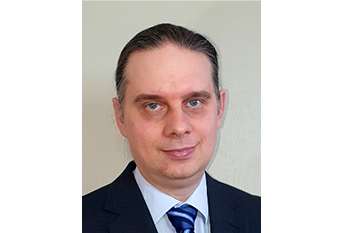
Jan Bednarik
Conclusions
As Chairperson, I am extremely grateful for the support of our members and experts for their patience and dedication under the current situation. I also appreciate members’ organisations to support them as we continue developing the future power network. SC B3 continues to keep an eye on the utility industry's rapid changes and works on new challenges with our experts for an environmentally friendly and sustainable future.
Contact
Suggested content