Active distribution systems and distributed energy resources
By Kurt Dedekin, Chair, & Evert De Haan, Secretary
Introduction
The energy transition is in full flight, and the C6 related activities form part of shaping the destiny of this new energy future that we are currently witnessing.
A measure of the success of our contributions within the C6 working activities, is the progress that is shown towards meeting the universal Sustainable Development Goal (SDG7). Whilst significant progress has been made towards improved energy efficiency worldwide, the access to electricity remains out of reach to 675 million people. Despite advancement being made across the indicators, the current pace of delivery is not sufficient to achieve the 2030 targets.
Whilst the uptake of renewable energy has grown in the last decade, efforts must be scaled up to increase the share of renewables in the total energy mix to meet the decarbonisation targets that have been agreed upon internationally. If the world is to be on track to limit the temperature rise to less than 1.5°C, the share of renewable energy must increase substantially (In the electricity sector, renewable energy would need to increase to 60-65 percent of all electricity generation).
Decarbonisation gives rise to the adoption of Distributed Energy Resources (DER). The C6 Study Committee activities provide the framework for managing the increased uncertainty and variability associated with the introduction of larger percentages of DER. The outcomes are geared towards providing the world at large access to electricity, whilst ensuring a more reliant, sustainable, and resilient network for such access.
Technology advances have also introduced measures to manage the variability and flexibility requirements associated with an increased penetration of DER in distribution systems. This also implies that greater synergy is required to manage the interfaces between the generators, the Distribution System Operators, and the customer, to ensure a balanced outcome.
Background and Scope of SC C6 Activities
Over the last decade there has been an increased focus on distributed energy resources (DER) deployed in distribution systems. DER includes distributed generation, which in turn includes conventional systems (diesel engines, gas turbines, CHP), renewable resources (wind and solar based generation), energy storage systems (battery energy, thermal and inertial storage), and demand response methods (controllable and curtailable loads). Transportation, technology changes and electrification trends have also introduced further disruptors that have altered the distribution landscape.
Increased levels of DER penetration have impacted the planning requirements and the associated operations of distribution systems. The variability associated with the integration of DER into distribution systems, has required increased visibility and controllability of these systems at local and grid level. It has also required the DSO to respond to an increased flexibility required from the System Operator to balance, and to meet the ancillary services to manage and coordinate the distribution grids. Advanced operating systems are required to ensure that the interface between the System Operator and the DSO, and in turn between the DSO and the customer, can respond to the dynamic requirements of the grid. Distribution system reliability and resilience, together with grid stability, are core to such operational interfaces.
As DER displaces part or all the central generation, the DSO play an increasing role in the dispatch of generation on its interface with the Transmission System Operator (TSO). Increasing consumer involvement in demand-side management options, including a responsiveness to market and pricing signals has also ushered in new requirements for the DSO. The advent of Electric Transportation, Multi-Energy Systems and Power to X has introduced a series of additional planning and operational requirements for the distribution systems.
This evolution of electricity grids is also driven by new technologies, including the digitalisation of grid control and management, which brings significant benefits and disrupt conventional approaches. It also is challenged by societal and environmental concerns and pressures, namely decarbonisation and energy sustainability, including the move away from fossil fuel use. In addition, there is a trend towards deregulation of the electricity markets, and requirements for increased resilience and reliability of the energy supply. DER will play a key role in the evolution of power grids, by contributing to the decarbonisation and sustainability agenda, providing flexibility resources to ensure the reliability and resilience of power grids, and by allowing end users to play an increasing role in the operation of the electric gird and participate in electricity markets. Finally, DER deployment can be an approach that will facilitate rural and remote community electrification.
Distributed energy resources and active distribution systems can therefore contribute to key elements of the CIGRE technical directions, which include (a) innovative solutions for DER and distribution technology deployment, (which includes the interface with the prosumer); (b) new approaches to configure, plan and operate new and reinforced distribution systems for enhanced reliability and resilience; (c) rural electrification, islanded power systems and individual customer off-grid systems and solutions;(d) energy efficiency and demand side management solutions.
Distributed energy resources, which include technologies mentioned above, are displayed in Figure 1. These assets and resources are the key drivers for deploying active distribution systems. They are increasingly included in the planning and operation of distribution systems. They make distribution grids more controllable and responsive, enhance the role of the Distribution System Operator (DSO) and enable consumer participation in electricity markets. DER, as it displaces part of the central generation, has an increasing impact on central power generation dispatch and the consequent impact on the operation and stability of transmission systems.
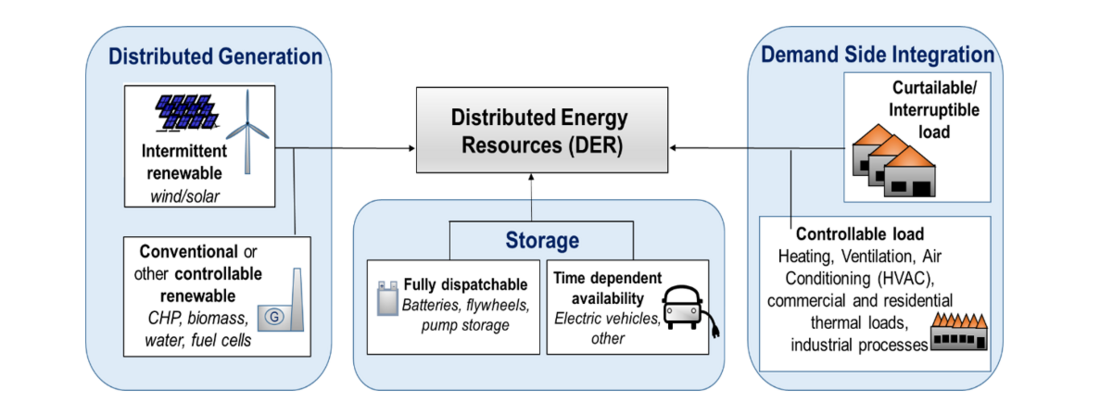
Figure 1 – Distributed Energy Resources (DER) – key enabler for renewable energy systems
Distributed generation, an element in the DER asset base, includes generation from renewable energy resources, which in practice are predominantly solar and wind power. These resources are variable and intermittent in nature and need to be balanced to provide dispatchable power to the grid. The flexibility of these operations can be managed using electricity storage (batteries) and demand response mechanisms. Distributed generation assets may also export power into the grid. The aggregation of DER is thus an effective way of managing many DERs, including smaller solar panels and battery energy storage systems at residential, small industrial and commercial levels. Concepts and tools such as microgrids, virtual power plants (VPP), as denoted in Figure 2, or software platforms such as DER management systems (DERMS) can thus aggregate and manage DER over a wider area as part of an active distribution system.
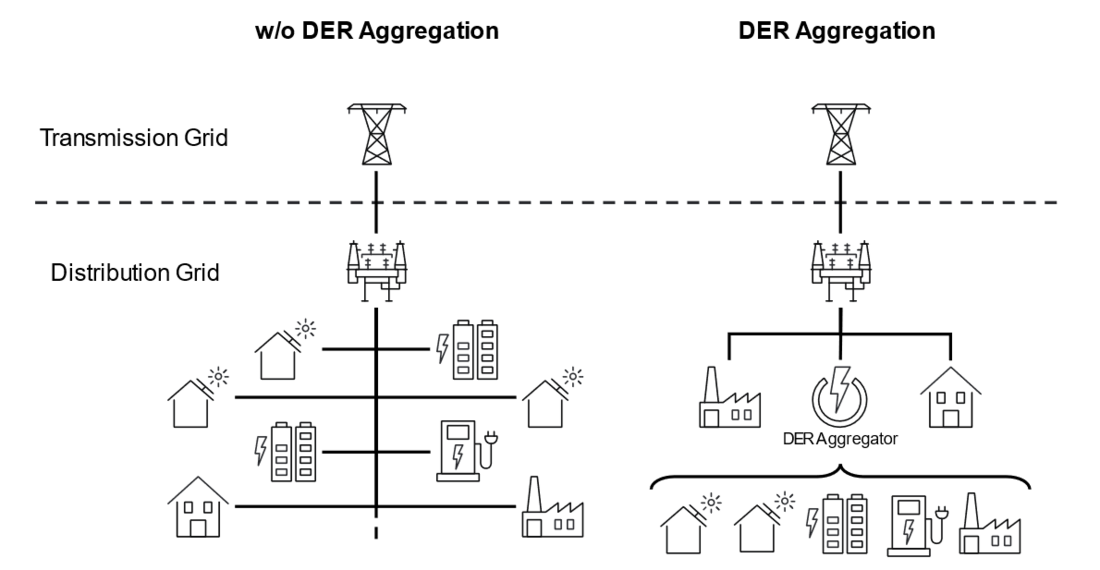
Figure 2 – DER deployment and aggregation – active distribution systems
SC C6 Mission and Scope
The activities of SC C6 are mainly concerned with the technology, the deployment of distributed energy resources (DER) and the impact of these on distribution grids. DER include assets are shown in Figure 1.
The SC C6 Working Groups are thus structured by using building blocks shown in Figure 3 as a platform for its activities:
The activities are principally concerned with the assessment of the technical impacts and requirements which a more widespread adoption of distributed energy resources (DER) including renewable generation units, storage applications and customer integration that could impose on the structure and operation of the whole energy system.
In parallel, the Study Committee should assess the degree to which such solutions are likely to be adopted in the short, medium, and long term. The practical importance and timing of the related technical impacts and requirements should also be assessed.
Through its work the Study Committee strives to objectively analyse the implications of DER and distribution technologies to become an internationally recognized forum on this evolving subject. Thus, the following topics are in the focus of SC C6:
- Technology, integration and operation of distributed energy resources and the associated active distribution systems - Analysis of the different approaches and solutions and to assist various players in distribution systems to make DER more controllable, visible, and responsive (active distribution systems with enabled customer involvement) and enhance the role of the Distribution System Operator (DSO) and its Distribution Management System (DMS).
- Technological field of activity - Innovative equipment and systems for DER and distribution technology deployment; customer integration and empowerment; enabling technologies for DER integration and application; storage technologies and multi‐energy technologies, electric transportation, rural electrification, and off‐grid systems.
- Distributed generation, from conventional (diesel, gas turbines, CHP) to renewable resource (wind and solar) based generation, energy storage systems (battery energy storage, thermal and inertial storage), and demand response strategies (controllable and curtailable loads).
Applications of interest may be reflected as:
- Enabling technologies for renewable and distributed energy resource integration and application: active network management, microgrids, virtual power plants, distribution management systems (ADMS, DERMS), DER monitoring and control, aggregation systems, platforms, blockchain applications
- Innovative solutions for DER and distribution technology deployment: smart inverters and power electronic interfaces and interconnection device applications, MV/LV DC supply systems, distribution system modernization
- Storage technologies: deployment of various storage technologies such as electrochemical electric battery energy storage systems, flywheels, flow batteries, and new storage technologies, hydropower, hydrogen, multi-energy solutions (with thermal storage), power2X applications (power to heat, power to gas …), electric vehicles.
- New approaches to configure new distribution systems for enhanced reliability and resilience: islandable grid-connected microgrids, power exchange between microgrids, meshed grids, MV and LV DC considerations.
- New approaches to determine the impact and plan and operate distribution systems in the context of a wide deployment of DER, including the analysis of hosting capacity, network stability and protection requirements
- Consumer integration and empowerment: Demand side integration and participation, demand response, load management, smart load, new customer sectors such as electric vehicles, smart home, and smart meter applications with impact on distribution systems.
- Smart cities: integrated distribution system technologies, power, control and information and communication technology deployment for flexibility, integration of multi-energy systems.
- Rural Electrification, islanded power systems and individual customer off-grid systems and solutions
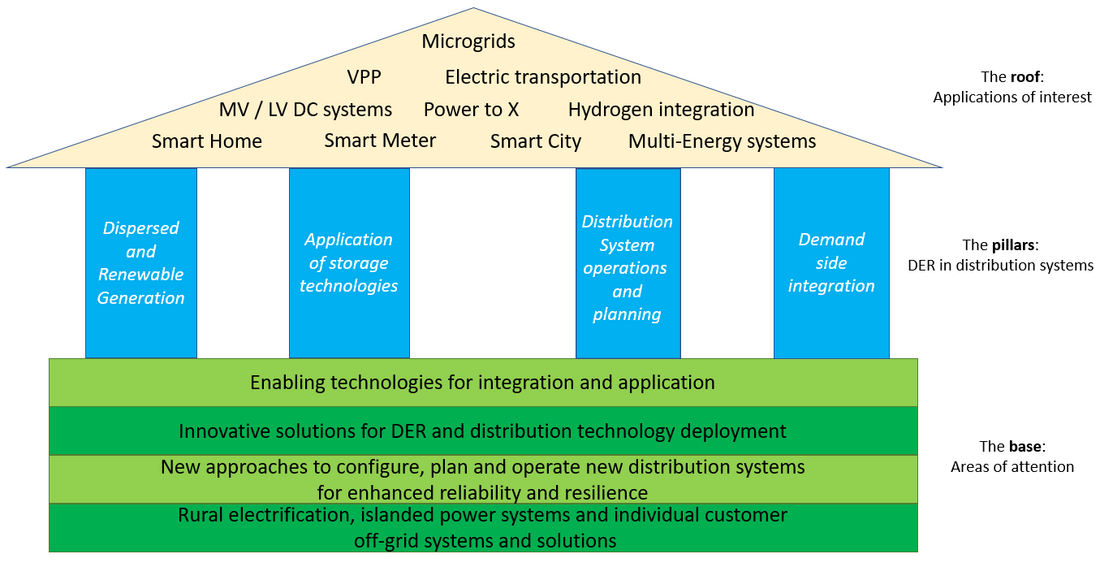
Figure 3 – Elements and building blocks of SC C6 technical activities
Structure and Membership
The SC is composed of 24 regular members, 4 additional members, 19 observer members, and a Chair and Secretary. Represented are 46 countries.
The membership includes stakeholders that have an interest in the topics covered by the Study Committee work. They include distribution planning and operations engineers and system operators, power system planning consultants, technology providers, manufacturers, applied information and communication technology experts, and researchers from academia and government laboratories. These stakeholders contribute to the effective collaboration platforms that shape the outcomes of the Working Groups.
The Study Committee also collaborates through Joint Working Groups (JWG) with other Study Committees, including SC B4 – HVDC and Power Electronics, SC C1 – System Development and Economics, SC C2 – System Operation and Control, SC C4 – System Technical Performance, SC C5 – Electricity Markets and Regulation, and SC D2 – Information systems and telecommunication.
Advisory Groups in C6 assist with the strategic direction setting and functioning of the Study Committee activities. The Advisory Group activities (AG) include:
- AG 01 – Strategy.
- AG 02 – Quality control of brochures and paper reviews.
- AG 03 – Delivery of Tutorials.
- AG 04 – Women in Energy (to be established)
- AG 05 – NGN co-ordination
- AG 06 – Communication
- AG 07 – Rural Electrification (with a close link to the Africa Working Group)
The composition of the WG activities and the strategic support provided by the respective Advisory Groups is portrayed in Figure 4.
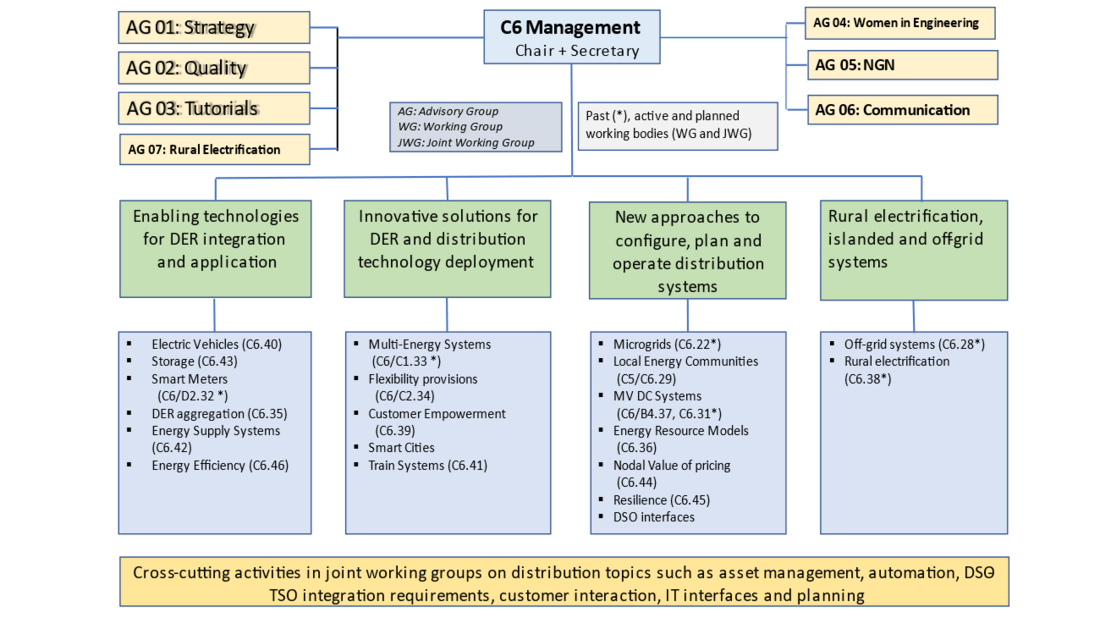
Figure 4 – Structure of SC C6 and associated technical activity
Current Technical Activities of SC C6 Working Groups
Current technical activities are addressed in the active Working Groups listed in Table 1. These cover the elements of the SC C6 technical activities structured in Figure 4, and with references to Figure 3 and the list in the Table 1. They include the following focus areas:
- Drivers for DER deployment and integration in distribution systems (areas of attention) – covered in WG C6.38 (rural electrification), JWG C6/C2.34 (DER flexibility provision), JWG C1/C6.37/CIRED (investment decision under uncertainty), JWG C1/C6.42 (planning for high levels of DER), WG C6.36 (DER models for impact studies), WG C6.43 (Aggregation of battery energy storage and distributed energy resources (DER), including solar PV). WG C6.45 (The Impact of DER on the Resilience of Distribution Networks)
- Enabling DER technologies (pillars for DER) – covered in JWG C6/C1.33 (multi-energy systems, as generation), WG C6.40 (electric vehicles as DER, as storage), JWG D2/C6.47 (Advanced consumer side energy resource management systems), WG C6.39 (customer empowerment, as demand response).
- Innovative solutions for DER and distribution system technologies and deployment (applications) – covered in JWG C6/C1.33 (multi-energy systems), JWG C5/C6.29 (local energy communities participating in markets), WG C6.39 (customer empowerment), WG C6.35 (DER aggregation platforms), JWG C6/B4.37 (medium voltage DC distribution systems), WG C6.42 (Electric Transportation Energy Supply Systems), WG C6.44 (Nodal Value of Distributed Renewable Energy Generation).
WG | Title of the Working Group | Approval | Convenor |
|---|---|---|---|
JWG C6/C2.34 | Flexibility provision from distributed energy resources | 2018 | P. Mancarella (Australia) |
WG C6.35 | DER aggregation platforms for the provision of flexibility services | 2018 | A. Oudalov (Switzerland) |
WG C6.36 | Distributed Energy Resource Models for Impact Assessment | 2019 | J. Taylor (USA) |
WG C6.39 | Distribution customer empowerment | 2018 | M. Ross (Canada) |
WG C6.40 | Electric Vehicles as Distributed Energy Resource (DER) systems | 2019 | J. P. Lopes (Portugal) |
WG C6.42 | Electric Transportation Energy Supply Systems | 2020 | M. Albano (UK) |
WG C6.43 | Aggregation of battery energy storage and distributed energy resources (DER), including solar PV | 2020 | N. Hatziargyriou (Greece) |
WG C6.44 | Nodal Value of Distributed Renewable Energy Generation | 2021 | K. Reiche (Germany) |
WG C6.45 | The Impact of DER on the Resilience of Distribution Networks | 2022 | N. Faarooqui (New Zealand) |
WG C6.46 | Energy Efficiency in Distribution Systems | 2023 | A. Pandarum (South Africa) |
WG C6.47 | DSO - Customer interfaces for efficient system operation | 2023 | D. Eghbal (Australia) |
JWG C1/C6.37/CIRED | Optimal transmission and distribution investment decisions under increasing energy scenario uncertainty | 2018 | J.C. Araneda / |
JWG D2/C6.47 | Advanced consumer side energy resource management systems | 2018 | A. Nebera (Russia) |
JWG C1/C6.42 | Planning tools and methods for systems facing high levels of distributed energy resources | 2019 | C. Higgins (UK) |
JWG C5/C6.29 | New markets, local energy communities | 2019 | A. Toccoen (France) |
Scope of Active Working and Joint Working Groups
JWG C6/C2.34 – Flexibility provision from distributed energy resources
The scope of the WG is to analyse, assess and promote the role and potential of distributed energy resources (DER) in providing ancillary services, particularly flexibility, and participating in balancing market and whole-system operation. It will review drivers and new requirements for flexibility at different stages of power system planning and operation at different levels of the power system, from the whole-system to the local network, with a focus on DER based on intermittent renewables and compile information on the potential of DER and multi-energy coupling to provide flexibility over different time scales, and in different forms, including generation (inverter interfaced), energy storage (batteries, thermal storage, e-vehicles, gas infrastructure), demand response (industrial installations, individual buildings or district energy systems), and flexible assets (transformer tap changers and voltage regulators, dynamic thermal rating) and operations (active power control of renewable energy, TSO - DSO coordination). The WG analyses the contribution of DER to operational and planning flexibility in transmission and distribution networks in current and future power systems, considering market structures, in providing multiple services of their choice to TSOs or DSOs, facilitated by new actors (aggregators) and grid architectures (interconnections, microgrids, virtual power plants, and energy hubs interlinkage, among which Vehicle to Grid (V2G) and Power to Gas (P2G). It will identify and discuss experiences and case studies and explore new business cases for emerging technologies and new market models. Finally, it will provide recommendations and guidelines regarding commercial, regulatory and policy changes required to exploit the flexibility provided by DER.
WG C6.35 – DER aggregation platforms for the provision of flexibility services
The objectives of this WG are to collect and analyse information on technical, economic, and regulatory aspects of DER aggregation and to analyse methods for integrating aggregated resources into network planning and operation. Economically attractive DER aggregation approaches, classified according to contracted customers and services offered, as well as aggregator interaction with other major stakeholders such as participation in ancillary services markets, including frequency regulation, capacity and energy markets, bilateral agreements with distribution network operators. Services covered include voltage support, congestion management, black start and restoration and services to end-users and customers, including backup power. The WG will review of aggregation technologies including DERMS (Distributed energy resource management system), VPP (virtual power plant), and microgrids, considering among others the role of ICT and forecasting, trading, and scheduling optimization and analyse the technological improvements that will allow DER aggregation to move to the next level of controllability and flexibility. Experiences, case studies, regulatory and business model trends will be analysed providing guidelines and existing practices, techno-economic challenges, and solutions for the deployment of DER aggregation platforms.
WG C6.36 – Distributed Energy Resource Models for Impact Assessment
The continued proliferation of DER and the convergence of distribution operations with distribution planning require that the models (both planning and real time models for operations) for these DER and their control systems be aggregated to support requirements for TSO/DSO coordination. With these requirements for advanced distribution planning systems, there is a need to develop benchmark models for different types of distributed resources that will be considered in planning studies. The impact of DER will need to be evaluated in a variety of planning studies and assessments – static load flows, quasi-static time-series assessments, fault analyses, harmonic studies, dynamic studies, electromagnetic transient simulation, and reliability assessments. Different DER models will be needed for different assessments – there is a need for industry coordination around the framework for these models, data needs and actual benchmark models for generic types of DER that can be used at the planning stage. There is also a need to consider emerging assessment methods that can be used to better facilitate DER integration, such as probabilistic load flow, hosting capacity and locational value assessments. Additional drivers for this work include the continued development of local energy community concepts where DER is an integral part of the community energy management, the broad penetration of electric vehicles and the potential for advanced electric vehicle charging management, design of Distributed Energy Resource Management Systems (DERMS) as an integral part of future distribution management, and Common Information Model requirements for inclusion of DER in the different types of distribution simulation studies. The scope of this Working Group is to present, analyse, assess and describe the need and possible approaches for benchmark DER models that can be used for a variety of distribution systems studies.
WG C6.39 – Distribution customer empowerment
The scope of this WG is to study the contributions to the operation of distribution systems that can be made by customers through the deployment of DER on their premises, supported by modern control and communication systems. Customer empowerment approaches include providing them the information required to understand their impact in better managing their consumption and the tools available to implement this management in a manner agreed with the distribution system operator. Load shifting and levelling are some of the tools. The WG will explored and elaborate the general context for customer engagement and empowerment opportunities, distribution utility interests, expectations, and requirements in-regard to the consumer. It will analyse the sensing, communication and control infrastructure required, and the implementation of customer empowerment and interaction with stakeholders. It will perform a review of current and planned practices and approaches to empower customers and the available power, control and communications and analyse experiences and examples of deployments and case studies. Guidelines and existing practices, techno-economic challenges and present and future solutions are provided.
WG C6.40 – Electric Vehicles as Distributed Energy Resource (DER) systems
The electric vehicle (EV) battery and its charging system, with or without the addition of a stationary battery, can therefore be used in almost the same manner and with almost the same potential benefits as any BESS type DER. Some of the benefits include demand response management (load shifting and load smoothing), distribution grid resilience enhancement (building back-up power supply, local grid support, enhanced hosting capacity and stability, contribution for islanding operation and black start in microgrids), renewable energy system balancing (solar PV), and ancillary services to the transmission system, particularly when aggregated, for purposes such as ramping and frequency support. This WG deals with the EV charging systems and infrastructure as a key distribution grid enabling technology. The EV battery and charging system technologies are presented from the distribution grid perspective, and the control systems required to enable the multiple benefits these systems can provide are described.
WG C6.42 – Electric Transportation Energy Supply Systems
The scope of this Working Group is the study of the available electric transportation energy sources and supply systems from perspectives related to the relative costs of the equipment, which include capital and operating costs, volume, weight and installation requirements, reliability, availability and maintainability considerations, and the recharging infrastructure requirements and deployment considerations. The energy supply systems to the transportation systems include batteries, hydrogen fuel cells, and electrochemical supercapacitors. Environmental impact, life expectancy and life cycle considerations are covered. The study proposes a comparative evaluation, including technical and economic considerations, of on-board energy supply systems and of the recharging infrastructure. For the on-board energy supply systems, power and energy considerations, range and losses, operating temperatures and environment, safety, security, and risk mitigation are considered. For the stationary installation, the reuse of existing infrastructure and impact on the existing infrastructures (electric power grid, energy supply infrastructures) are considered.
WG C6.43 – Aggregation of battery energy storage and distributed energy resources (DER), including solar PV
The Working Group addresses issues associated with BESS deployment, configuration, design and management in the context of a high penetration of renewable energy resources in distribution systems, including solar PV systems. Issues covered include BESS design and deployment considerations, and the interconnection and integration requirements. The Working Group addresses implementation of BESS controllers for the provision of grid services, and aggregation approaches for managing power and energy, and enabling grid services from a large number of distributed BESS. Economic and business case considerations are addressed. Environmental impact, life expectancy and life cycle considerations of installations are discussed in relation to the different types of applications.
WG C6.44 – Nodal Value of Distributed Renewable Energy Generation
The objective of the WG is to document, discuss and analyse in practical terms how the variable renewable energy (VRE) nodal value concept can be applied more broadly and systematically by public and private power sector planners (and investors). This would allow for the joint optimization for distribution systems and generation expansion of the scaling up of distributed VRE investments, in different countries and energy system contexts. The practical issues and implications of applying the VRE nodal value concept are developed. Issues addressed include: (a) typical economic benefits, directly through reduced distribution losses, and indirectly in terms of providing ancillary services; (b) relevance of VRE nodal value analysis in VRE expansion planning and policies, particularly in weak power grids; (c) integration of the nodal value analysis in other power sector planning methods and procedures; (d) determination of minimum standards for data, modelling and cost benefit analysis information needed to generate robust results, to be used by practitioners and policy makers.
WG C6.45 - The Impact of DER on the Resilience of Distribution Networks
With increased probability and severity of extreme weather events, resilience of the energy system has become a key concern to system operators. Processes before, during and after an event will need to be elaborated upon. Hardening of existing infrastructure should be revisited under the scenario of extreme weather events and global warming. Vulnerability to failure of the upstream network shall be analysed. Distributed Energy Resource integration may enhance and complement existing resilience practices. With electricity becoming the backbone of the entire energy system, and where an increase of decentralized renewable generation of electricity with highly automated operation, cyber security will become an increased risk to manage. Strengthening the inverter-based energy system will be a third element requiring further investigation. This Working Group will focus on how to increase resilience in local and regional energy systems via increased DER integration.
WG C6.46 – Energy Efficiency in Distribution Systems
The potential for energy efficiency measures to address economic growth, facilitate a sustainable and secure energy future, together with a positive impact on the environment is well known. Energy efficiency can however have a pronounced impact in developing and developed countries where the need for access to electricity, and where electrification growth is affecting these requirements. Utilities are battling to keep up with the demand for electricity, grid capacity is becoming constrained, and the capital to expand the availability of energy and improve the quality of supply is scarce. Energy efficiency in electrical systems thus promotes a host of beneficial characteristics that may ultimately assist with the achievement of the Sustainable Development Goals (SDG), whilst also improving environmental and climate outcomes, health, gender equity and associated economic opportunities. The Working Group will thus evaluate energy efficiency measures in electrical networks, the associated impact of the implementation of such programs on power systems and associated customer behaviour.
WG 6.47 – DSO-customer interfaces for efficient system operations
Where DSOs used to design their networks for rather predictable loads and have the required reinforcements in place on time, the world could not be(come) more different. The climate issues (and transition to renewables) force customers to go about their energy use in a different manner, resulting in (rapid) increases in electrical loads (e.g., electric heating and mobility) and generation (e.g., solar and wind) on the distribution networks. The natural reflex for DSOs might be to ramp up their grid reinforcement efforts to support the electrification. However, shortages in staff and materials do not always allow for timely reinforcement and significant grid reinforcement increases the electricity price for customers. Furthermore, low-capacity factors for certain use cases (e.g., for PV) raises the question whether all reinforcements would be cost effective. These developments require the DSOs to grow into their system operator role. Increasingly, the DSO can (due to increased integration of DERs) and needs to (due to capacity constraints) unlock and orchestrate the customer-side flexibility capabilities. It requires increased communication with the customers on the state of the grid and the behaviour that is expected from the customer. Communication between the DSO and the customer requires a defined interface – an interface that goes beyond the capabilities of the regular (smart) energy meter. The Working Group is to investigate the requirements for communication, data exchange, visibility and controllability between a customer and its DSO. These requirements will be translated to (high level) design considerations for such an interface. Note that different design choices may be made for different types of customers and include the role of aggregators. These design considerations will help move towards international best practices and standards for information exchange between DSOs and customers.
JWG C1/C6.37/CIRED – Optimal transmission and distribution investment decisions under increasing energy scenario uncertainty
Transmission and distribution investment decisions can no longer be made independently by power system or market executives. This is because environmental, social and political issues are important factors to be taken into account at the moment the investment is subject to its approval. It has meant long lead times to develop transmission infrastructure (longer than the time required for approving and building a new renewable DER based power plant). On the distribution side, populated cities and towns generally imply pushing for the use of underground distribution infrastructure that competes with residential expansion or local requirements. Significant increase in DER integration, interconnection with other grids, and utilization of Smart Grid technologies makes transmission and distribution system planning more challenging than in the past. Users’ measurements and data are available at both TSO and DSO level, including active power exchange measurements, load and generation data and interconnection capability data. Through an appropriate data exchange methodology and Information and communication (IT) architecture it should become possible to determine robust plans with efficient resource allocation. This Working Group will summarize learnings from several prior SC C1 and SC C6 WGs which focused on the planning decisions, methodologies and implications derived from the growing integration of DER.
JWG D2/C6.47 – Advanced consumer side energy resource management systems
Recent advances in Industrial Internet of Things, Blockchain and other new information and communication technologies (ICT), as well as methodology and experience gathered e.g., in Transactive Energy pilot projects, provide a potential platform to deal with the DER control and integration challenge at the consumer level. The scope of this Joint Working Group (JWG) includes an analysis of the current state of new ICT applicable for coordinated or shared control of multiple DER, and the important interactions between control systems of electric power utility, generation or load aggregator and consumer. It will provide guidelines for the selection and use of ICT for various business cases involving utilities, aggregators, and consumers.
JWG C5/C6.29 – New electricity markets, Local Energy Communities (LEC)
The WG will provide a worldwide overview of DER technology applied in LEC, the planning and operation of DER, and the development of LEC. The regulatory framework will be addressed. The aim is to understand how members of a LEC can be market actors and how the LEC can be itself a market actor. The following topics are addressed: (a) definition of LEC (differences to microgrids, virtual power plants or net-zero communities) and of DER technology; (b) role of the regulator, local legislations as well as business cases within the internal organization of the LEC; (c) mechanisms for consumers entering and leaving a LEC; (d) options for an LEC being locally responsible for the balance between generation and demand; (e) interfaces as well as relation and required exchange of data between a LEC and the DSO; (f) competition between suppliers within a LEC.
JWG C1.C6.42 – Planning tools and methods for systems facing high levels of distributed energy resources
The JWG will identify the impact of a large deployment of DER at the distribution level and repercussions on the transmission grid as well as methods of aggregating DER and of determining the benefits of aggregating DER at the distribution and transmission levels. It will identify the tools required to analyse the impact of individual and aggregated DER on the distribution and the transmission systems and investigate the potential of co-simulation tools allowing the analysis of the impact of DER installed at the distribution level on the transmission grid considering static and dynamic aspects. Planning and operation tools required at the distribution and at the transmission levels to consider the impact of a wide deployment of DER will evaluate the impact on reliability and resilience. The economic aspects associated with the generation of power and increased reliability and resilience will be analysed. A survey for distribution and transmission utilities will provide present practices and additional needs, with a focus on known techniques, valuing DER and customer flexibility; practices and techniques in developing scenarios and tools to adapt to uncertainty, and commonly used tools, methods, and data.
WGs led by other SCs – with C6 liaisons and contributions
- WG C5.31 - Wholesale and Retail Electricity Cost Impact of Flexible Demand Response;
- WG C2.40 – TSO-DSO Interaction;
- JWG C1/С4.36 – Review of Large City & Metropolitan Area power system development trends considering new generation, grid and information technologies.

CIGRE active Working Groups / Call for experts
Recently Published Technical Brochures

Involvement in recent Conferences
Oman Symposium March 2023
The Symposium in Muscat, Oman was co-chaired by SC C6 in March this year, and technical support was provided to the Gulf CIGRE Organising Committee in this instance.
12 papers were presented in 2 sessions during the Symposium covering selected C6 related topics. These papers represented varied applications relating to DER integration and the use of innovative technologies. The key learnings from these papers were.
- The impact of DER integration on Grid Stability, and how innovative hybrid solutions and co-located convertor-based generators are touted as possible solutions.
- The optimization of PV+ BESS resources taking account of practical use case applications
- Innovative technology applications for DER uses.
- The importance of accurate data in the modelling outcomes of DER integration requirements and the consequent use of tools and systems for advanced analytic requirements.
- Cost impact studies relating to the least cost of energy approaches, whilst taking de-carbonization initiatives into account.
- Interest in MVDC applications for improved energy efficiency and reliability measures
- Greater understanding required with respect to the impact of Grid Forming Invertors and their application
Additionally, an expanded Tutorial on Rural Electrification, based on the Technical Brochure 835 was presented as part of the Symposium proceedings.
Cairns Symposium September 2023
The Symposium in Cairns was supported by SC C6, where international C6 members joined the local C6 members to participate in the event.
- 11 Papers submitted for the Symposium under the C6 banner were integrated into the regional program of the CIDER (Committee for the Integration of DER) event.
- 19 papers were presented in three sessions as part of the C6 series of presentations. Broadly the following themes were accommodated during these sessions.
- Active network management techniques for distribution systems
- The customer interface and its impact on distribution operations
- Managing the network with hybrid solutions and other power electronic devices
CIGRE Session 2022 Materials
SC C6 Package available on eCIGRE
Free for Members and Delegates
New directions and conclusion
Study Committee C6 has sustained, during this reporting year 2022-2023, its efforts to create new WGs and extend its activities to new types of DER and new areas of DER applications. Two new Working Groups were approved in the reporting period, see Table 1. The energy transition away from fossil fuels, efficiency measures and the expansion of electrification of several processes and systems offers such an opportunity.
Surging energy costs, the disruption of energy supply chains and the looming shortages of energy have sharpened the focus on the implementation of new measures and policies to use, manage and conserve energy more efficiently. Grid reinforcement efforts are unable to keep up with the growth in electrification. Networks are also limited by their hosting capacity due to the exponential growth in renewable energy applications. Energy Efficiency measures thus bring value to consumers – notably in a period where energy cost-of-living pressures have risen considerably. It is within this realm that a set of binding measures are implemented by countries to improve energy efficiency. To better manage the energy and electricity use and to make efficiency related decisions, a series of standards and policy decisions are adopted in countries to manage the transition towards a more carbon neutral energy use.
Other issues proposed by SC C6 member proposed for future activities will focus on the following challenges in active distribution systems, addressed with the help of other interested study committees:
- Climate change and decarbonization approaches, net zero operation of distribution grids.
- Forecasting of renewable energy resources (solar, wind) and load, data management and use of AI, use of geospatial location of DER, elements to be integrated into tools for enhancing DER management and the provision of flexibility services.
- Distribution planning and operational system management interrelationships, by considering DER as flexibility resources, the use of AI for the development of planning and optimization tools, and consideration of system resilience and reliability requirements.
- Communication interfaces between the DSO and the customer, taking note of increased real-time digital interface requirements
- Management and operations of dynamic operating envelopes
- Integration and coordination of inverters in distribution systems
- Dynamic protection requirements for Distribution networks with increased incorporation of DER
- A continued drive to find affordable and sustainable solutions via Rural Electrification initiatives in a quest to reduce the numbers of people without access to electricity worldwide.
The increased integration of DER into networks is adding layers of complexity in the management and modelling of network behaviours and is introducing challenges for both the network service provider, aggregators, and customers. It is apparent that SC C6 continues to scan the environment to look at technology offerings that are shaping the “how” of this energy transition. In similar vein, the varied facets of DER integration are challenging both the approach to the engineering behaviour required to manage the increased flexibility dictated by these new technologies and accompanying customer behaviour. It is thus evident that SC C6 needs to be adaptive to the requirements that shape both the energy transition and associated value chain.
SC C6 continues to publish technical brochures and produce tutorials that focus on knowledge dissemination related to the transition to the future power systems with a high penetration of DER and the potential for decarbonization. The preferential topics of the CIGRE symposia and session in which SC C6 is involved reflect these trends and initiatives. Future Working Group terms of reference and session preferential topics will integrate the topics and considerations proposed above.
Acknowledgements
The SC C6 Chair would like to acknowledge the active participation, contributions and support of all dedicated individuals that contributed to the achievements of SC C6 in this reporting period, including Working Group and Joint Working Groups convenors, and SC members, reviewers of abstracts, papers and CSE articles, observers, and experts. It also wishes to recognize the contributions and support it received from other SCs in developing and promoting the potential of distributed energy resources to implement active distribution systems and provide services to transmission systems.
Contact
Suggested content