The Greek Power System towards the Green Transition
Due to its geographical position and shape, Greece has a verified high wind and solar potential (especially at the eastern part of the country), and the western part has a significant hydro potential (mainly at the west) that is already being exploited. The utilization of intermittent RES (wind and solar) was accelerated during last 20-25 years so that Greece has already achieved large RES penetration. Nevertheless, new and more ambitious targets have been set towards further decarbonization, bringing new challenges for the Greek power system.

by Yannis Kampouris
The Greek power system at a glance
The Greek power system, shown schematically in Fig. 1, serves the needs of the mainland and numerous adjacent interconnected islands. The gross electricity demand during 2022 amounted to 50.7 TWh. The transmission system consists of high (150 kV) and extra high (400 kV) voltage networks; the overhead lines (~11,500 km) prevail while there are 500 km of underground and submarine cables. The system is interconnected to the north (Albania, Bulgaria and North Macedonia), and to the East (Turkey) via six AC 400 kV tie lines; it is also connected to Italy via an asynchronous 400 kV AC-DC-AC link. The total transmission capacity for power exchanges is in the order of 2GW (in both import and export directions).
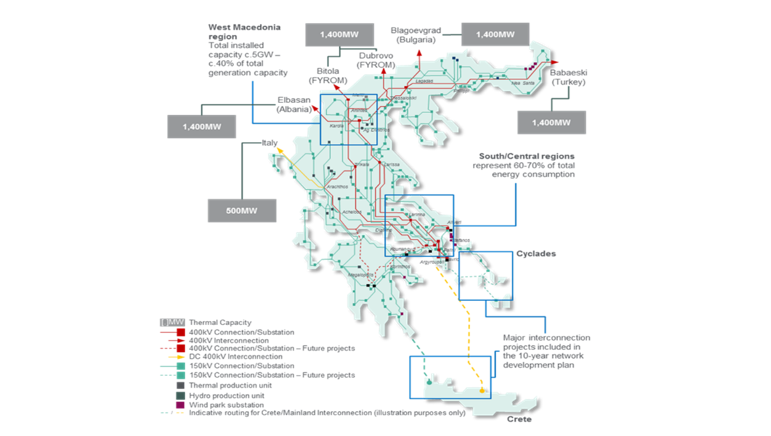
Figure 1 - The Greek power system at a glance
The total generation capacity reached 20.7 GW at the end of 2022; RES capacity represents the highest portion as shown in Fig. 2. It is worth to mention that the lignite-fired generation capacity has significantly decreased (from around 50% on 2005 to 12% on 2022) following an ambitious de-carbonization plan.
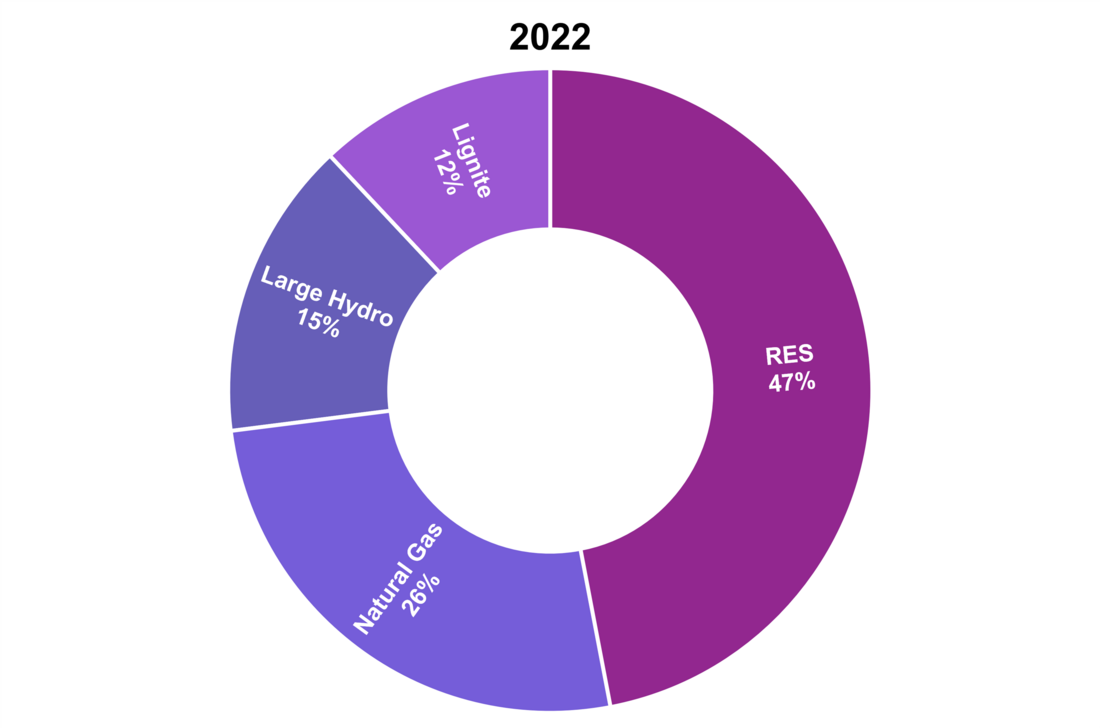
Figure 2 - Generation capacity mix as of 2022
25 years of developments lead to large intermittent RES penetration
Although the attempts to exploit RES started in the early 80s [1], it was the Law 2244/94 [2] that boosted massive installation of intermittent RES in Greece. The development started in the new millennium with the installation of medium size Wind Farms (WFs). During the first decade of 2000 the transmission and distribution operators set the relevant technical requirements for wind turbines and PVs and technical rules for their secure connection of RES plants, while specific transmission projects were erected focusing to connect windy areas to the system and accommodate the new WFs. These actions lead to the installation of about 4,6 GW of WFs by the end of 2022. The majority of WFs (75%) has been contracted by the transmission operator.
PVs started to grow fast during the decade of 2010 after the breakthrough on their capital cost thus reaching 4,9 GW by the end of 2022. Due to their limited capacity, PVs are mainly dispersed in the medium voltage distribution networks. As shown in Fig. 3, PVs have considerably reduced the (transmission) system load; this fact contributed drastically to solve the severe voltage stability problems that the Greek system faced for almost two decades, especially during peak hours (noon) in summer.
It is worth mentioning that until today no severe events related to RES plants have occurred in Greece.
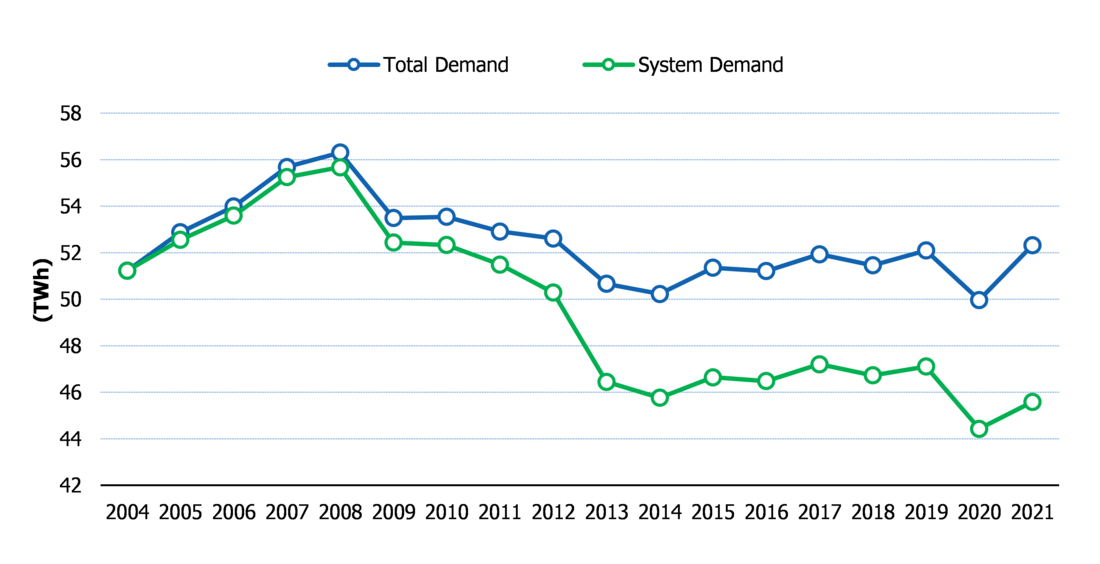
Figure 3 - Impact of dispersed PV generation on system load
During 2022, intermittent RES generation in Greece reached 39% of the total annual energy demand, while the total RES contribution (accounting for large hydro plants as well) in the electricity balance was 47%, which is an achievement. It is anticipated that this contribution will exceed by far 50% in 2023, since the capacity of RES plants continues to grow while the load is declining due to the energy conservation measures and the rather high electricity prices.
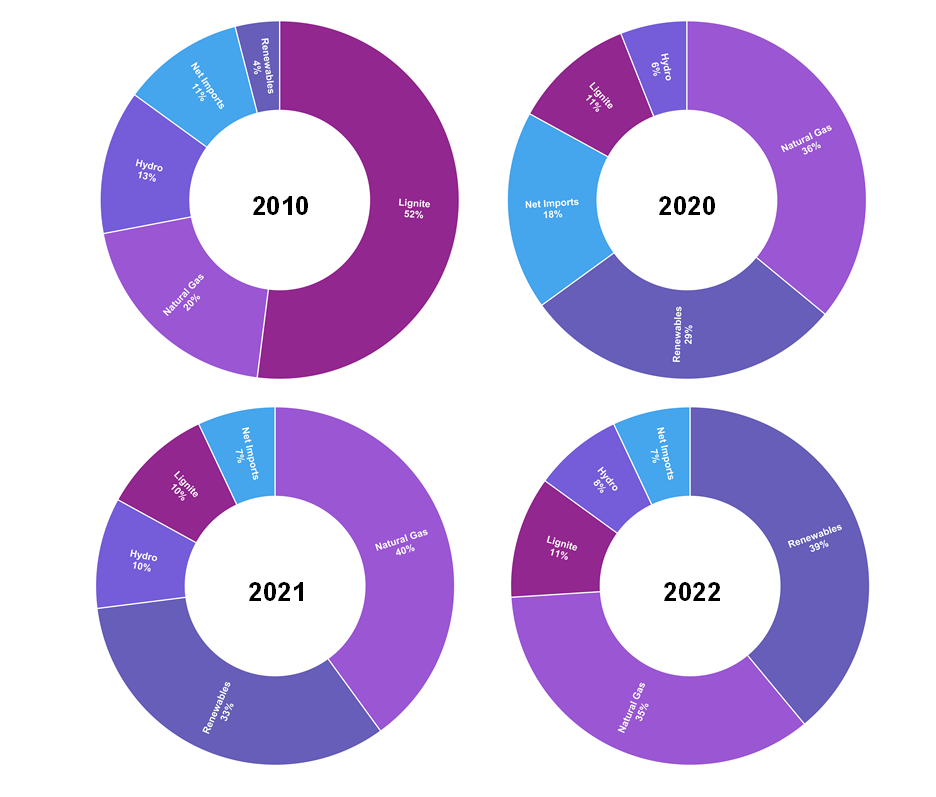
Figure 4 - Indicative evolution of electricity balance in Greece
Fig. 4 indicates the changes in electricity balance during the last 12 years. It is obvious that the Greek power system has entered the “large RES penetration” era. This fact has brought new technical problems and challenges as far as system security is concerned but also it drastically affects the electricity market since the share of conventional thermal plants has been significantly reduced. More specifically, the large and fast growing Solar (PV) capacity has already led to a need for fast ramping capacity of about 2 GW to 3 GW in order to cover the load in a time window of 3 hours at sunset. This - continuously growing effect - is also affecting the electricity market and therefore more flexibility should be added in the generation mix.
The increased RES penetration requires higher reserves due to their volatility and unpredictability. These reserves can be provided mainly by thermal plants which are still needed to ensure security. On the other hand, their market share is continuously decreasing, so that their possibility to recover investment costs is very much questioned.
Due to the limited flexibility of conventional generators (long start-up and shut-down times, low ramp rates and high technical minimums), they cannot be disconnected and therefore the system experiences periods of “overproduction.” In such cases, the transmission and distribution operators curtail wind and solar power as the last means to regulating the Area Control Error (ACE) according to the rules of the interconnected system of Continental Europe. These curtailments are expected to increase if the system flexibility resources remain unchanged.
Also, the large amount of dispersed generation (mainly PVs) has extremely reduced the power transmitted through the transmission grid leading to very high voltages; this phenomenon requires fast solutions and investments in compensation devices.
The road map towards the mitigation of these challenges towards the green transition now follow.
Anticipated developments
The current decade seems to be a crucial one towards further decarbonization. The National Energy and Climate Plan (NECP) aims at energy conservation, GHG reduction and contribution of RES in the electricity sector in the order of 61-64% (to be revised to 80%) by 2030. The latter target can be interpreted as a need for installation of 20-25 GW of new RES plants. This target cannot be achieved without the substantial increase of system flexibility; it is undoubted that the most proper solution is the installation of storage capacity as it will also offer arbitrage capacity thus minimizing the impacts on the market. Specific steps in both technical and regulatory fields have already been taken by the authorities, leading to relative capacity auctions which were held recently [3]. The acceleration of the introduction of massive use of electric vehicles is another crucial factor to increase RES penetration since they can be used as extra reserve capacity under proper market regulation.
The interest for new investments in the RES sector remains high in Greece. Currently, around 13 GW of RES projects have valid connection offers, while applications for new RES projects of almost 40 GW are pending to be examined by the Transmission and Distribution operators. Nevertheless, the network faces severe congestion problems and the network hosting capacity has been exhausted.
The erection of new transmission infrastructure is not an easy task as it faces strong public opposition. The connection of new RES capacity is also questioned; the possibility of erecting off-shore WFs is also under consideration.
Banner & thumbnail credit: Chris Ouzounis on Unsplash
- [1] The first wind farm in Europe consisting of 5 wind turbines of capacity 20 kW each was put in operation in 1982 on the island of Kythnos
- [2] This Law allowed for private RES plants offering priority to dispatch, high feed-in tariffs and subsidies on capital investment
- [3] More info in ”Electricity storage in Greece: State-of-play & near-term outlook”, at Electra August 2023 issue
Suggested content