Power system technical performance
By Marta Val Escudero, Chair & Genevieve Lietz, Secretary
Overview of Study Committee C4
Study Committee (SC) C4’s main mission is to facilitate and promote the progress of power systems engineering and the international exchange of information and knowledge in the field of system technical performance and to add value to this information and knowledge by means of gathering state-of-the-art practices from around the world and developing recommendations. The main approach is through the formation of working groups (WGs) and the publication of CIGRE technical brochures (TBs); some recent examples are provided at the end of this brief report. The other approach is through sponsoring and promoting colloquia around the world which focus on the key technical challenges in modern power systems that relate to system technical performance.
The scope of SC C4 is the development and review of methods and tools for analysis related to power systems, with particular reference to dynamic and transient conditions and to the interaction between the power system and each of the following: (i) its apparatus/sub-systems; (ii) external causes of stress; and (iii) other installations. Specific issues related to the design and manufacturing of components and apparatus are not within the scope of SC C4, nor are those specifically related to planning, operation and control, apart from cases in which a component, apparatus, or subsystem behaviour depends on, or significantly interacts with, the performance of the nearby power system.
The SC C4 scope covers system technical performance phenomena that range from nanoseconds to hours, which includes everything from lightning, switching, power quality, electromagnetic compatibility and electromagnetic interference (EMC/EMI) and insulation coordination to power system stability, modelling and long-term system dynamics.
As the scope is quite broad and covers all aspects of the technical performance of large power systems, further work was carried out to better explain the timeframe of various phenomena. This work is regularly revised, and the timeframes of various current phenomena are given in Figure 1. The output of this work is included as an appendix in the SC C4 strategic plan.
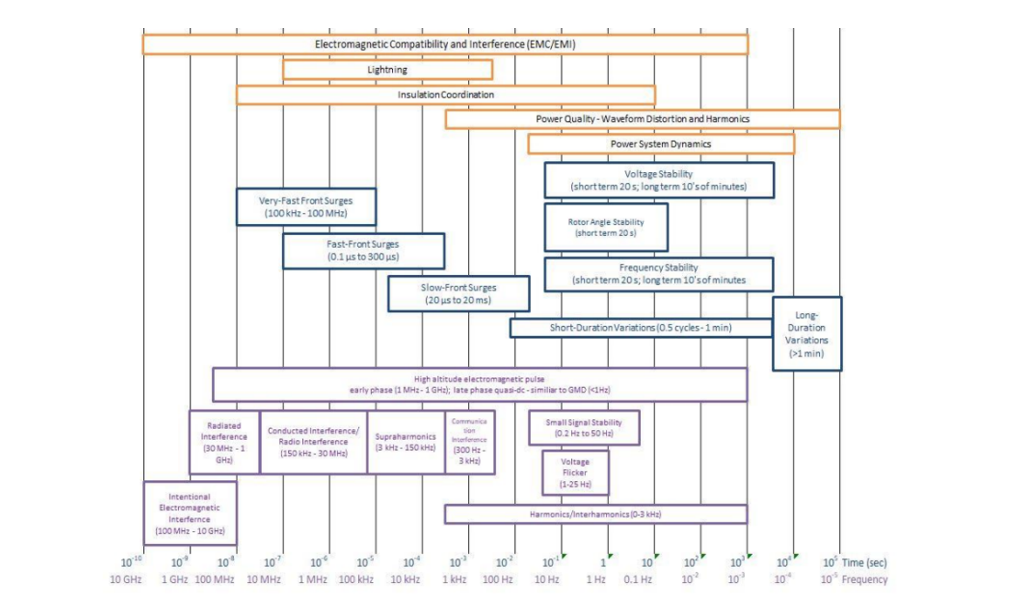
Figure 1 - Range of phenomena investigated by SC C4
Due to its wide remit, SC C4 alone cannot investigate power system technical performance issues without a solid understanding of the equipment itself, its performance, system planning and operational issues and environmental factors that may play a role in system performance. This leads to close cooperation between SC C4 and other CIGRE SCs that deal with equipment, system planning and operations, distribution networks, materials and testing, and environmental aspects of the power system. The close cooperation can be seen from the establishment of a formal liaison member between SC B4 and SC C4 and several joint working groups (JWGs). Furthermore, nomination and establishment of liaison members from other SCs in SC C4’s WGs and vice versa also adds to the close collaboration between SC C4 and other SCs. At the time of writing, there are 14 JWGs with SCs A1, A3, B1, B2, B4, B5, C1 and C2. Furthermore, two SC C4 WGs are joint with CIRED on issues related to distribution networks. There are also two JWGs between SC C2 and IEEE owing to the increasing cooperation between the two organisations. SC C4 also has formal liaisons with the IEC TC 77 (on EMC) and the International Special Committee on Radio Interference (CISPR).
SC C4 Structure and Strategic Direction
SC C4 is composed of 24 regular members, 2 additional regular member and 18 observer members, together with a chairperson and a secretary representing 43 countries. SC C4 presently consists of 44 WGs performing highly technical work aligned with the strategic fields of SC C4. These WGs are composed of over six hundred individual technical experts from 60+ countries around the world, some serving in more than one WG.
There are also three advisory groups (AGs) within SC C4. AG C4.1 is a group of experts that consults on the strategic directions for SC C4 and includes liaisons with IEC, IEEE and SC B4. AG C4.2 on Customers reviews and prioritises the composition of target groups and identifies improvements and opportunities for communication of the SC target groups. AG C4.3 on Tutorials and Conferences coordinates SC C4’s activities with respect to colloquia and tutorials.
The SC C4 annual meeting in 2023 took place during the CIGRE Symposium in Cairns, Australia.
Main Technical Areas of Activity in SC C4
Below is a brief summary of WG activities in the main technical directions within SC C4. A complete list of all active SC C4 WGs with their annual reports is available in the SC C4 KMS space.
Power Systems Dynamic Performance Models and Numerical Analysis
The subject of system dynamics and the overall system performance in terms of various stability parameters is gaining significant attention due to the energy transition bringing increased connection of power electronic based devices. This trend is obvious from the number of WGs covering this technical direction, with a total of sixteen WGs looking at many important issues of present and future concerns for power system dynamics and analysis. These include:
- Development of grid forming converters for secure and reliable operation of future electricity systems (JWG B4/C4.93)
- Power system resilience (WG C4.47 and JWG C1/C4.46)
- Review of advancements in synchrophasor measurement applications (JWG C4/C2.62/IEEE)
- Impact of low inertia networks on protection and control (JWG B5/C4.61)
- Wind generators and frequency-active power control of power systems (JWG A1/C4.52)
- Protection roadmap for low inertia and low fault current networks (JWG B5/C4.79)
- Guidelines for sub-synchronous oscillation studies in power electronics dominated power systems (JWG C4/B4.52)
- Multi-frequency stability of converter-based modern power systems (WG C4.49)
- Benchmarking of simulation models for control interaction in meshed AC networks with multiple converters (JWG B4/C4.97)
- Small signal stability analysis in inverter-based resource dominated power systems (WG C4.71)
- Evaluation of voltage stability assessment methodologies in transmission systems (JWG C4/C2.58/IEEE)
- Generic EMT-type modelling of inverter-based resources for long-term planning studies (WG C4.60)
- Application of real-time digital simulation in power systems (WG C4.64)
- Developments in large city and metropolitan areas incorporating new generation, grid and information technologies (JWG C1/C4.36)
- Line and cable models for steady-state and transient studies (WG C4.74)
These WGs are investigating challenging technical issues associated with modelling, simulation and dynamic performance assessment of power systems around the world. The ever-increasing penetration of renewable energy sources within the generation mix is driving the formation of more WGs in this area due to the need to understand the level of technical performance issues facing the grid of the future.
Power Quality
Currently there are five WGs concentrating on power quality related issues of present and future power systems. Work in most of the WGs is at an advanced stage. The work of WG C4.40 is very important in this area as it is trying to revise the relevant IEC Technical Reports, i.e. IEC 61000-3-6, 61000-3-7, 61000-3-13 and 61000-3-14. C4.51 is addressing traction supply points and the impact these points may have on the wider system with respect to power quality. WG C4.63 looking at harmonic power quality standards and approaches from a comparative viewpoint and has issued a questionnaire to National Committees to gather information. WG C4.65 is addressing the specification, validation and application of harmonic models for inverter-based resources and has recently formed a liaison with the IEEE Task Force on Harmonic Modelling.
Electromagnetic Compatibility and Electromagnetic Interference (EMC/EMI)
Electromagnetic Compatibility and Electromagnetic Interference (EMC/EMI) issues addressed by SC C4 cover emission and immunity problems resulting from disturbances that are not addressed under the subject of power quality. These include disturbances produced by the electrical power system as well as disturbances of external origin able to interfere with the electrical power system. Such disturbances can affect the integrated system performance by electrical conduction (electrical contact), induction (electric or magnetic fields) or radiation (high-frequency electromagnetic field). Health effects related to low-frequency electromagnetic field (EMF) are excluded, whilst intentional electromagnetic interference (IEMI) is instead included.
There are five active WGs within SC C4 that can be classified as being related to EMC. WG C4.44 is focusing on EMC for large photovoltaic systems and its work is at an advanced stage. Two further WGs include C4.54, which is looking at the protection of HV power network control electronics from the high-altitude electromagnetic pulse (HEMP), and C4.55, which is examining EMC related very-fast transients in gas-insulated substations. WG C4.68 is working on identifying EMC issues in modern and future power systems building on the work that was achieved a few years ago by the now disbanded WG C4.24. JWG C4/B4.72 is looking into lightning- and switching-induced electromagnetic compatibility (EMC) issues in DC power systems and new emerging power electronics-based DC equipment.
Lightning
Lightning is one of the most important natural phenomena that impacts and interacts with the electric power network necessitating advanced knowledge of lightning current parameters. There are presently ten WGs investigating various aspects of lightning. WG C4.36 is looking at lightning parameters and engineering consequences for wind turbines WG C4.43 is well advanced in its work reviewing lightning protection design schemes for structures from the viewpoint of avoiding physical damage and overvoltages that could generate flashover at electric apparatus and lines and investigating the applicability of these schemes to nuclear power plants. Two other WGs include WG C4.57, which is looking specifically at formulating guidelines for the estimation of lightning performance of distribution lines; and JWG B2/C4.76, which is concentrating on lightning and grounding considerations during rebuilding or refurbishment of overhead lines for both AC and DC. WG C4.59 is addressing real-time lightning protection in relation to the networks of the future where digitisation is heavily in use. Three further WGs include WG C4.61 investigating lightning transient sensing and monitoring, WG C4.66 researching new concepts for analysis of multiphase back-flashover phenomena, and WG C4.67 investigating the lightning protection of hybrid overhead lines. Two new WGs, WG C4.69 and WG C4.70, are looking at quantifying the lightning response of tower-footing electrodes of overhead transmission lines in terms of measurement methods, and the application of space-based lightning detection in power systems, respectively.
Insulation Coordination
There are eight active WGs within the technical direction of insulation coordination. Two WGs concentrate on overvoltage related issues. JWG B4/B1/C4.73 is addressing surge and extended overvoltage testing of HVDC cable systems with a goal to produce recommendations on methods for determining lightning levels in mixed OHL-cable systems, and WG C4.46 is addressing the evaluation of temporary overvoltages. These are complemented by JWG B1/C4.69, which is investigating the development of insulation coordination recommendations on AC cable systems. Two well-advanced WGs include C4.50, which is investigating the evaluation of transient performance of grounding systems in substations, and JWG C4/A3.53, which is looking at the application of advanced metal-oxide varistors for surge arresters with better protection properties. Three recently stablished WGs investigate additional aspects related to insulation coordination: WG C4.43 deals with insulation coordination of HVDC overhead lines, JWG C4/A3/B2/B4.75 aims to create guidelines for the creation of pollution maps for outdoor insulation coordination purposes and WG C4.76 deals with switching overvoltages and mitigations options for vacuum circuit breakers.
Newly Formed Working Groups
Five new WGs have been established since September 2022:
- WG C4.73: Insulation coordination of HVDC overhead lines
- WG C4.74: Accurate line and cable models for steady-state and transient studies
- JWG C4/A3/B2/B4.75: Guide to procedures for the creation of pollution maps required for outdoor insulation coordination
- WG C4.76: Overvoltage protection in switching inductive devices with vacuum circuit breakers
- JWG B4/C4.97: Benchmarking of simulation models for control interaction in meshed AC networks with multiple converters

CIGRE active Working Groups / Call for experts
Publications
Technical Brochures
The following nine Technical Brochures have been published since September 2022 as a result of work done by SC C4 WGs and JWGs:
Seven further Technical Brochures are expected to be finalised and submitted for publication before the end of 2023:
- JWG C4/C2.58/IEEE: Evaluation of voltage stability assessment methodologies in transmission systems
- JWG C4.42/CIRED: Continuous assessment of low-order harmonic emissions from customer installations
- JWG C4/A3.53: Advanced metal-oxide varistors for surge arresters with better protection properties
- JWG B4/B1/C4.73: Surge and extended overvoltage testing of HVDC Cable Systems
- WG C4.59: Real-time lightning protection of the electricity supply systems of the future
- WG C4.61: Lightning transient sensing, monitoring and application in electric power systems
- WG C4.49: Multi-frequency stability of converter-based modern power systems
Green Books
SC C4 is currently working on a new Green Book on “Power system dynamic modelling and analysis in evolving networks”, co-edited by Dr Babak Badrzadeh and Dr Zia Emin. Various chapters within the book are led by SC C4 experts. This Green Book will provide information about all aspects of contemporary power system dynamic modelling and analysis in a rapidly changing power system with increasing uptake of inverter-based resources. It will also provide a comparison of changes occurring in conventional power systems with a dominance of synchronous generators, and an evolving power system with a high share of grid-connected and distributed inverter-based resources. Topics that will be addressed include dynamic phenomena experienced, analysis methods and simulation tools required, and enablers to achieve this.
Tutorials and Conferences
Since September 2022, SC C4 has supported the following event:
- CIGRE 2023 Cairns Symposium (September 2023): SC C4 had nine paper sessions and a workshop.
The paper sessions, covering three main theme areas were chaired and moderated by 17 international experts: Angelica Costa (BR), Genevieve Lietz (AU), Babak Badrzadeh (AU), Tim Browne (AU), Marta Val Escudero (IE), Andrew Halley (AU), Wayne Guttormson (CA), Behrooz Bahrani (AU), Peter Mayer (CA), Nilesh Modi (AU), Torsten Lund (DK), Sorrell Grogan (AU), Antti Harjula (FI), Julia Matevosyan (US), Hieu Dinh Nguyen (AU), Deepak Ramasubramanian (US) and Sachin Goyal (AU) .
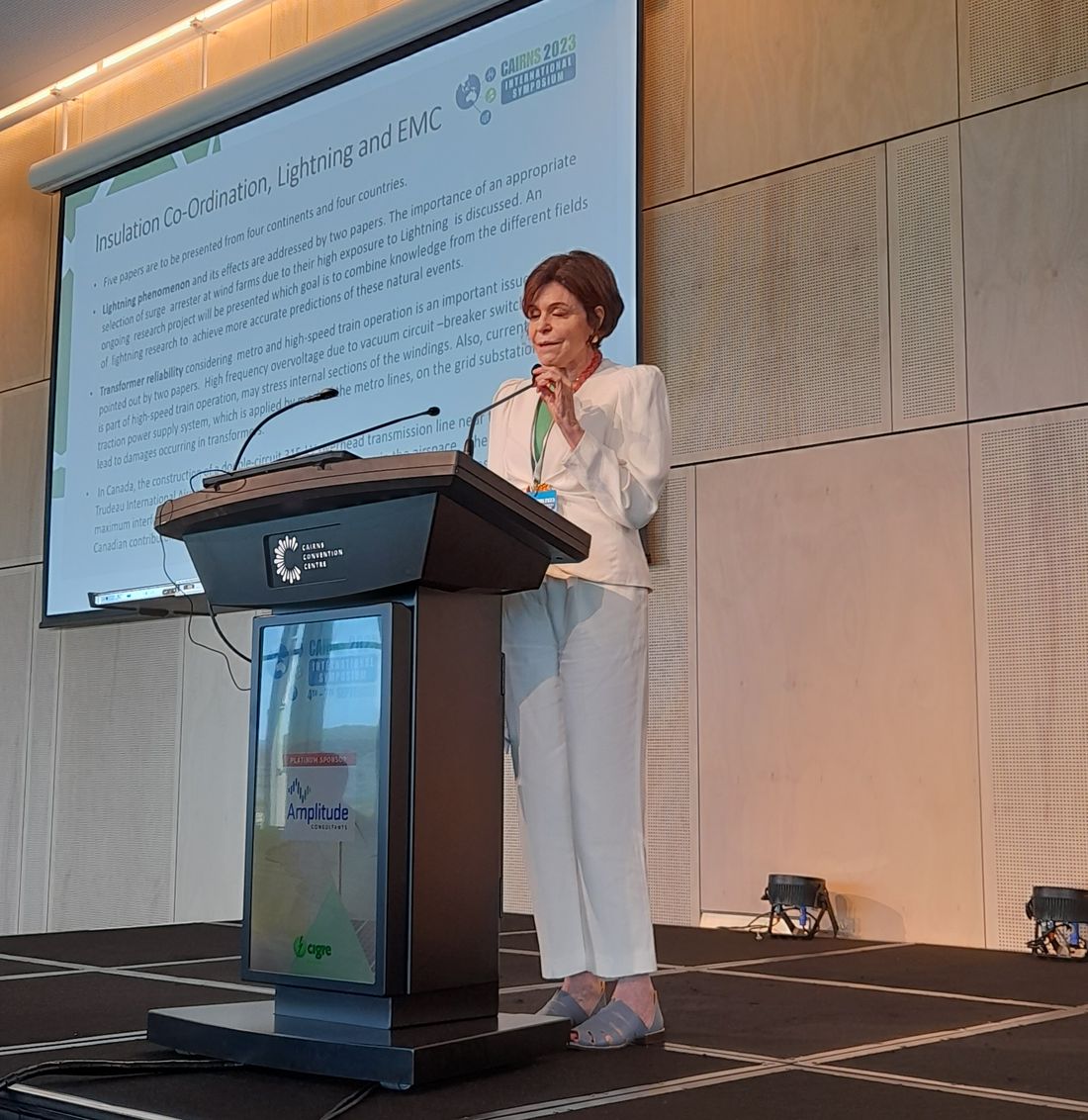
SC C4 Regular Member and AG Member, Angelica Rocha, chairing the SC C4 session on Insulation Coordination, Lightning and EMC
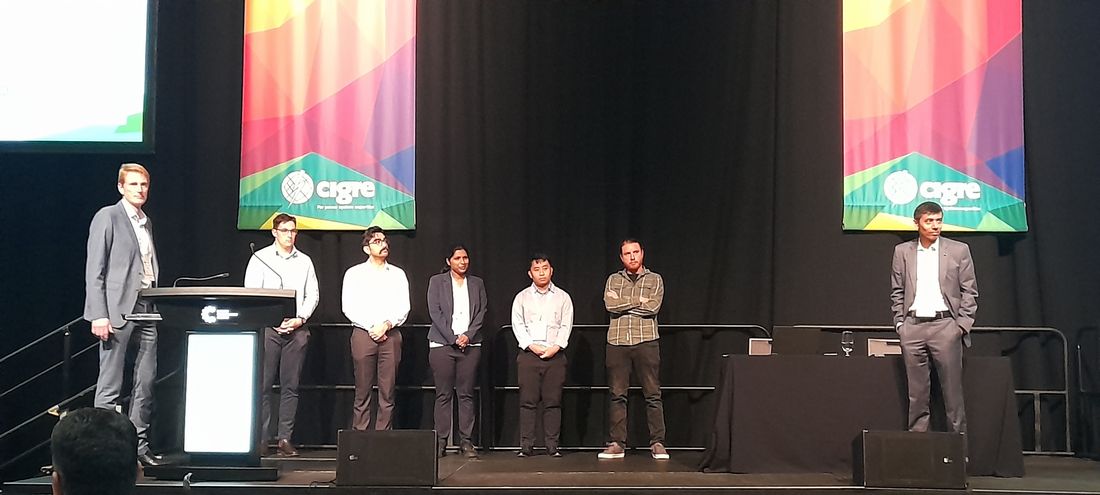
(L); Dr Torsten Lund and Dr Nilesh Modi running one of the SC C4 sessions on Power System Dynamics (R)
The Workshop on “Modelling and analysis of new and emerging forms of system stability” covered power system dynamic modelling and analysis to better understand the impact of increased uptake of inverter-based resources on conventional and emerging forms of system stability including transient stability, frequency stability, small-signal stability, system strength and inertia using the work conducted by WG C4.56, WG C4.71 and JWG A1/C4.52 as well as more recent and related activities. Plant and system-wide modelling for different forms of stability were discussed and examples presented include the impact of grid-following and grid-forming inverters. The use of various modelling tools such as electromagnetic transients, phasor-domain transients, dedicated small-signal stability analysis tools, and the role of screen methods were discussed.
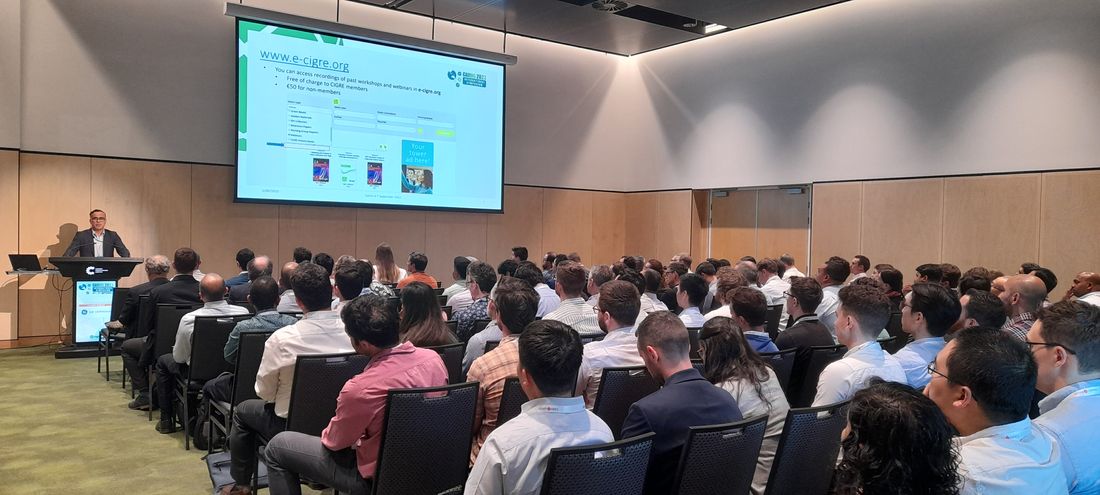
SC C4 Regular Member, Australian C4 Panel Convenor and WG C4.56 Convenor, Dr Babak Badrzadeh, presenting at the workshop
CIGRE Session 2022 Materials
SC C4 Package available on eCIGRE
Free for Members and Delegates
Upcoming events in 2023:
- Sendai Colloquium, October 2023
- Suzhou CIGRE ICLPS-CIPDA, October 2023
In terms of upcoming events supported by SC C4, the next major event will be the CIGRE Paris Session in 2024.
The following webinars were presented, and the associated recordings can be accessed on eCIGRE:
- WBN044: “EMT simulation models for large-scale system impact studies in power systems with high IBR penetration”. Presenters: Babak Badrzadeh (AU), Jean Mahseredjian (CA) and Sorrell Grogan (AU)
- WBN 046: “Modelling and analysis of power networks with a high percentage of inverter resources”. Presenter: Deepak Ramasubramanian (US)
- WBN 047: “Evaluation of temporary overvoltages in power systems due to low order harmonic resonances” (WG C4.46)
Upcoming webinars:
- “Guidelines for sub-synchronous oscillation studies in power electronics dominated power systems” (JWG C4/B4.52): Oct 18, 2023
Awards
CIGRE Thesis Award supported by SC C4:
- Yicheng Liao, “Impedance-Based Analysis for Power Electronics-Based Systems”.
Contact
Suggested content