Guidelines for SF6 end-of-life treatment of T&D equipment (>1 kV) in substations
Electrical equipment using SF6 as insulating and/or arc quenching gas is widely used globally since the second half of last century. Due to its superior technical performance, SF6 technology has been implement-ed in applications for medium voltage (MV, ≤52 kV) in distribution network, high voltage (HV, >52 kV) in bulk power generation and transmission, and all the way up to ultra-high voltage (1200 kV).
Members
Convenor
(DE)
M. HYRENBACH
Secretary
(UK)
T. LUJIA CHEN
A. GREEN (UK), A. LASO RUBIO (US), F. TRICHON (FR), F. ZENG (CN), G. KACHELRIESS (DE), J. STAGE (US), J. RAPP (UK), J. MANUEL INCHAUSTI SANCHO (ES), N. OTAKA (JP), P. FERNANDEZ (BR), R. KURTE (DE), S. LABERGE (CA), S. FLOOD (IE), T. DÜRR (DE), T. SCHWARZE (DE), T. UCHII (JP), U. AMMER (DE), Z. SMITH (US)
Even considering the very long lifetime of 40 to 50 years for electrical equipment, it is inevitable that equipment will reach their end-of-life (EoL). Alternatively, the gas quality indicates that heavily aged SF6 must be replaced to extend the equipment lifetime. An unexpected discovery when the SF6 technology had been implemented in the market was the extremely high global warming potential (GWP) that is 25,200 times the CO2 equivalent. Therefore, emission of the SF6 gas must be minimised and special precautions are necessary at the EoL management of SF6 containing electrical equipment, in terms of the final disposal procedures and/or recycling of SF6 and parts of such equipment.
Transmission System Operators (TSO) and Distribution System Operators (DSO) are electricity utilities with their own service departments and established experience in the handling of SF6 equipment and SF6 gas. This is not the case across the entire power industry as there are many smaller companies with perhaps only a few SF6 installations, far fewer handling experience and service personnel. For these companies, an environmentally sound EoL treatment guide is of great benefits. For distribution equipment, the quantity of SF6 per asset is relatively low for equipment at lower voltage levels due to their compact design. However, the number of units installed is extremely high, so the overall quantity of SF6 used in MV and HV is more or less the same. Therefore, it is imperative to develop guidelines that inform end-users the appropriate steps for all SF6 assets across different voltage levels to ensure minimal SF6 emissions.
This guide summarises the well-known practices and inform the EoL procedure of handling electrical equipment containing SF6 and the SF6 itself. Every step of the process is explained in detail, from the preparation until recycling or final disposal. The target is to limit the SF6 emissions in every step of the processes dealing with the disposal of equipment parts and/or the recycling of SF6 used in all equipment reaching their EoL to the absolute bare minimum that is technically achievable. Importantly, safety must be guaranteed in every single step.
Checklists at the end of the brochure will support streamlined preparation of the work and in selecting appropriate partners to perform the work in the most professional and cost-effective manner. It needs to be highlighted that avoiding emissions of SF6 is stipulated in various regulations and local laws, and therefore this guide helps to comply with these rules and regulations to prevent sanctions or penalties for owners or operators of electrical equipment, and crucially avoid undesired impacts to the environment.
The brochure starts with some definitions on electrical equipment types and common technical expressions used throughout the Technical Brochure. Large HV switchgear are well known as products containing SF6 in high quantity, but also smaller equipment such as ring main units or even circuit breaker poles containing less than one kilogram of SF6 must be treated using an environmentally sound approach. Prior to any activity, a detailed planning must be undertaken to avoid misunderstandings or delays in the execution. The required amount of information and the associated justification are explained in detail, which will later be used in completing the checklists at the end of the brochure as a preliminary work plan. These checklists will guide the owner of SF6 equipment through the planning process and supports in driving decisions on who is responsible for which part of the work.
Based on the equipment design, the technical condition and the preferences of the owner, a decision will be reached on the stage where SF6 is removed from the equipment and the process involved. Considering that a lot of equipment will reach their EoL in the coming decades, there will be an increasing number of recycling companies which can support or even assume responsibility of work to be performed. The figure below provides the principal decision tree on where SF6 will be removed, which has a huge impact on the project planning and budgeting. This is especially the case for smaller sized equipment. For example, transporting multiple ring main units to a recycling company will be significantly cheaper than bringing a gas handling equipment to different substations and perform onsite SF6 gas evacuation.
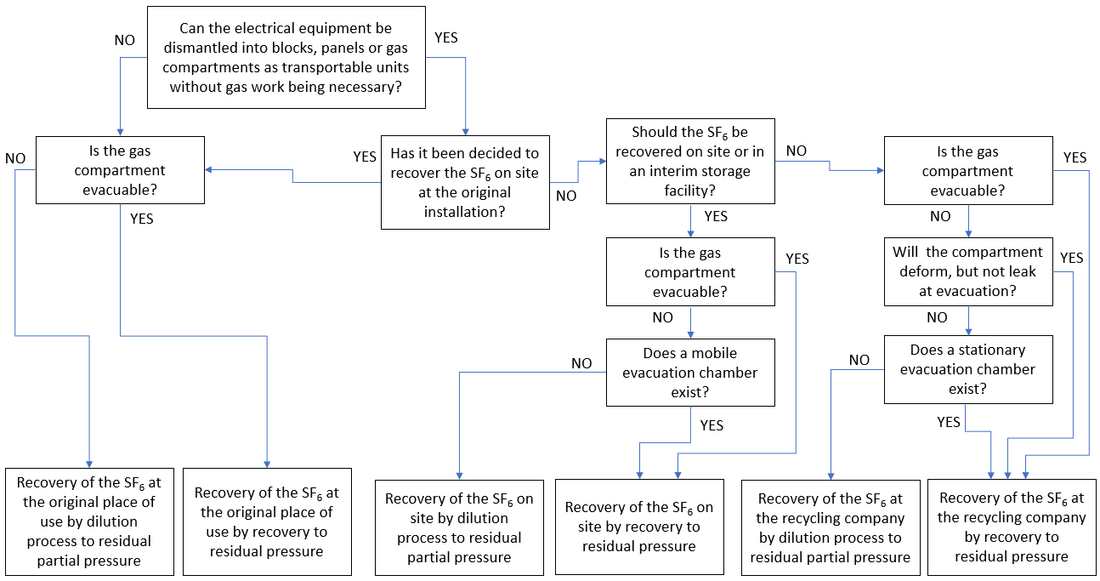
Figure 1 - Decision diagram for the recovery of SF6
At the starting point of SF6 recovery, one must first investigate the potential access point to handle SF6 gas. By using the original gas valve, this would be an easy operation provided the correct adapters are available, which could be an issue for very old equipment. Otherwise, gastight drilling tools are required to obtain access to perform gas handling. Examples of equipment for the gas recovery are given from some manufacturer of gas handling equipment, as well as for containers to collect, store and transport the recovered gas. The best matching solution should be chosen in relation to the electrical equipment scheduled for EoL treatment.
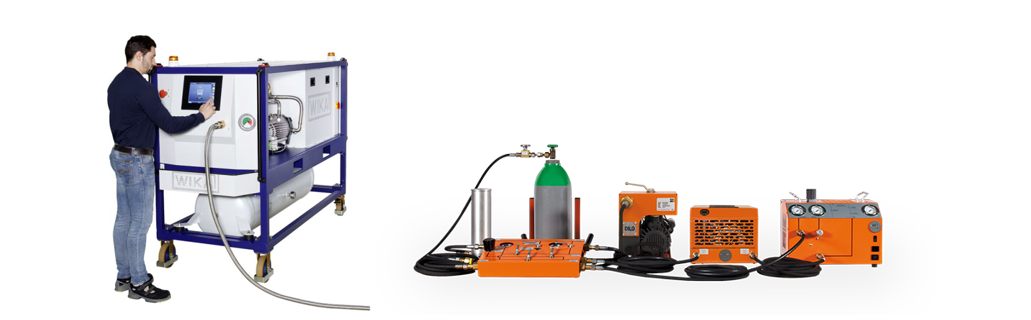
Figure 2 - Examples of gas handling systems for SF6 recovery
For MV switchgear, depending on the type and design of the equipment, special care must be taken when SF6 is recovered down to low pressures of a few mbar. When equipment is not designed as an evacuable unit, this might limit the minimum pressure, or will lead to a mechanical damage of the system, which is acceptable for the EoL if it remains gas tight.
When the SF6 has been recovered, documentation of the recovered amount of SF6 and residual quantity of SF6 remaining in the compartments may be required. The guide gives some support on how this can be calculated on the basis of easily accessible data. The status of the emptied equipment shall be documented, especially when there is a hand-over to another party, e.g. the recycling company for the materials. A sticker has been proposed for this purpose and shown in the figure below.

Figure 3 - An example of a warning sticker indicating that SF6 has been removed
The recycling process on the equipment will commence after the initial documentation. However, some preparation steps must be followed to guarantee the safety of personnel potentially getting into contact with solid decomposition products. The process of decontamination is described with some examples of personal protection equipment shown in the Technical Brochure.
Special care must be taken for the further treatment of recovered SF6. The main question first and foremost is on the quality of the recovered SF6. There are other considerations, namely, is the gas ready for re-use? Can it be treated as nontoxic or is it contaminated and needs to be handled with special care? For transportation, a correct labelling is of high importance. Information is given for transportation of SF6 in different conditions.
A specific chapter deals with gas quality evaluation methods and availability of equipment. Detailed information on the usage of the equipment and the technical function will provide important background information. In the case that the quality of SF6 is at a good level, information on reconditioning equipment and the processes are given. As for gas that cannot be reused or recycled, an overview is given about the conventional incineration process and other possible future low-carbon disposal solutions for the final destruction of SF6.
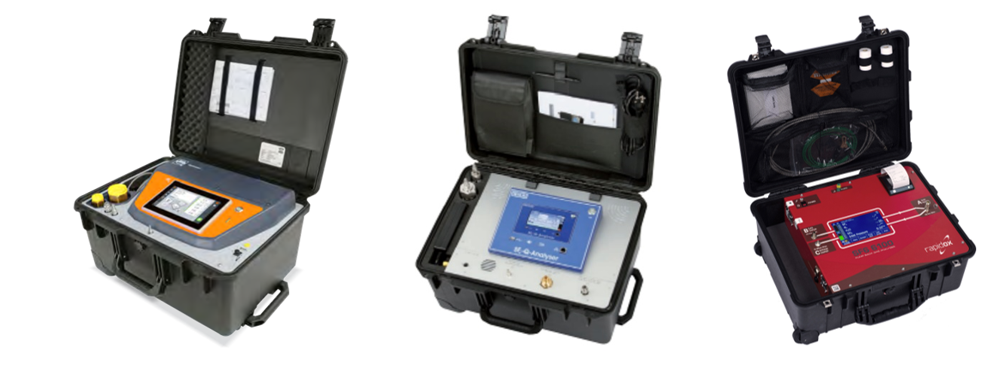
Figure 4 - Some samples of latest generation multi-measuring devices including the gas collection function
A review of relevant regulations related to SF6 EoL treatment gives a global overview to provide a first indication on the potential steps involved, however, users must refer and adhere to their local regulations.
This guide ends in the appendix with several checklists. They are intended to be printed and filled for each case when electrical equipment containing SF6 needs to be decommissioned and SF6 gas must be recovered.
The authors of the brochure hope that this Technical Brochure gives some useful insights on the EoL process of electrical equipment containing SF6 . The target was to remove potential hurdles and support in reducing the overall emissions of SF6 via the final disposal of electrical equipment.

Other Technical Brochures