The Trust Ceiling: What Stakeholder Engagement Programs Miss
Utilities have gotten very good at communicating. Portals, newsletters, public meetings, bill stuffers, disclosure schedules: the infrastructure of transparency has never been more mature, and it has never been easier to build. But transparency and trust are not the same achievement, and a growing number of utilities are discovering the difference at the worst possible moment, mid-crisis, when the relationship they thought they had turns out not to exist.

By Peter Claghorm, Senior Associate, Vanry Associates
A floor, not a ceiling
The instinct behind most engagement programs is reasonable enough: communicate thoroughly and consistently, and stakeholders will trust you. It is not wrong, exactly. Withheld information creates adversaries faster than almost anything else a utility can do, and a stakeholder who feels kept in the dark will read every later interaction through that suspicion.
But reducing suspicion is a floor, not a ceiling. Thorough, consistent communication gets a utility to “we have no reason to distrust you.” It does not get it to “we trust you.” Those are different achievements, built through different means, and a great many engagement programs quietly stall in the gap between them without anyone noticing until it matters.
Trust, in practice, is built through kept commitments and through presence when things go wrong. Stakeholders are watching behavior over time, not reading documents. That distinction sounds obvious, stated plainly. It is far less obvious from inside a program that is, by every visible metric, working.
The tell
Here is the pattern worth naming directly: utilities routinely mistake the absence of opposition for the presence of trust.
It is an easy mistake, because for long stretches the two look identical from the inside. Meetings go smoothly. Comment periods close without incident. The regulator does not push back. Everyone reads the quiet as confirmation. Then a wildfire event, a rate filing, or a service disruption arrives, and the relationship that was supposed to be there is not. What surfaces instead is a stakeholder base that was never convinced, only unbothered, and unbothered evaporates the moment there is something to be bothered about.
This failure mode does not announce itself along the way. It accumulates quietly, meeting after meeting, and a utility generally finds out what it actually built only in a crisis, exactly when it can least afford to be wrong about the answer.
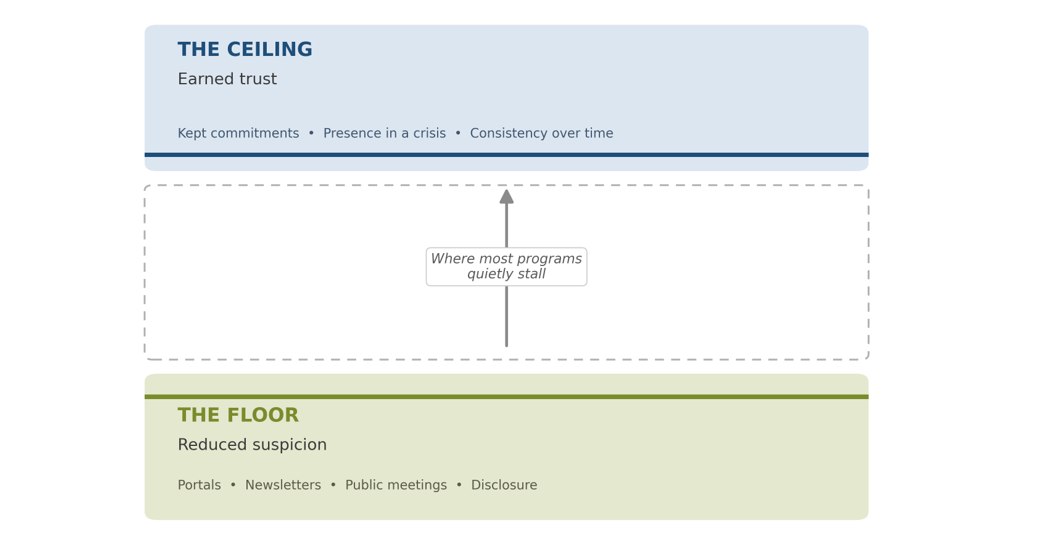
Figure 1 - Communication builds the floor. Kept commitments, over time, build the ceiling
Two ways to see the relationship
Underneath most engagement programs sits an unexamined choice about what stakeholders actually are. Two views tend to compete, often inside the same organization.
The first treats stakeholders as an audience: engagement is one-way, decisions arrive already made, and feedback, where it exists, is optional. This view is efficient, and it is fragile. It produces compliance rather than commitment, and it invites resistance the moment stakeholders feel their voice was never really in the room.
The second treats stakeholders as partners: engagement is an ongoing, intentional relationships, feedback shapes the program rather than getting logged and filed, and voices not yet at the table, including future opponents, get engaged early rather than after a position has hardened. This view takes more effort. It also produces durable relationships, fewer surprises, and decisions that carry stronger legitimacy when they are challenged later, which they will be.
Knowing which of these a program is actually running, as opposed to which one it says it is running, is worth an honest look before anything else changes.
Knowing who is actually in the room
Utilities are generally competent at mapping stakeholders organizationally: who has a stake in a decision, what their formal position has been, what commitments they are on record for and can be held to.
What gets missed more often is the individual layer underneath. Organizations do not have relationships; people do. The person who will be in the room carries concerns, fears, and aspirations that rarely show up in an organizational position paper, and the natural alliances and fault lines in a stakeholder group are usually a matter of individual history, not institutional stance. A utility that engages only the organizational layer is negotiating with an abstraction and will be surprised, repeatedly, by the humans who actually show up.
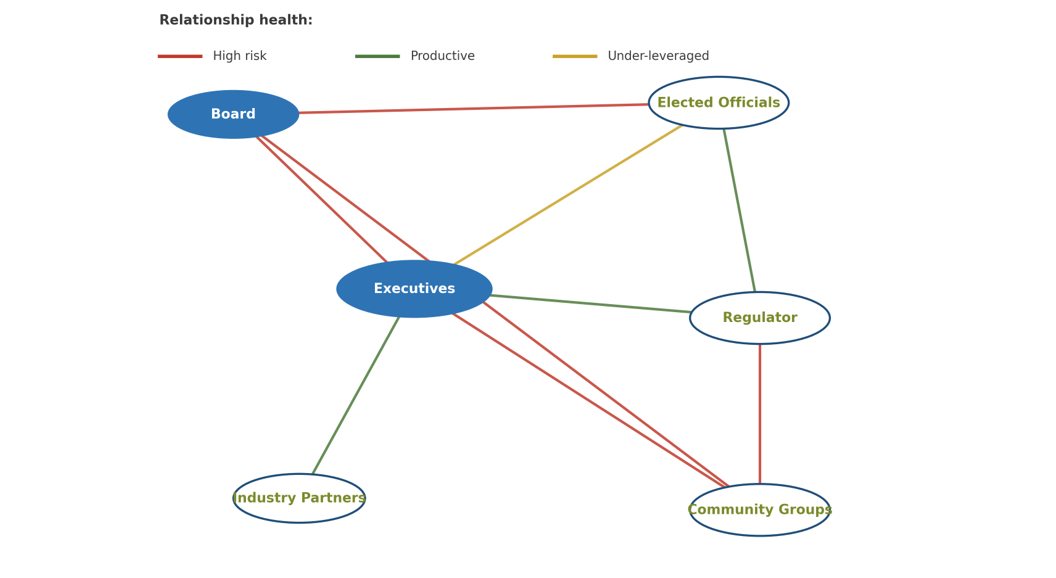
Figure 2 - Mapping relationship health, not just organizational position, surfaces where the real work is
What building the real thing requires
None of this makes the communications infrastructure wasted effort. It means that infrastructure is necessary and not sufficient, and the difference gets made up somewhere else, usually in three places.
The first is preparation that goes beyond the agenda. Sending materials in advance, reviewing them specifically for where a stakeholder is likely to react, and fielding presenters who know the subject matter rather than the slide, all signal that the utility is in the conversation rather than managing the room. A defensive answer to a hard question undoes that signal in seconds, no matter how well the materials were prepared.
The second is facilitation, and utilities tend to underbudget it. Where technical complexity and relationship sensitivity are both high, a skilled third-party facilitator changes the physics of the room. Some of the value is subject-matter fluency. A good deal of it is simpler: the facilitator is expendable in a way the client team is not. They can absorb a hard critique and keep the conversation productive, which frees the utility's own people to keep working the relationship instead of defending it in real time.
The third, and probably the least glamorous, is cadence. Deciding specifically what stakeholders can expect and when, and then delivering on it without fail, builds something no single well-run meeting can. It is a small, repeated demonstration: we said we would, and we did. Irregular communication reads as disinterest or disorganization even when neither is intended, because stakeholders have no way to tell the difference from the outside.
Underneath all three is a willingness to let stakeholders be how they are. Anger, fear, and frustration come from somewhere, and the instinct to manage a breakdown or shut down a difficult comment, however well-intentioned, communicates the opposite of what the utility is trying to build. Being heard moves people further than winning the argument ever does.
How it actually breaks
A handful of specific failure modes recur often enough to be worth naming plainly.
Check-the-box engagement, where the investment in meetings and communications is real, but nothing visibly changes as a result, teaches stakeholders that the process is performative, and they take real concerns elsewhere: a regulator, the press, a courtroom.
Project, not relationship, is the pattern where engagement appears around a rate case or major capital program and then goes quiet until the next one. Stakeholders learn, correctly, that engagement means the utility needs something, and every cycle resets to zero because nothing was banked in between.
Executive impatience may be the hardest of these to solve, because it is not a communications failure at all. The genuine payoff from relationship-building tends to land in year two or three. Budget and attention cycles run in year one, and programs get scaled back exactly when they are on the verge of proving out.
And internal misalignment, where legal, operations, regulatory affairs, and communications each carry a different risk tolerance, tends to surface publicly at the worst moment: a stakeholder question exposes the gap, and trust collapses. Not from dishonesty, but from visible incoherence.
The question worth asking
The utility industry is facing a wider range of challenges than it has in the past and this is bringing enormous pressure on its relationships with stakeholders. The stakes are higher, the timelines are tighter, and the room now includes regulators, elected officials, and communities who have watched utilities get this wrong before.
A transparency program that reduces suspicion is worth building, and worth the investment it requires. But it is not the same achievement as a relationship stakeholders will still trust on the day something goes badly. The utilities that have not yet made that distinction tend to find out the hard way, in exactly the moment they can least afford the lesson. The more useful question to put to any engagement program, honestly, is which of its practices are actually building trust, and which ones are those that the organization simply has the infrastructure for.
Thumbnail & banner credit: gremlin on iStock
Suggested content