CIGRE Australia A2 power transformers and reactors workshop
Between 29th April and 1st May CIGRE Australia ran a transformers workshop. Planning began in earnest in the previous October by: Peter McIntyre our CEO, Matt Gibson the Australian A2 convenor, Tara-lee MacArthur the Australian treasurer, Tania Minchella and me, Dan Martin, as the organising committee.
By the end we had a sell-out workshop with 140 delegates, visitors from eight countries as far away as Sweden and Finland, twenty-three presentations, four hands-on workshops and two site tours which were to a 500 kV transmission substation and a local transformer manufacturer. There was also a keynote speech by the University of New South Wales detailing how to have successful university-industry partnerships.
Day 1
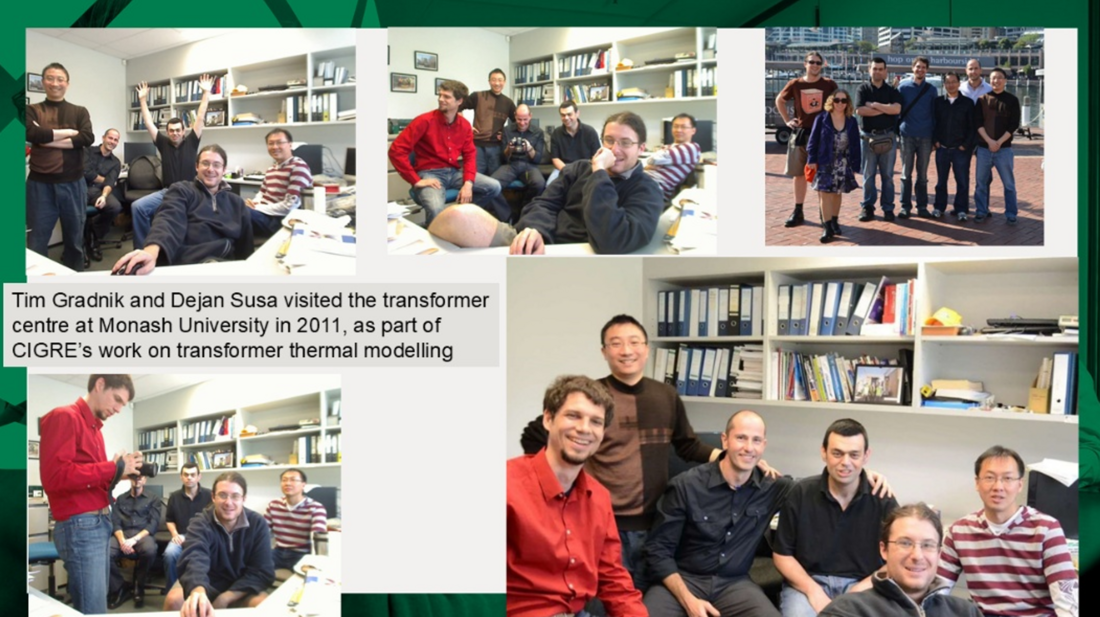
Matt Gibson opened the event and gave an update of the scope of the panel and working groups. Tara-lee MacArthur, who is the new A2 secretary, spoke about international study group activities. I reflected on what CIGRE means to me, which is enabling the long-lasting connections I’ve made over the years, such as with Dr Dejan Susa and Dr Tim Gradnik who came to Australia in 2011 as part of an A2 working group. In recent years COVID-19 had such a disruptive impact on the ability to travel and meet that in-person events became much smaller to stay within travel bubbles, or were online. This was the second transformers workshop post-COVID-19 and its success and scale establish it as the beginnings of what will be an ongoing biennial series. I really do value these large events to network and find out what everyone is up to. I was pleased to see so many colleagues who had travelled across the Tasman Sea from New Zealand, where I had previously worked at a transformer manufacturer. There were also delegates from China, Indonesia, Singapore and Vietnam, highlighting the international scope of this workshop.
Phillip Clark (Energy Queensland) introduced the application of transformer‑focussed intelligent electronic devices in asset management and operations. The work reinforced that improved visibility alone does not reduce asset risk unless it is integrated into established engineering and asset management practices.
Philippe Reboul (Molekulis / Redox) considered the lifecycle of transformer oil from initial selection through service, treatment, and eventual end‑of‑life. Attention was given to how oil condition evolves over time and the role of monitoring, intervention, and refurbishment in managing transformer risk.
Prof. John Fletcher and Brad Trethewey (UNSW / Essential Energy / Race for 2030) examined the impact of emerging electric‑vehicle charging patterns on transformer loading and thermal stress. Practical scenarios were used to illustrate how unmanaged load growth can accelerate ageing, while coordinated approaches can mitigate risk.
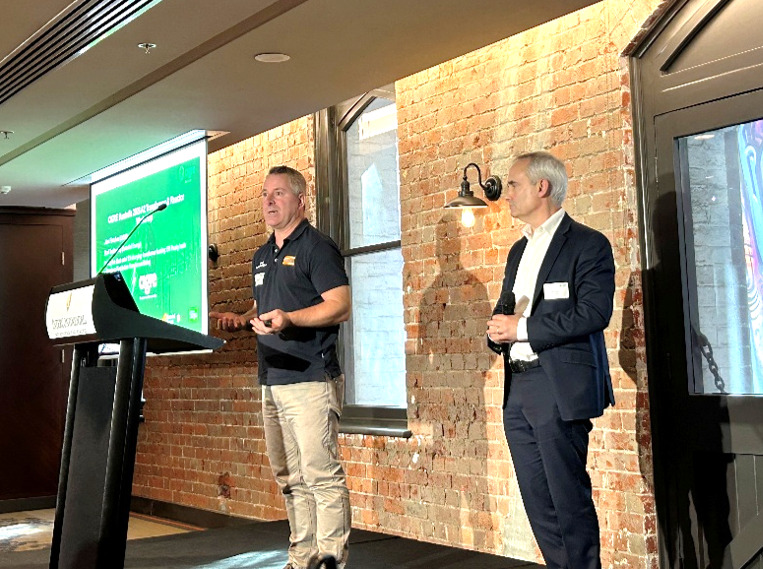
Brad Trethewey and Prof. John Fletcher showing the EV charging and transformer loads project
Tim Farrell (Reinhausen Australia) addressed the evolving role of tap changers in applications characterised by increased variability and complexity. Changes in network behaviour, loading profiles, and operating expectations were discussed in the context of tap changer duty and reliability. Juliano Santos explored lifecycle‑driven transformer strategies in high‑availability transmission networks. The discussion highlighted how early technical choices can either constrain or enable effective risk management over the asset life. Chris Beckett (CitiPower / Powercor / United Energy) outlined practical challenges in transformer risk management across complex distribution networks. Experience based examples were used to show how competing drivers must be balanced.
The session then moved to hands-on workshops which were sponsored and led by: Dynamic Ratings, Reinhausen Australia, OMICRON and Vaisala. They showed the latest technologies for monitoring and controlling power transformers.
The day finished with networking drinks and the conference dinner. It was great to catch up with so many of my colleagues.
Day 2
This started with a keynote by Prof. John Fletcher (University of New South Wales), who reflected on university–industry collaborations across energy, transport, water, and high‑technology sectors. Using practical examples with extended timeframes, it showed that meaningful impact typically requires patience, early agreement on intellectual property, and funding structures that genuinely support industry participation.
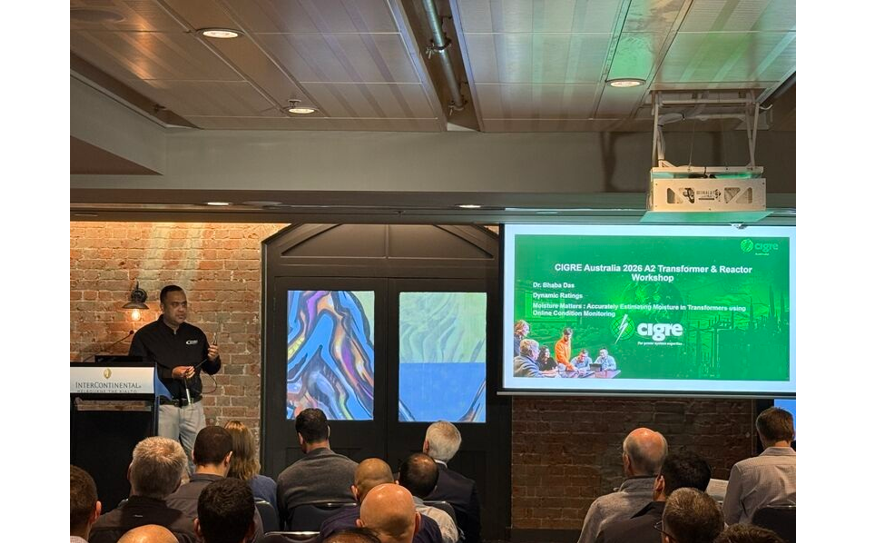
Dr Bhaba Das (Dynamic Ratings) examined the limitations of traditional equilibrium‑based moisture assessment when applied to transformers operating under real, non‑steady‑state conditions. The discussion acknowledged both the value of online monitoring and the need to understand its constraints when interpreting results.
Anthony Ulrich (Vaisala) revisited the fundamentals of dew‑point measurement and its practical application in transformer drying and maintenance. Worked examples illustrated how theoretically correct relationships can still lead to misleading conclusions if practical effects are not carefully managed.
Lars Jonsson (Hitachi Energy) presented the importance of assessing bushing condition using multiple parameters rather than relying on any single indicator. Case examples demonstrated how integrated assessment supports better prioritisation and reduces the risk of inappropriate intervention.
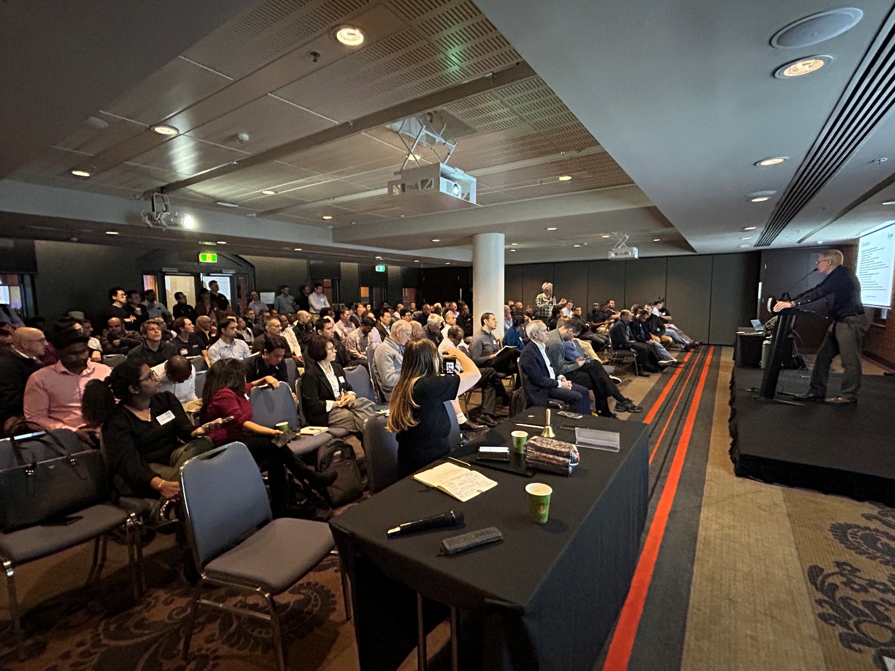
The view from the front, with Lars Jonsson from Sweden speaking about bushing reliability
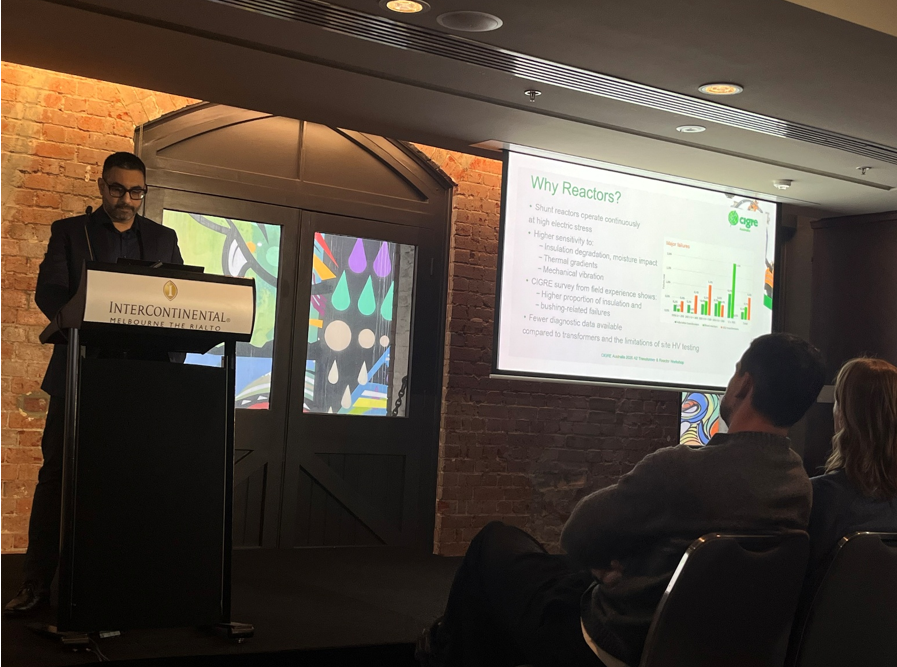
Dr Hossein Rahimpour discussing reactor maintenance
Dr Dejan Susa (GMB-TX) and Adam Suleiman (AusNet Services) reviewed insulation ageing models with particular emphasis on the combined influence of temperature, moisture, and oxygen. Case material showed how modest changes in operating conditions can significantly influence remaining life estimates.
DrKin Yu Lam (Cargill) investigated the thermal ageing behaviour of thermally upgraded paper in natural ester fluid using different end‑of‑life criteria. The presentation demonstrated the need for consistency and care when translating laboratory ageing data into loading guides and design assumptions.
Dr Hossein Rahimpour (Transgrid) drew on site and factory experience to highlight the sensitivity of shunt reactors to moisture and insulation condition.
Sam Mulquiney (Essential Energy) and Florian Predl (OMICRON) described the coordinated use of partial discharge measurements following a transformer refurbishment. The example showed how targeted diagnostic approaches can reduce uncertainty and support timely decision‑making when post‑maintenance anomalies arise.
Antony Giacomin (TJ|H2b Analytical Services) presented the role of oil analysis as an integrated diagnostic tool illustrated through multiple case histories. Gas generation, moisture, particles, and degradation products were linked back to physical failure mechanisms.
Adam Suleiman (AusNet Services) reviewed recent cases of copper and silver corrosion across mineral oil and ester‑filled transformers. The presentation highlighted inconsistencies between laboratory test results and in‑service observations, particularly for silver corrosion.
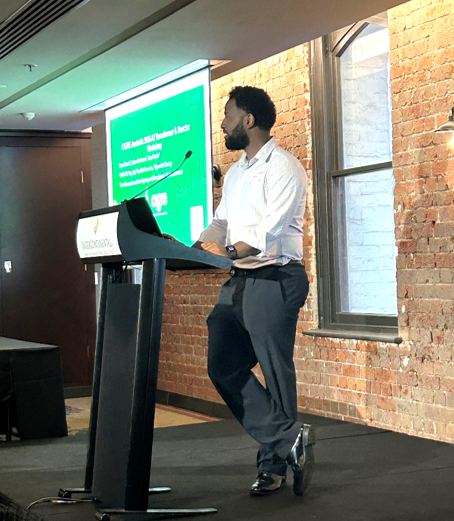
Adam Suleiman presenting the problems caused by corrosive oils
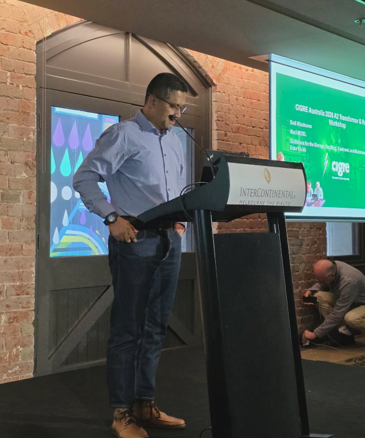
Budi Wicaksono presenting storage handling treatment and maintenance of ester fluids
Michael O’Brien (GE Vernova) challenged established views on transformer electrical testing by considering risk, consequence, and network security. The broader message was that poorly targeted testing can create false confidence, whereas well‑chosen tests support proportionate intervention.
Budi Wicaksono (PT. Shell Indonesia) focussed on the practical handling, storage, and maintenance considerations specific to ester insulating fluids. While the higher moisture tolerance of esters was acknowledged, equal emphasis was placed on their sensitivity to inappropriate handling practices.
Olivia Panjkov and William Togu (Snowy Hydro) used a case study investigating suspected defects in generator step‑up transformers while maintaining operational availability. The work highlighted the risk of relying solely on negative test results and the need for engineering judgement when deciding on further investigation.
Ngan Le Thi (Hitachi Energy) focussed on circularity in transformers, material intensity, ageing fleets, and supply‑chain constraints rather than abstract sustainability goals. Design choices, lifetime extension, and end‑of‑life recovery were considered incrementally.
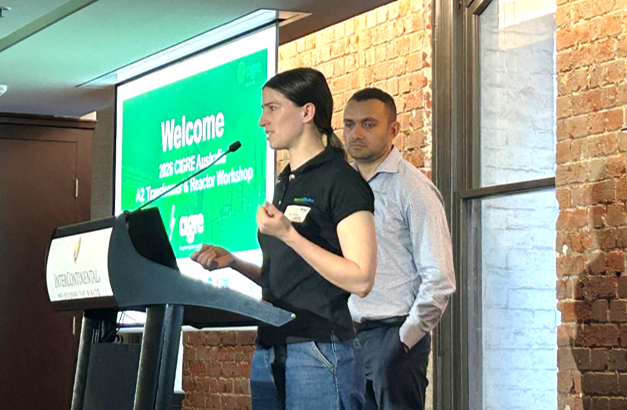
Olivia Panjkov and William Togu present addressing transformer defects
Day 3 tours
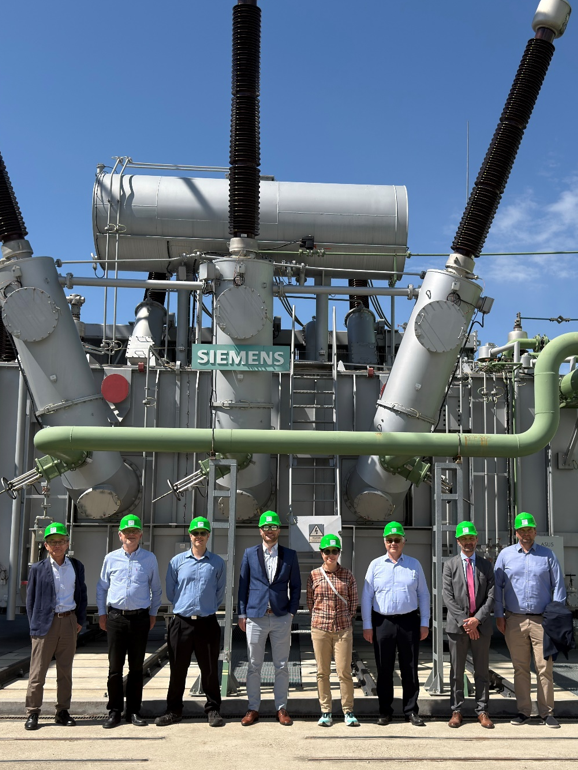
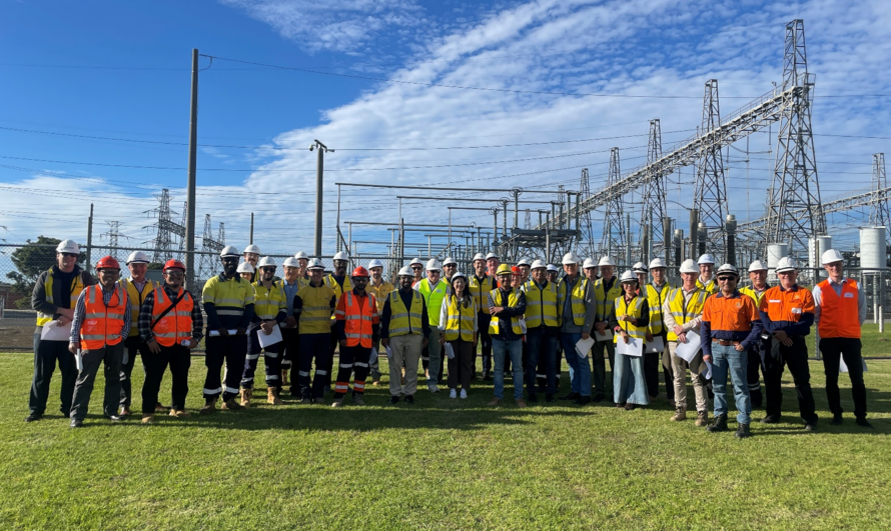
One tour was hosted by Adam Suleiman and Russell Wheatland, AusNet Services, of the 500/220 kV transmission substation east of Melbourne, which connects the city to incoming lines from power stations in the Latrobe Valley area of Gippsland. Here there are six single phase power transformers rated 333 MVA each. Victoria’s first 500 kV lines were built in the 1970s, and today its transmission system consists of 6,500 km of overhead lines and 50 transmission substations.
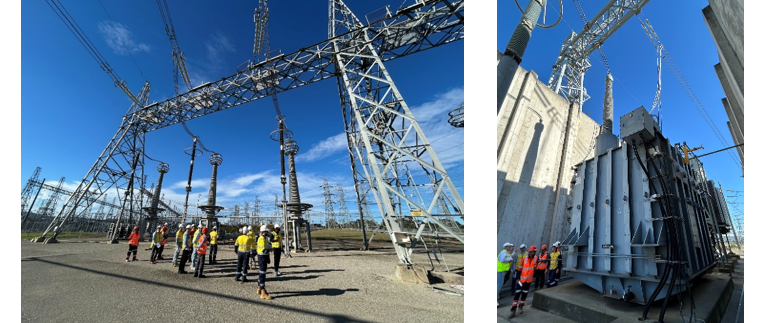
The Rowville 500/220 kV transmission substation
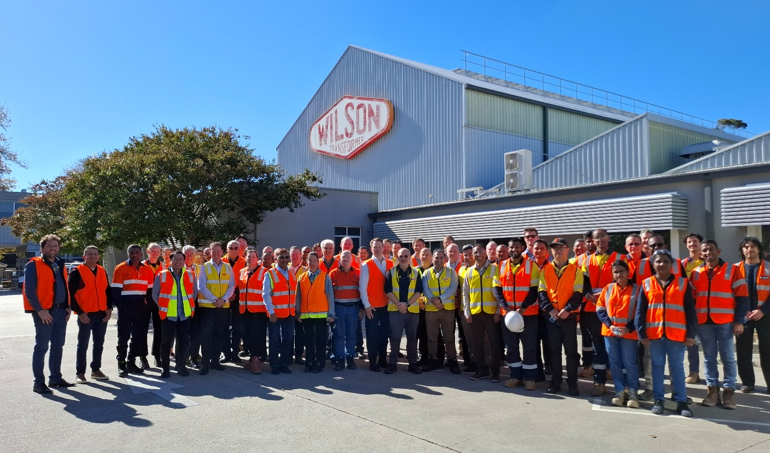
Our site-tour program also took us to Wilson Transformer Company (WTC), Australia’s largest manufacturer of power and distribution transformer solutions, and in operation since 1933.
WTC operates two state-of-the-art manufacturing facilities in Australia. The group were taken to the power transformer facility in metropolitan Melbourne, where visitors explored manufacturing and testing processes, with discussions focused on the discipline and engineering required to consistently deliver quality transformer solutions.
Next steps
In the attendee survey report 65 % rated the overall experience as excellent, and 35 % as good. 100 % said that they would attend this event again.
Given the strong success of this workshop CIGRE Australia plans to make this a regular biennial event. We will consider how to increase participation while maintaining quality. We look forward to seeing everyone again in 2028. The workshop was a timely reminder that transformer engineering is strengthened through shared experiences, built in conversations, challenged in debates, and sustained through the long professional relationships that CIGRE helps build.
Dan Martin is a senior engineer at Essential Energy, Australia. Matt Gibson is a senior engineer at Ausgrid, Australia, and is currently the A2 panel chair. Tara-lee MacArthur is a senior engineer at Energy Queensland, Australia. Tania Minchella and Peter McIntyre (CEO) are at CIGRE Australia.
Suggested content