Digital twins for power transformers – Concept and future perspectives
The digital transformation of power systems is creating new opportunities for asset management, particularly through the deployment of digital twin technologies. While widely adopted in sectors such as aerospace and manufacturing, their application in the electrical power industry remains at an early stage. Given the critical role of power transformers within transmission and distribution networks, they represent a natural priority for digitalisation. In response, CIGRE established Joint Working Group A2/D2.65 to define a transformer-specific framework for digital twins and assess their applications, challenges, and future development.
Members
Convenor (CA)
Patrick PICHER
Secretary (DE)
Alexander ALBER
Dennis ALBERT (AT), Fredi BELAVIĆ (AT), Sruti CHAKRABORTY, TF leader (AT), Janaina COSTA (BR), Sandra COUTO (PT), Hakim DULAC, TF leader (CA), Gabor FARKAS (HU), Annie HEIEREN (NO), Deo NATH JHA, TF leader (IN), Inge MADSHAVEN (NO), Tony McGRAIL, TF leader (US), Aysar MUSA (DE), Johannes RAITH (AT), Ricardo RIBEIRO (PT), Mauricio SOTO, TF leader (US), Brian SPARLING (CA), Adam SULEIMAN (AU), Marco TOZZI (IT), Zhongdong WANG, TF leader (GB), Sicheng ZHAO, TF leader (CN)
Corresponding Members
Jamie BEARDSALL (GB), Federica BRAGONE (SE), Rémi DESQUIENS (FR), Reena DHIR (CA), Quentin DOLLON (CA), Tim GRADNIK (SI), Paul GREY (AU), Bruno JURISIC (HR), Behzad KORDI (CA), Nima Sadr MOMTAZI (SE), Tucker REED (US), Mohamed RYADI (FR), Balamurugan SARAVANAN (IN), Stephan VOSS (DE), Guoli WANG (CN), Jian ZHANG (CN)
Context and application of digital twins for power transformers
A digital twin is a virtual representation of an asset or system, dynamically updated using data from its physical counterpart, incorporating predictive capabilities and supporting decision-making to generate value. The bidirectional interaction between the virtual and the physical is central to the digital twin. The concept is illustrated in Figure 1.
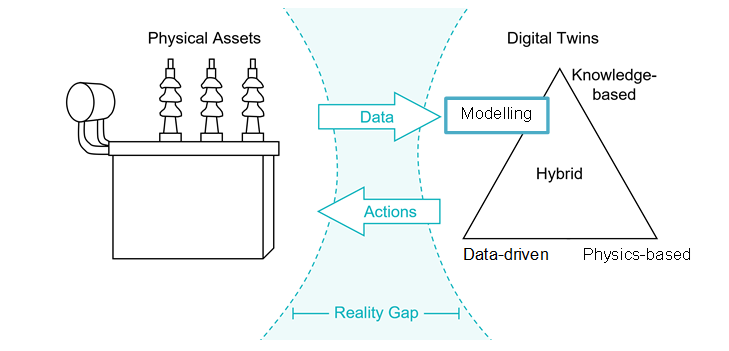
Figure 1 - The digital twin concept
The Technical Brochure introduces a structured capability framework for digital twins. At the descriptive level, the digital twin provides real-time visualisation of the transformer state. Diagnostic capabilities enable the identification of abnormal operating conditions and early-stage faults. Predictive capabilities support forecasting of future behaviour, including failure risk and remaining life. At higher levels, prescriptive digital twins support decision-making through scenario analysis, while autonomous systems can interact with operational controls. This progression reflects increasing levels of data integration and modelling complexity and provides a structured roadmap for gradual implementation. The capability levels are summarised in Figure 2 and presented in detail in Table 1.
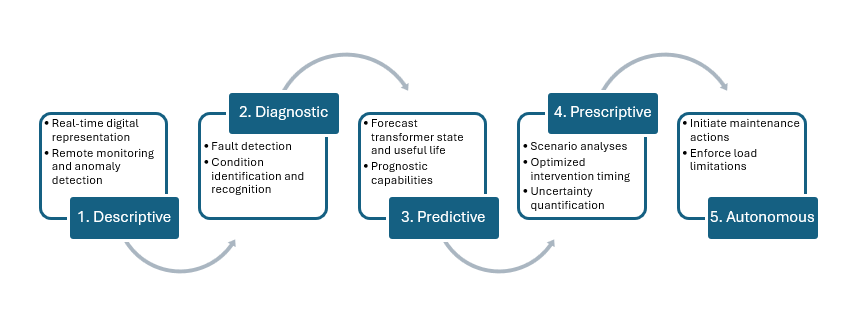
Figure 2 - The capability levels of digital twins on a scale from 1 to 5
Level | Description | Key capabilities |
1. Descriptive | Real-time digital representation of the physical transformer integrating sensor data | Remote monitoring and visualisation of transformer data and state. |
2. Diagnostic | Analytics for condition monitoring and fault detection using sensor data and historical trends. | Fault detection, abnormal condition identification, and early-stage issue recognition. |
3. Predictive | Uses predictive modelling to forecast transformer state and estimate remaining useful life. | Failure prediction, ageing analysis, and proactive maintenance planning. |
4. Prescriptive | Provides optimised recommendations for operation and maintenance based on scenario analyses. | Optimised intervention timing, uncertainty quantification, and decision support. |
5. Autonomous | Empowered to control transformer functions and interact with grid management systems. | Automated real-time optimisation and integration with other autonomous assets. |
Table 1 - Digital twin capability levels
Within this framework, data interpretation techniques can be categorised according to the type of output they provide, as shown in Figure 3. Anomaly detection focuses on identifying deviations in transformer behaviour by comparing real-time or periodic measurements with expected patterns derived from historical data or predefined thresholds. Once an abnormal condition is identified, diagnosis aims to determine its root cause by linking observed symptoms to known fault signatures, often requiring additional off-line testing to confirm the origin of the issue. Prognosis extends this analysis by estimating the future evolution of the asset based on its current condition, operating context, and historical data.
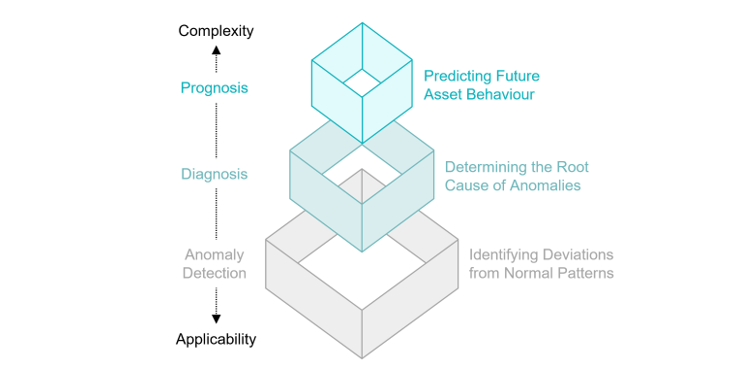
Figure 3 - Data interpretation techniques
Survey on digital twin applications, benefits and perspectives
An industry survey conducted by the working group provides a comprehensive overview of the current status and expectations regarding digital twin adoption. Based on responses from 70 experts representing utilities, manufacturers, service providers, and research institutions, the results indicate that approximately 60% of the surveyed organisations have already initiated digital twin projects. However, most initiatives remain at early stages of maturity, with the majority classified as pilot or prototype level and only a limited proportion in operational use. At the same time, expectations for future adoption are high, with more than 90% of respondents anticipating moderate to significant impact over the coming decade.
The survey highlights that digital twin applications currently focus on asset-level use cases. Real-time monitoring, diagnostics, and predictive maintenance are consistently identified as the most valuable applications, supporting improved decision-making, enhanced reliability, and increased operational efficiency. Lifecycle optimisation and performance simulation also...
ELECTRA, is the digital magazine of CIGRE, you can obtain access as part of a CIGRE membership. Find out more about joining options here.
Other Technical Brochures