Development of low voltage direct current (LVDC) supply and utilization system
Due to the rapid development of distributed energy resources (DERs) and high density urban proliferation, the fast growth of DC loads and increasing consumer demand for higher reliability and power quality, LVDC supply and utilization system (LVDCSUS) has attracted global attention significantly in recent years, particularly in China and Europe.

Shandong University, China
The LVDCSUS is a new type of fully DC ecological, green and efficient power supply and utilization system which is composed of renewable energy resources, energy storage devices, flexible DC loads and communication infrastructures expected with high efficiency, self-recovery, self-control and self-optimization. It can realize the intelligent interaction and flexible energy management of DC sources and equipment by employing the IoT (Internet of Things) technology.
There are usually two major operation modes of the LVDCSUS. One is the ideal DC ecological system purely supplied by the renewable energy generation, which is called Pro-consumer mode as shown in Figure 1. In this mode, the LVDCSUS operates with a self-healing and self-balancing energy system. The other mode is the AC rectified DC common busbar operation mode with the AC power assisting the DC supply which requires at least an AC/DC converter as shown in Figure 2. This model is typically used where green energy is limited and/or DC load demand is high.
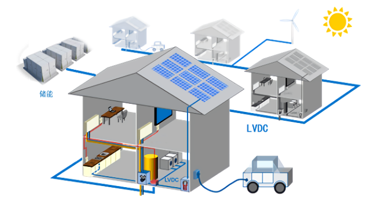
Figure 1 - Pro-consumer mode
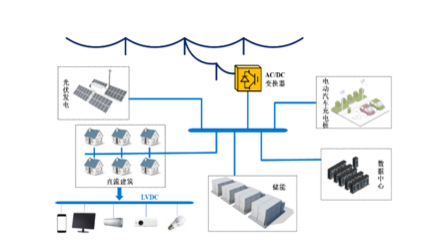
Figure 2 - AC rectified DC common busbar operation Mode
The LVDCSUS has great potential to integrate various kinds of DC loads and is mainly used for the foreseeable scenarios, such as data centers, ICT equipment, smart DC buildings, smart homes, electric vehicles, railways, underground subways, ships and airplanes, etc. as shown in Figure 3.
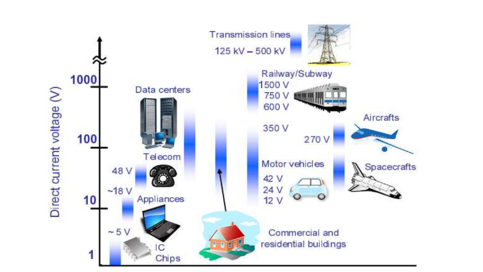
Figure 3 - Application scenarios of LVDCSUS
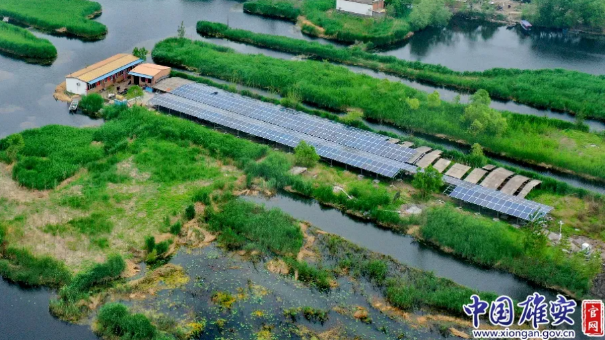
Figure 4 - Wangjiazhai village (IEC SyC LVDC report)
The LVDCSUS is currently in the development phase and expected to play an important role in the future energy systems to provide flexible connectivity interfaces and support a growing number of DC power supplies and DC loads. At present, a number of LVDCSUS applications/ demonstrations and pilot projects/systems have been built and developed in China.
Xiongan New District power supply company of The State Grid Corporation of China was the first to carry out the LVDCSUS research and demonstration projects built in Xiongan New District. Xiong'an New District is a newly established city as a core to further promote the coordinated development of Beijing-Tianjin-Hebei, which is of great practical significance and far-reaching historical significance for concentrating on the relief of Beijing's non-capital functions. Wangjiazhai village project is the first zero-carbon project built in Xiong'an New District to demonstrate and verify the advantages and functions of the microgrid systems and the smart devices. Wangjiazhai village is a pure water village and composed of a main island and 17 satellite islands in Xiongan New District (Figure 4).
In order to improve the ecological environment of Wangjiazhai village and respond to the clean heating policy, the State Grid Xiongan New District power supply company has built a LVDCSUS based green smart microgrid having "1 + 3 + n" mode for the village, i.e. to build “1” all green power demonstration village, to have “3”-layer (village, neighborhood and family) power control system and to install “n” innovative elements, such as photovoltaic (PV) seats which can charge mobile phones (Figure 5), smart street light (Figure 6) and smart rubbish-bins (Figure 7) driven by pure solar energy, piezoelectric footpaths which can generate electricity when walking on it.
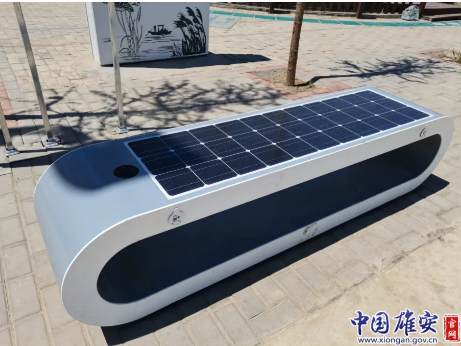
Figure 5 - PV seat
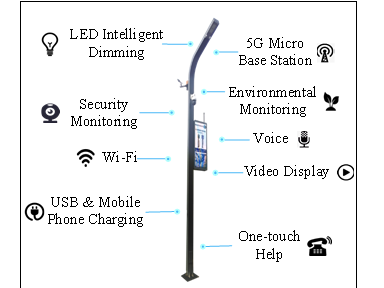
Figure 6 - Smart street light
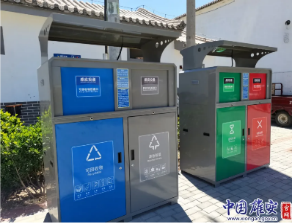
Figure 7 - Smart rubbish-bin
In addition, photovoltaic equipment has been installed for 5 families in Wangjiazhai Village, forming 5 family-level microgrids, which can enable these families to achieve "electricity replacing coal" clean heating in winter and 24-hour household green electricity in summer.
The microgrids, which can operate without connection to the power grid system, consists of 300 kW PV panels, 4 kW wind power generators and 3300 kWh energy storage to provide electricity to the smart homes, public welfare medical centres, catering services and emergency shelters for the villagers. The system is controlled intelligently by Xiong’an City Intelligence Energy Management System (CIEMS) which uses the most advanced and cutting-edge technologies.
"Relying on the current power equipment so far installed, Wangjiazhai Village can be supplied by the microgrids continuously for up to 38 hours. The average annual household power outage time can be reduced by 80 %, which can reduce coal burning by about 2,100 tons and reduce carbon dioxide emissions by about 5,200 tons annually.
Wangjiazhai village LVDC system is the first zero-carbon project built in Xiong'an New District. There are other similar projects that have been built or are under construction in the new district, such as the installation of the smart street lights on a more than 20 km sightseeing and tourist road, a “Green Energy Magic Box” which is an ecological LVDC house converted from an abandoned container, apartments all powered by the LVDCSUS, etc.
The LVDCSUS is a complex, multidisciplinary system which is based on distributed renewable energy and has the characteristics of a bottom-up, self-healing, self-balancing grid energy ecosystem. Its market is in a stage of vigorous development and growth with great potential. However, there is a certain gap currently between the overall long-term development and the short-term attention of users. LVDCSUS is a complex multidisciplinary system based on distributed renewable energy that is characterized by a bottom-up, self-healing, self-balancing grid energy ecosystem. Its market is in a stage of vigorous development and growth, and the potential is huge. However, there is a certain gap between the overall long-term development and the short-term attention of users. Therefore, it is necessary to find a route suitable for LVDCSUS technology, and work together to incubate and build a new green industrial chain to ensure the healthy and orderly development of the LVDCSUS.
References
- V. N. Volkova, A. S. Kudryavtseva, A. V. Loginova, Y. Y. Chernyy and A. E. Leonova, "System Analysis of Innovative Technologies of the Industrial Revolutions," 2018 Third International Conference on Human Factors in Complex Technical Systems and Environments (ERGO)s and Environments (ERGO), St. Petersburg, 2018, pp. 57-61, doi: 10.1109/ERGO.2018.8443813.
- Ma Zhao. Future power supply system: a new generation of low voltage DC[N] (in Chinese). China Science Daily, 2020-05-13(003).
- Ma Zhao, Zhao Zhigang, Sun Yuanyuan, et al. Key technology and development prospect of new generation low voltage DC power supply and consumption system[J] (in Chinese). Power system auto-mation,2019,43(23):12-22.
Suggested content