Materials and Emerging Test Techniques
By Simon Sutton, Chair, and Gordon Wilson, Secretary
The scope of Study Committee D1 has been consistent for many years; it covers new and existing materials for electrotechnology, diagnostic techniques and related knowledge rules, and emerging test techniques which may be expected to have a significant impact on power systems in the medium to long-term. As one of two horizontal CIGRE Study Committees, SC D1 strives to support the other CIGRE Study Committees in their activities and consequently has many joint Working Groups. The mission of SC D1 is to facilitate and promote the progress of engineering and the international exchange of information and knowledge. It achieves this through the synthesis of state-of-the-art practices and developing recommendations which can be applied by our customers, namely, power generators, utilities, manufacturers, and standards organisations such as IEC.
Test and measurement procedures are developed based on the performance of materials subjected to electrical, thermal, mechanical, chemical, and environmental stresses. These can then be applied to the development of new diagnostic and analytical methods to support the asset management of electrical apparatus to aid the work of equipment, subsystem, and system committees.
The current membership of the SC consists of 24 regular members, 5 additional regular members and 11 observer members.
All activities can be grouped in four areas, as follows:
- Liquid and liquid impregnated insulation systems
- High voltage and high current testing and diagnosis
- Solid materials
- Insulating gases
Each of these areas is overseen by an Advisory Group comprised of global experts to advise the Advisory Group Convenor on topics for future study. Additionally, there are two other Advisory Groups;
- Tutorial Advisory Group
- Strategic and Customer Advisory Group
Changes to the Study Committee
The Paris Session in August marked a change in the leadership of the Study Committee. After six years as chairman Ralf Pietsch (DE) stepped down and was replaced by Simon Sutton (UK). There has also been a change of Secretary with Gordon Wilson (UK) replacing Johannes Seiler (DE) who served in the role for 10 years. The Study Committee is very grateful for their years of service.
As is customary, all the Advisory Groups were dissolved by the outgoing chairman. The incoming chairman has kept the same Advisory Group structure and reappointed three of the five previous convenors. The two new convenors are:
- D1.01 Liquid and liquid impregnated insulation systems, Dr Qiang Liu (UK)
- D1.03 Solids, Prof Jerome Castellon (FR)
The Study Committee would like to thank Lars Lundgaard (NO) and Simon Sutton (UK) for their roles as Advisory Group convenors and Special Reports over the past few years.
Finally, Tim Gradnik (SI) has agreed to take on the role of webmaster.
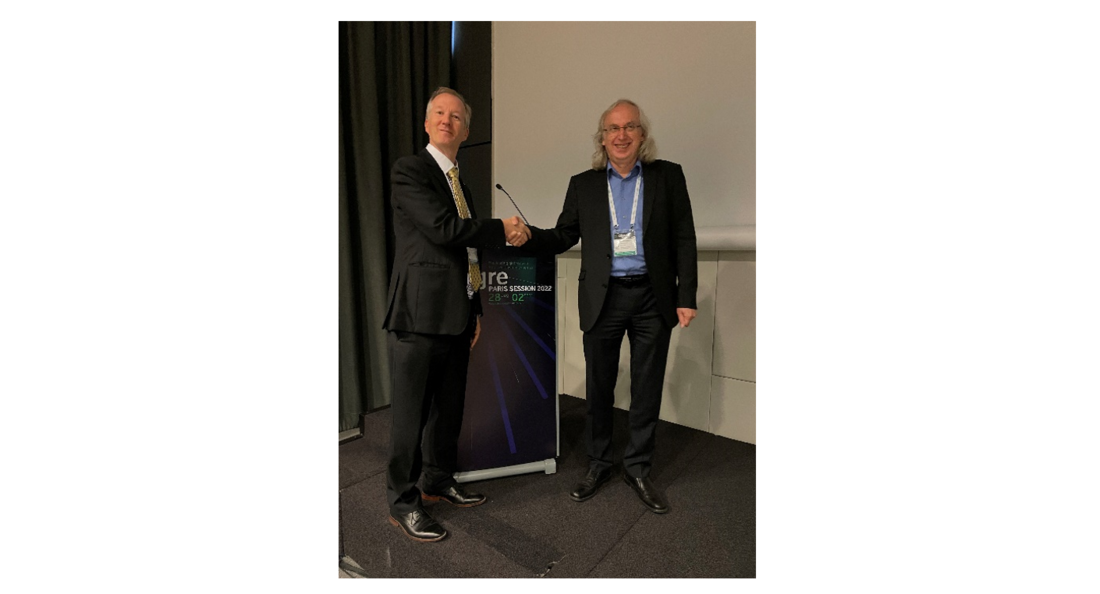
Figure 1 - Chairmanship of SC D1 passed from Ralf Pietsch (right) to Simon Sutton (left)
Activities
SC D1 deals with the characteristics and performances of materials for electrotechnology which covers both conducting and insulating materials, including superconductors and nanocomposites, as well as new fabrication methods such as additive manufacturing which can produce novel graded materials.
In practical applications, insulating materials are used in structures containing one or more electrical insulating materials together with associated conducting parts employed in an electrical device, thus forming an electrical insulating system (EIS). The life of an EIS is frequently determined by the life of electrical equipment under electrical, thermal, mechanical, electro-chemical and environmental stresses, acting either individually or in combination (IEC 60505). SC D1 deals with the associated ageing processes which affect the materials used in the generation, transmission, and distribution of electricity; this includes bulk, surface, and interfacial phenomena.
The scope of SC D1 also covers emerging test techniques. In general, methods of testing and related measurement techniques vary depending on the test object, the purpose of testing and on the conditions of testing. For example, the test object can be the materials, insulating systems, equipment, electrical subsystems, or power systems, and the testing purpose can be to determine electrical, thermal, mechanical, and electro-chemical characteristic properties, as well as ageing performance under various stresses. Such testing can be applied for the purpose of design, type, sample, or routine tests.
Testing always requires the measurement of the stresses as well as the response of the test object to evaluate the performance. Lastly, testing can be used to collect information which forms the basis for diagnosis, e.g., to evaluate the condition of a test object. As such, testing can be performed on-site or off-site as well as under on-line or off-line conditions.
The development of test techniques is driven by various factors, like the introduction of new materials or electrical insulating systems (e.g., polymeric materials, nanocomposites), new requirements on accuracy (e.g., more precise correction factors) or on higher stress levels (i.e., UHVAC, UHVDC) or new test objects (e.g., testing of artificially or naturally polluted insulators). SC D1 studies and synthesises state-of-the-art techniques of testing and measurement, develops relevant recommendations and new diagnostic and analysis methods for asset management, all in close cooperation with its customers.
These major activities are covered by D1 WGs as shown in Figure 2. In 2022, one WG has been disbanded and three new Joint WGs have been approved by the TC Chairman:
- A2/D1.67, “Guideline for online dissolved gas analysis monitoring”
- B3/D1.63, “Guideline for assessing the toxicity of used SF6 gas onsite and in the lab of T&D equipment above 1 kV in substations”
- A2/D1.66, “Breathing systems of liquid filled transformers and reactors”
SC D1 presently has 22 WGs, including two JWGs led by D1 and a further five JWGs led by other SCs; two with SC A2, two with SC B1, one with SC B3. In total, 387 expert members from 38 countries are active in SC D1 led working bodies.
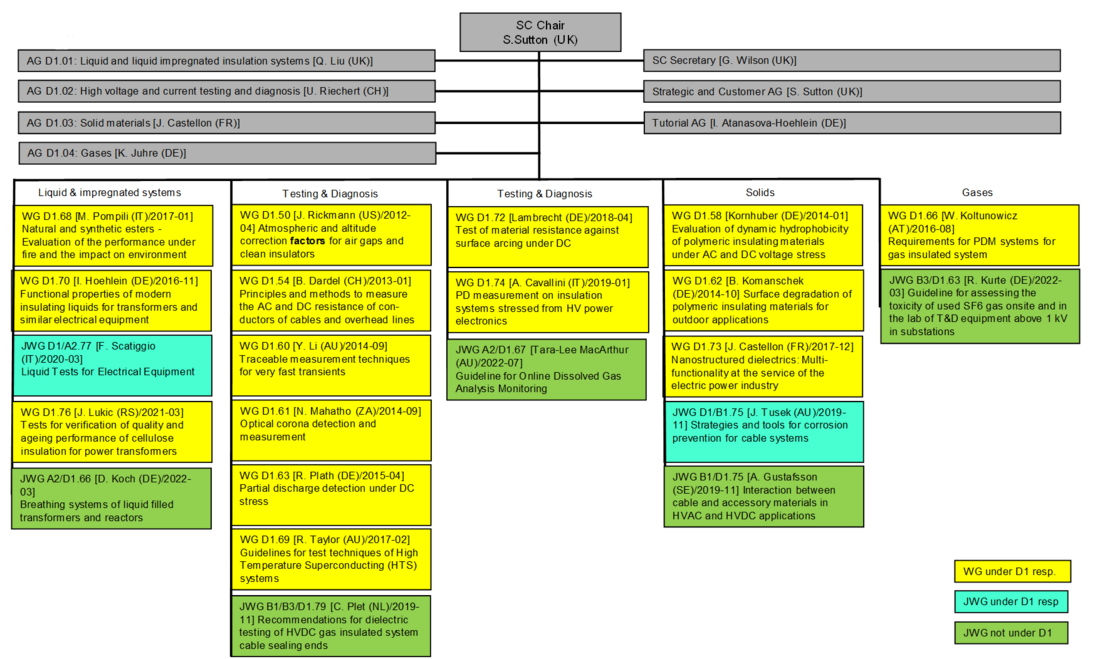
Figure 2 - Organisation chart of SC D1
Since the last Annual Report, two Technical Brochures have been published:
- TB 856, “Dielectric performance of insulating liquids for transformers”, WG D1.70 TF3
- TB 861, “Improvements to PD measurements for factory and site acceptance tests of power transformers”, JWG A2/D1.51
Liquid and liquid impregnated insulation systems, organized by AG D1.01 (Q. Liu)
The Advisory Group focusses on basic phenomena and mechanisms related to conductivity, dielectric performance, dielectric strength and ageing of relevant materials and insulating systems, covering traditional mineral oil based insulating liquids as well as alternative liquids. The work aims to discover and understand the basic physical and chemical mechanisms associated with ageing, thus forming the basis for diagnostics and asset management of products like liquid filled transformers and liquid insulated cable accessories. For example, JWG A2/D1.51 strove to develop improvements to partial discharge measurements for factory and site acceptance tests of power transformers by measuring high electromagnetic waves with the ultra-high frequency (UHF) method: the results were published in TB 861 in Feb 2022. WG D1.65 is dealing with mechanical properties of insulating materials and conductors for liquid immersed transformers: a draft TB is ready and being reviewed by the WG. WG D1.68 is evaluating the fire performance and the impact on environment of natural and synthetic esters.
The functional properties of modern insulating liquids for transformers and similar electrical equipment are being studied by D1.70; the results of Task Force 3 were published in TB 856 in Dec 2021 and another Technical Brochure is being prepared. WG D1.76 is dealing with Degree of Polymerisation (DP) measurements and the relations between functional mechanical properties of cellulose products and measured DP-values. A new JWG with SC A2 entitled ‘Breathing systems of liquid filled transformers and reactors’ was approved in 2022. The proposed work will review transformer breather and sealed expansion systems and provide recommendations on when and how to use breathing and sealing systems.
High voltage and high current testing and diagnosis, organized by AG D1.02 (U. Riechert)
One of the most important foundations for the Advisory Group is the cooperation with IEC TC 42 “High-voltage and high-current test techniques”. Based on a request from IEC TC 42 WG D1.50 was been established, dealing with atmospheric and altitude correction factors for air gaps and clean insulators. After having checked and evaluated the existing correction factors for installations up to 6.000 m above sea level round robin tests were performed by the members of the WG. The Working Group has developed recommendations for the modification of atmospheric and altitude correction factors based on the results and will conclude the work with the publication of the technical brochure in 2023.
WG D1.54 studies basic principles and practical methods to measure the AC and DC resistance of conductors of power cables and overhead lines. The aim is to define a test procedure including suitable equipment for the measurement of AC and DC resistance considering the major influencing factors, e.g., current frequency, current density and conductor temperature. This group should also publish its technical brochure in 2023.
WG D1.60 was established to coordinate the development of suitable hardware and software for traceable measurement techniques for very fast transient overvoltages (VFTO), in order to widen the basis for reference measurement capabilities meeting the relevant calibration requirements. In contrast, WG D1.61 accepted the challenge to develop objective methods and indicators which can be used for optical corona measurements on overhead lines and equipment. The group performed comparative measurements at different sites and laboratories using different types of cameras.
In recent years, the Advisory Group has seen an increasing interest in topics related to the properties and applications of materials and equipment under DC stress. This includes discussing and defining how to test gas insulated HVDC systems, investigation of partial discharge activities under DC, surface arcing under DC, methods to measure the AC and DC resistance of conductors of cables & overhead lines and the evaluation of dynamic hydrophobicity of polymeric insulating materials under AC and DC voltage stress.
WG D1.72 is dealing with test of material resistance against surface arcing under DC and WG D1.74 is investigating PD measurement on insulation systems stressed from HV power electronics. To support the development of existing IEC standards, WG D1.63 is studying methods of partial discharge detection under DC stress and the analysis of partial discharge activity with respect to pulse patterns and the sequence of pulses under various factors of influence, e.g., slope of voltage change, voltage magnitude, and material properties of the test object. The response of measuring instruments and possibilities of noise suppression will also be addressed. With the publication of TB 841 "Dielectric testing of gas-insulated HVDC systems" in 2021, the essential and new test requirements for gas-insulated systems for HVDC were described for the first time. Based on these results, work will continue to compare and harmonise different requirements for different materials and products. The JWG B1/B3/D1.79 is focussed on the recommendations for dielectric testing of HVDC gas insulated system cable sealing ends.
Solid materials, organized by AG D1.03 (J. Castellon)
Currently the Solids AG has several WGs focused on surfaces; in particular, the surface properties of polymeric insulators and the interaction between surfaces within cable accessories. In the former case, the WGs are studying the characterisation and degradation of polymeric insulators under AC and DC conditions. Other activities in the Solids AG includes nanocomposites, corrosion prevention, and field grading.
There are two WGs examining the surface properties of polymeric insulators. Firstly, WG D1.58 is studying suitable test procedures for the evaluation of dynamic hydrophobicity of polymeric insulating materials under AC and DC voltage stress; this work is driven by the need for new and updated standards. Secondly, the experts of WG D1.62 are dedicated to exploring the root cause and mechanisms of surface degradation in polymeric materials for outdoor use, and to derive potential countermeasures for various material groups.
WG D1.73 deals with the multi-functionality of nanostructured dielectrics and continues previous work (Technical Brochures 451 and 661) in this important field of improving material properties with the addition of small amounts of nano-fillers.
There are presently two JWGs with SC B1, namely:
- Strategies and tools for corrosion prevention for cable systems (JWG D1/B1.75)
- Interaction between cable and accessory materials in HVAC and HVDC applications (JWG B1/D1.75)
The former is a follow-on to the more general, “Understanding and Mitigating Corrosion” (TB 765), published in 2019. JWG D1/B1.75 is collecting case studies of unexpected instances of corrosion and the corrective actions taken by asset owners. The latter is examining the main parameters involved in the mutual chemical and physio-chemical interactions of cable/accessory components including degradation and methods to analyse material compatibility.
Insulating gases, organized by AG D1.04 (K. Juhre)
Thanks to its excellent technical properties, sulphur hexafluoride (SF6) is still the predominant gas used the insulating and arc extinguishing in gas-insulated systems. However, due to its high global warming potential (GWP) intensive research and development of alternatives with lower GWP is ongoing within industry and academia. These alternative gases will contribute to the sustainability of the energy supply with SF6-free gas-insulated systems. Both, SF6 and its alternatives, are covered in the work of SC D1 and specifically, D1.04.
Natural-origin gases (e.g. nitrogen or carbon dioxide) as well as mixtures with fluorinated gases are some of the alternatives to SF6 gas insulation being considered. Following on from WG D1.51 (TB 730), which considered natural-origin gases, WG D1.67 described methods for identifying new insulating gases and gas mixtures. It investigated and summarized the dielectric properties of new non-SF6 insulating gases and gas mixtures for gas-insulated systems. The WG summarized the related state-of-the-art knowledge and conducted an exhaustive round-robin-test campaign on the electric strength of novel insulating gases: the results were published in TB 849.
Partial discharge monitoring (PDM) systems are important tools to assess the condition of gas-insulated systems. WG D1.66 is working on a definition of GIS PDM requirements to ensure that signals from incipient PD defects are reliably detected, monitored, and interpreted. The technical guidance will help users to specify and choose a PDM system best suited to their needs and their level of PD know-how. Further work on PD is being undertaken by the new WG D1.78, “Partial discharge properties of non-SF6 insulating gases and gas mixtures” which is currently starting its work.
The determination and classification of used SF6 gas toxicity, both onsite and in the lab, are being considered in JWG B3/D1.63. The target is to prepare guidelines how to classify used SF6, taking into account the practical application.

CIGRE active Working Groups / Call for experts
Relations to other organisations
SC D1 strives to establish and maintain good relations to internal customers, i.e., equipment and sub-system committees, as well as to external organizations, like IEC, IEEE and CIRED. The main partners within IEC are TC 2 “Rotating Machines”, TC 10 “Fluids for Electrotechnical Applications”, TC 14 “Power Transformers”, TC 36 “Insulators”, TC 42 “High-voltage and high-current test techniques”, TC 90 “Superconductivity”, TC 99 “Insulation co-ordination and system engineering” and TC 112 “Evaluation and Qualification of Electrical Insulating Materials and Systems”. SC D1 also has a good relationship with the relevant IEEE organisations. With some technical committees of these organisations, SC D1 has established formal liaisons.
Tutorials
SC D1 has established a set of 28 tutorials covering specific topics in its field of activity, all based on published Technical Brochures.
This year a tutorial on the “Electric performance of new non-SF6 gases and gas mixtures for gas-insulated systems” was held at the 2022 CIGRE Session. This tutorial, presented by Karsten Juhre and Michael Walter, and supported by Thomas Götz for the Q&A, summarized the work of CIGRE WG D1.67, which was also published in CIGRE Brochure 849 in October 2021. Approximately 240 delegates joined this tutorial and heard about the important work in the technical field of new insulating gases and gas mixtures, as replacements for the still common SF6. The tutorial described methods for identifying new insulating gases and gas mixtures, summarised the dielectric properties of these gases, and provided information on the practical insulation performance of new non-SF6 insulating gases and gas mixtures for gas-insulated systems.
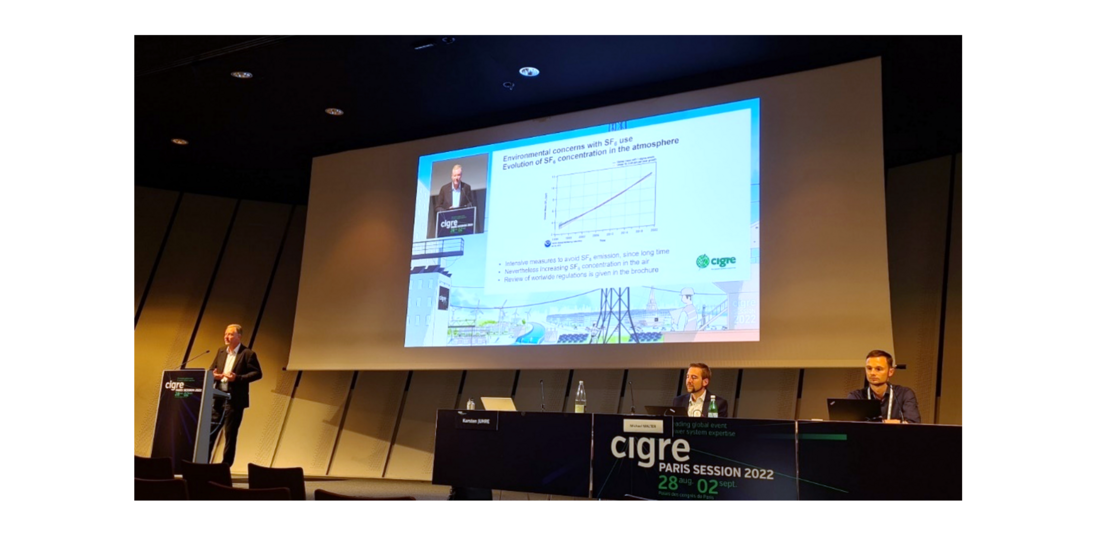
Figure 3 - Karsten Juhre presents during the D1.67 tutorial during the Paris Session
A further four tutorials were held during the year:
- “Moisture in transformers and its mitigation”, WG D1.52, Virtual Tutorial for CIGRE Australian/NZ, April 2022
- “Dielectric performance of insulating liquids for transformers”, WG D1.70 TF 3 at the 21st IEEE International Conference on Dielectric Liquids, May-June 2022, Spain
- “Partial discharge detection under DC voltage stress”, WG D1.63 at the VDE Hochspannungstechnik, November 2022, Germany
- “Electric Performance of new non-SF6 gases and gas mixtures for gas insulated systems”, WG D1.67 at the CIGRE VDE Hochspannungstechnik, November 2022, Germany
Publications
The following two CIGRE Technical Brochures were published since the last annual report:
Awards
This year the CIGRE Technical Council Award was given to Wojciech Koltunowicz (DE) for his expertise, contributions and many years of service to the CIGRE community. Additionally, in recognition of his hard work and dedication during his years as SC D1 Chair, Ralf Pietsch was made an Honorary Member of CIGRE.
Meetings and Events
After two years of virtual CIGRE conferences, this year SC D1 was pleased to hold its Group Discussion Meeting in-person at the Paris Session. The Group Discussion Meeting was chaired by the then SC Chair Ralf Pietsch, assisted in the planning and delivery by the special reporters Lars Lundgaard convenor of AG D1.01 (Liquid impregnated systems), Uwe Riechert convenor of AG D1.02 (High voltage and current testing and diagnosis), Simon Sutton convenor of AG D1.03 (Solids) and Karsten Juhre convenor of AG D1.04 (Gases).
This year a total of 55 papers from 19 countries were accepted for the Paris Session. There were 42 contributions to the questions posed in the Special Report based on these papers, along with a lively discussion following the presentations. The Group Discussion Meeting also included three excellent presentations from NGN members.
The Poster Session was kindly organised by Maria Kosse. Authors and delegates clearly enjoyed the face-to-face discussion and there were lively conversations happening all around the room. Some authors had clearly thought hard about using the digital screens to maximum effect to present supplementary information on the additional slides.
My thanks go to all the above individuals who worked incredibly hard before and during the conference to ensure the smooth running of the Group Discussion Meeting.
More information on the SC D1 activities during the Paris Session can be found in the General Report issued after the event.
CIGRE Session 2022 Materials
SC D1 Package available on eCIGRE
Free for Members and Delegates
This is the first Annual Report under my chairmanship and its contents reflect the hard work and dedication of the previous Chairman (Ralf Pietsch) and Secretary (Johannes Seiler) to whom I wish to express my sincere thanks.
As the role and influence of CIGRE continues to expand, I look forward to working with all the Study Committee members, AG and WG convenors, and wider CIGRE community.
Finally, the next Study Committee meeting of SC D1 will be in early September 2023, at the CIGRE Symposium in Cairns (Australia) along with ten other Study Committees. The event which is focusing on, “end-to-end electricity system: transition, development, operation and integration” is shaping up to be great conference, with the opportunity for plenty of interaction between the Study Committees. I look forward to meeting many of you there.
Contact
Suggested content