Power system operation and control
By Jayme Darriba Macêdo, Chair & Flávio Rodrigo de Miranda Alves, Secretary
Introduction
Analyzing the year 2022, from the point of view of the Operation of Electric Power Systems, could just be a continuation of the stabilization process that we should be experiencing with the resumption of normality after the COVID-19 pandemic.
However, major technical changes and changes in the behaviour of electricity consumers have ensured the well-known lack of routine in activities in this field, with constant challenges.
The growth of intermittent renewable generation with wind power plants, including offshore plants, and photovoltaic plants could happen only to meet the loads, also in growth, or in natural recovery.
However, the growth of Distributed Energy Resources, close to and even promoted by the consumers themselves, are guaranteeing challenges since the unpredictability of demand, or even lower-than-expected consumption values, have been changing load curves and usage generation available in the bulk system.
It was not enough that the operators had to face the variability of the generation availability of these plants, but they also had to live with the excess of this availability and the frustration of the full generation capacity available.
To overcome the challenges of intraday variability or over longer periods of intermittent renewable generation, new options can already be seen with the construction of pumped storage plants that are now starting to come into operation in several countries.
The use of electrochemical accumulators (batteries) is also on its way and is gaining ground, although the expected reduction in their cost is not yet a decisive factor for a large increase in use.
The use of surplus energy for the production of hydrogen also continues to expand, reducing the frustration of wasting available energy that cannot be accommodated by demand.
Finally, the ability to take advantage of existing Interconnections between electrical systems still appears as a strong weapon in the fight against this variability. However, in addition to the need for these interconnections, economic and technical issues have been causing the growing decommissioning of equipment, especially in the European system and, as a result, the use of this energy exchange resource tends to be more affected, depending on of the area considered.
And the focus of technicians concerned with the safe operation of the system could not disregard the reduction of inertia levels which, even though it has ceased to be the most urgent focus in the problems that arise, remains with its characteristic of dangerous hidden risk.
On the other hand, the capabilities existing in equipment associated with the new energy transition elements are beginning to be better used as voltage control resources and even blackstart capabilities or important support in system recovery.
In the same way, in the activities of CIGRE and, in particular, of our Study Committee C2, 2022 was also a year for us to get closer to the reality that existed in pre-pandemic normality.
Not that there was any expectation that everything would go back to the way it was before, but the arrival of the idea that we would finally return to an in-person CIGRE Session, at the Palais de Congrès, in the second half of 2022, filled us with excitement.
And all the intense preparation work for the CIGRE Session 2022 was of great reward for SC.C2.
Previously, we had great success in the number of participant registrations and, already on Monday, in the traditional Large Disturbances Workshop, with SC C2 working together with SC C5, we filled the Bleu Amphitheatre with more than 500 registered participants. In face of this expressive audience,the Large Disturbances Workshop will take place in the Grand Amphitheatre during CIGRE Session 2024.Likewise, we had great success in our Group Discussion Meetings, not only because of the verified participation but also because of the excellent technical content of the papers and the discussions they provided. On this topic, it is always important to highlight the great work of our Special Reporters from the beginning of the preparation to the post-event reports.
Still during the CIGRE Session, we were able to perform again internal discussions with face-to-face Study Committee and Strategic Advisory Group (SAG) meetings.
An excellent Tutorial was delivered during the 2022 CIGRE Session, successfully concluding the work of Working Group C2.40.
And, to conclude, it was the first opportunity for the SC C2 Chair to participate in person in a Technical Committee meeting since he assumed the position in 2020, in the middle of the COVID-19 pandemic.
But, evidently, the work of SC.C2 did not stop at the CIGRE Session from July 2022 to June 2023.
Although we were not officially in the group of Study Committees taking part in the Muscat International Symposium, some technical papers related to System Operation were proposed and submitted to review by SC C2 volunteers. These full papers were also presented during the event, thus configuring the presence of our Study Committee.
This symposium took place in Muscat, Sultanate of Oman, in March 2023. We take this opportunity to once again thank the reviewers.
And, regarding the events, before closing the topic, we highlight all the work developed in the preparation of the Cairns International Symposium that will take place in September, in Australia, on the leadership of our SC.C2 and SC.C5, with the participation of more of ten other Study Committees. We already have, for our SC.C2, 29 full papers ready and reviewed thanks to the work of our volunteer reviewers. Thank you so much again. In addition, our Study Committee has scheduled two Tutorials and some important meetings for the Cairns event.
Finally, our preparatory actions for the CIGRE Session 2024 are already underway.
In addition to the events, the actions of ongoing Working Groups are following their way, and we are adding to this list two new Working Groups that have already started their activities, bringing great interest from several specialists. These new WGs will deal with the very current themes of insertion of Off-shore Wind Power Plants and Artificial Intelligence (AI) applications focusing on Power System Operation and Control.
We are still alive and very active, as are our challenges and our growing need to cope with them. And it is the inexhaustible technical capacity of our participants that has been guaranteeing and keeping us confident to maintain the high level of results of our Study Committee.
SC C2 Mission and Scope
The scope of the SC C2 covers the technical, human resource and institutional aspects and conditions for a secure and economic system operation of power systems in a way that is in compliance with requirements for network security, against system disintegration, equipment damages and human injuries, and security of electricity supply.
Unbiased and high-quality knowledge dissemination to the power systems community by CIGRE Study Committees is a strong pillar for the development and performance of power systems, especially in the increasingly integrated environment. This applies not only to current but also to future power systems. SC C2 therefore needs to understand, use and integrate results from other Study Committees to assure that technical concepts can be applied in real-time in various contexts and implemented by the System Operators. An area which is unique for C2 is however the dependence on good performance of human resources in performing operational planning and real-time system operation. In these respects, SC C2 embraces a wide range of competence areas and interfaces to other disciplines.
The mission of SC C2 can be summarised in the following four points:
- To facilitate and promote knowledge dissemination and worldwide collaboration in the field of system operation and control, providing adequate conditions for progress of engineering.
- To facilitate unbiased technical information exchange, integrating solutions and recommendations for system operations issues and problems. These first two points are achieved among others by the publication of Technical Brochures and papers, delivering tutorials, and participating in conferences, symposia and colloquia.
- To prepare for the foreseen future challenges by integrating and consolidating available knowledge and taking into account the usage of new and proven technologies. For example, the joint effort of several Study Committees in establishing Joint Working Groups, where different expertise and knowledge is combined, as well as in writing multi-disciplinary Reference Papers.
- To engage and encourage young members to increase their involvement in the SC activities. By integrating them into Working Groups, a bridge between the young experts and experienced members can be built. SC C2 aims to connect, when possible, a young member to a mentor from the same SC and NC. This gives the opportunity to support the young member's development in a supervised way.
Structure
An overview of the structure of SC C2 is given in Figure 1. The SC has 27 regular members and 12 observer members, 7 active Working Groups of which 2 are Joint Working Groups with other CIGRE SCs, and 3 Advisory Groups.
The Strategic Advisory Group, consisting of the SC Chair, Secretary and other SC C2 experts, deals with SC strategy and updates the scope of the Technical Directions. The Publication Advisory Group is responsible for the revision of synopses and papers for CIGRE activities where SC C2 plays a role. The Tutorial Advisory Group (TAG) coordinates the development, planning, quality assurance and delivery of tutorials for conferences, symposia, colloquia and webinars. There are around 195 experts from 42 countries actively involved in SC C2 activities.
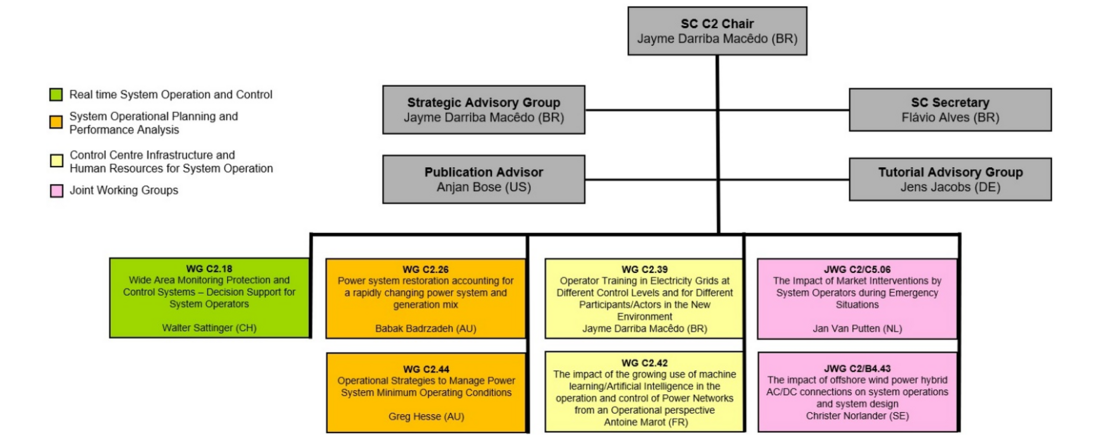
Figure 1 - SC C2 Structure
Figure 2 gives an overview of the geographical distribution of SC C2 members.
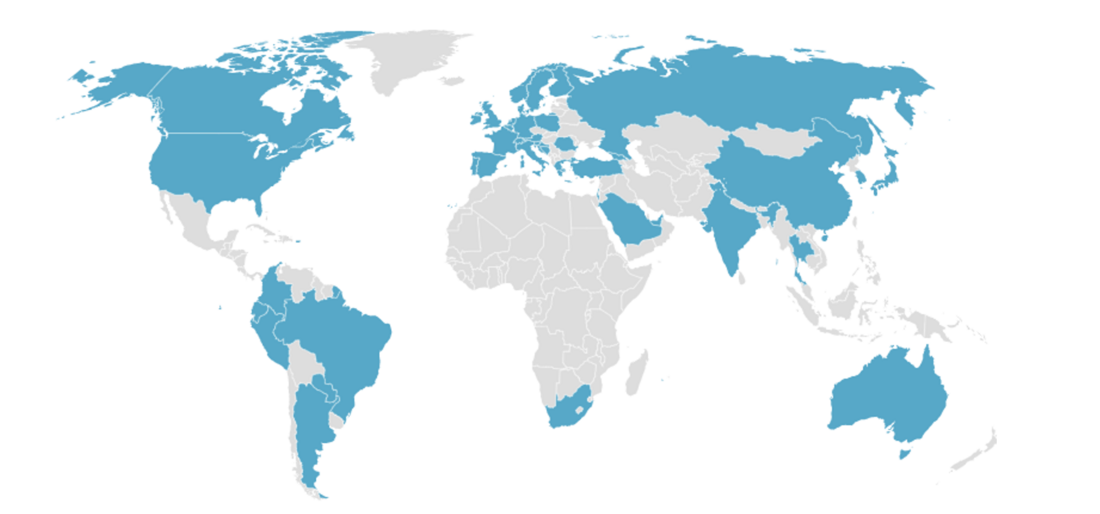
Figure 2 - Geographical Distribution of SC C2 Members
Main technical directions
SC C2 has defined three Technical Directions (TD) to address important emerging factors that will influence and define new requirements on the System Operation performance.
TD 1: Real-time System Operation and Control
- Wide area control, supervision and increased coordination: integration of regional and national grids into large control areas
- Operation and control of new technologies and system protection schemes
- Increased power system controllability, observability, flexibility and exchange of information, both at transmission and distribution level: e.g. voltage control, frequency control
- Interaction between market mechanisms and power system operation, e.g. ancillary services and congestion management
- Operational real-time security and risk assessment
- Maintaining Security of Supply, Emergency control and restoration procedures and tools
- Information and data exchange in real-time operation
The Working Group C2.18 and the Joint Working Group C2/C5.06 address topics in this TD 1.
TD 2: System Operational Planning and Performance Analysis
- Impact on system operation from new generation mix, storage and changes in electrical load behaviour
- Close to real-time operation, crucial for a successful and secure real-time operation, performed both by operational planners and control room operators
- Security assessment in Operational Planning, including coordinated activities
- Assessment of monitoring, control and protection functionalities, including development of new operational strategies
- Emerging Operational Issues for Transmission and Distribution Interaction
- Impact assessment on integration of new technologies
- Blackout integral analysis, defence plans, resilience schemes and restoration strategy considering the evolving environment
- Reliability, network security principles and generation and transmission adequacy
- Operational requirements in Grid Codes
- Information and data exchange in the operational planning timeframes
Working Groups C2.26 and C2.44 and the Joint Working Group C2/B4.43 address topics in this TD 2.
TD 3: Control Centre Infrastructure and Human Resources for System Operation
- Knowledge management and Operator training
- Operator training simulator and other training tools
- Control Centres processes, methods, tools and organisation development
- Tools for decision support and situational awareness
- Integration and exchange of information in system operations and data management
- EMS/SCADA systems, specifications and experiences
- WAMS system requirements and their integration within CC
- Control Centre reliability and resilience
- Information, cyber-security and other vulnerability aspects on control centres
The Working Groups C2.39 and C2.42 address topics in TD 3.
However, it is relevant to point out that some of the WGs touch upon more than one technical direction.
Working Groups Report
Below a short update of the Working Groups active in 2022-2023 is provided.
WG C2.18 - Wide Area Monitoring Protection and Control Systems – Decision Support for System Operators
The Working Group activity was focused on finalize the Technical Brochure “Decision Support for System Operators”, which complements the work documented in the TB 750 titled “Wide Area Monitoring Systems – Support for control room applications” while describing additional developments done in the meantime in the field as well as describing more details with respect of Wide Area Monitoring including Control and Protection application tools.
The Technical Brochure is based on a pragmatic approach, starting from the different physical phenomena that require a decision by the control room staff, describing it from a scientific perspective and discussing the solutions applied by the System Operators in real life. The document describes also the state of art of on/offline applications and tools, focusing on the interaction and integration with EMS/SCADA, including the evolving analytics/AI promising perpesctives. An important focus is dedicated to the WAM/WAMPAC system performances and cybersecurity constraints with aim to support the reader in the right selection of the proper architecture and design, considering also communication, synchronization and protocols issues.
Figure 3 reports and example of real event with aim to show the significant improvement of quality of the analyses and deep comprehension of system behaviour during large disturbances.
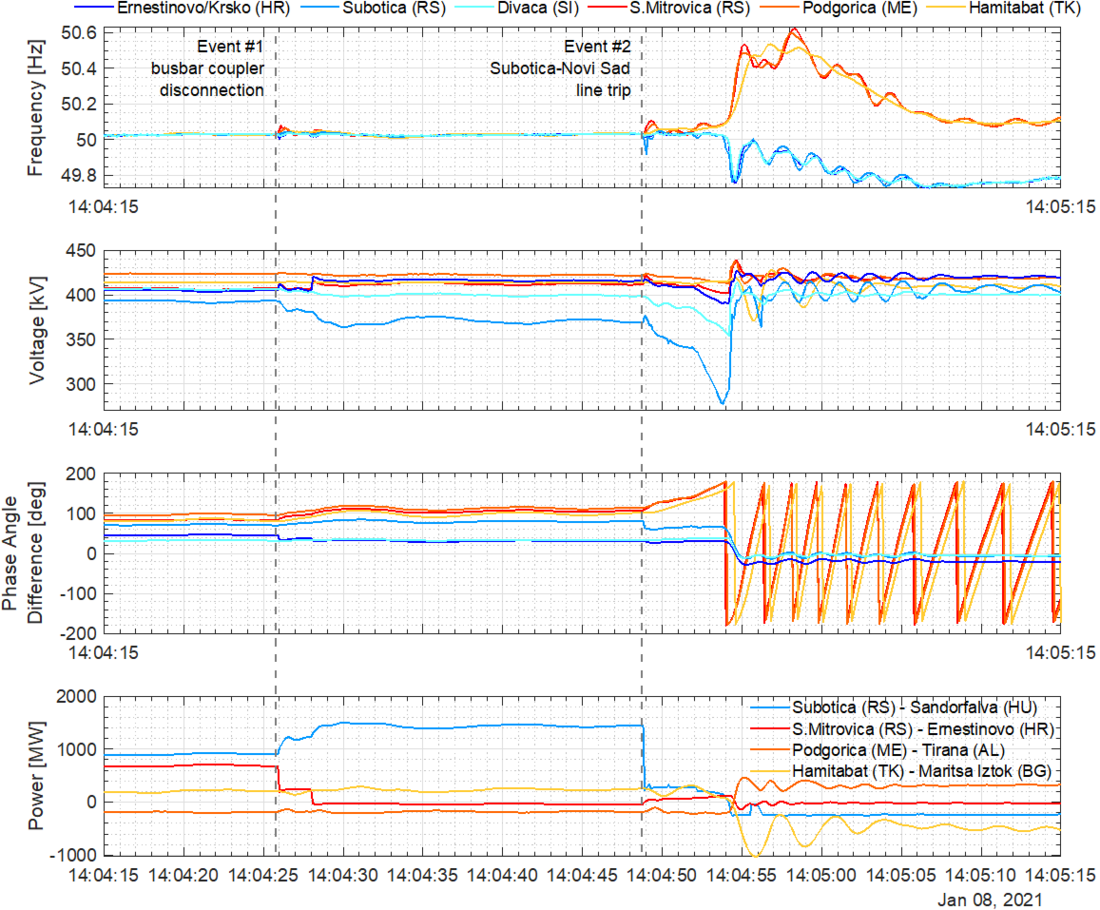
Figure 3 - Complete Event overview based on PMU data (CE system split on January 8th, 2021).
WG C2.26 - Power system restoration accounting for a rapidly changing power system and generation mix
The Working Group C2.26 focused on identifying emerging risks on system restoration, investigate opportunities for increased utilisation of new and emerging technologies during system restoration, and enable system operators and network owners to continue executing a successful system restart as required in an environment of rapidly changing generation mix. Key considerations in this WG were lessons learned and actions taken from recent blackout events, the role of grid-following and grid-forming inverters in system restoration, positive and negative impacts of distributed energy resources, physical testing of black start capability at the system level, the impact of cyberattacks on system restoration, and tools and techniques for analysing system restoration. The WG comprised 25 experts from 15 countries. The resultant Technical Brochure has already been approved by the Study Committee and is expected to be published by September 2023.
WG C2.39 - Operator Training in Electricity Grids at Different Control Levels and for Different Participants/Actors in the New Environment
The Working Group started its work in August 2018. By the end of 2019, the final version of Document No. 1 was completed and constitutes the first chapters of the Technical Brochure, the expected final product of the WG. This document clarified the existing situation on the subject based on the scenarios presented by the 16 companies surveyed. From there, the group began to work on the 9 items considered important for greater detailing of updated training based on simulator exercises. Research and analysis of the results of the responses were carried out and, today, the versions of each of these items are each of the chapters of the Technical Brochure, which is practically ready and, very soon, will be presented to the Secretary and Chair of the Study Committee for the start of its approval process.
The forecast is that by the end of 2023, the Technical Brochure will be published.
The WG comprises 18 active participants representing 14 different countries.
WG C2.42 - The impact of the growing use of ML-AI in the operation and control of power networks from an operational perspective
The main goals of this WG are to i) conduct an impact assessment of the usage of novel and state-of-the-art AI technologies on System Operations and Operators decision-making, ii) the identification of associated risks and core requirements for system operations (in terms of digitalization, data, and IT processes), iii) survey ongoing developments in power system industry to capture operational learning or experiences so far with AI, and iv) identify current trends for further development and integration. The WG started its activity in March 2022, and defined the following main topics for the technical brochure (planned to be published by December 2023):
- Taxonomy for AI in systems operations
- AI role in flexible operation
- State-of-the-art review of AI applications in power systems
- Survey of system operation practices
- AI regulation
- Unintended consequences of AI
- Technical, organizational, and environmental AI needs
- Roadmap of innovating with AI for control centres
Moreover, the WG conducted a survey “on the impact of the growing use of ML/AI in the operation and control of power network” between November 2022 and March 2023 and received 109 unique respondents from 26 countries, (plus 9 undeclared), where the majority were from U.S.A. and China, but with an excellent worldwide spread. According to the survey, around 60% of operators expect the impact of the value of ML in enhanced human decision-making and forecasting, and 40% expect ML will improve using data. ML already is used on around 50% of innovations for demand and renewable energy forecasting. The use cases of outage management, planning, the impact of weather events, and frequency risk and uncertainty management are not used but are of high priority (around 35% of respondents).
| Use case | Not relevant/low priority [%] | Medium/high priority [%] | Already in use [%] |
|---|---|---|---|
Forecasting Load and DER | 4 | 48 | 48 |
Risk assessment | 26 | 65 | 9 |
Grid monitoring | 27 | 65 | 8 |
Operations processes | 34 | 60 | 6 |
Simulation | 36 | 57 | 7 |
Market management | 36 | 57 | 7 |
Unplanned, extreme emergency | 35 | 60 | 5 |
Reporting assistance | 45 | 49 | 6 |
Together with the Technical Brochure, the WG plans to deliver a paper about a roadmap for ML-driven algorithmic advancements in electrical networks.
The Working Group has 26 experts (R&D / Academia from the AI community and power systems, system operators, industry, regulators, and policy makers for digitalisation) from 18 different countries.
WG C2.44 - Operational Strategies to Manage Power System Minimum Operating Conditions
The WG was approved by the Technical Council in June 2023 and is presently accepting nominations. The kick off meeting will take place during the Cairns Symposium, in September 2023.
JWG C2/B4.43 - The impact of Offshore Wind Power hybrid AC/DC connections on System Operations and System design
The WG C2/B4.43 is made up of utility representatives, consultants, manufacturers and academics, from 15 countries. A survey for the work of the JWG has been prepared and is sent for approval to the CIGRE SC C2 and SC B4 Chairs. The plan is to send this survey before the summer holidays and have the results analysed before the CIGRE Cairns symposium which is beginning of September 2023. Also a draft structure for the Technical Brochure has been determined which will serve to develop its content. A first draft of the Technical Brochure is expected by Q2-2024.
JWG C2/C5.06 - The Impact of Electricity Market Interventions by System Operators during Emergency Situations
The JWG started its work in October 2021 and expects to deliver the Technical Brochure by the end of 2023. The JWG organises 2 hours on-line meetings every 3 or 4 weeks, this works well and keeps the momentum, however the physical meeting during the 2022 Paris session proved that actual physical presence adds a lot to the cooperation.
In 2022 the JWG launched a survey and started to process the 21 responses received. The knowledge gained in that way was discussed in detail and now this knowledge together with other input is used while drafting the Technical Brochure. The responses did not (as hoped) provide full clarity on the questions “what is an intervention“ and “what is an emergency”, this is further debated in the JWG and will be addressed in the Technical Brochure. The responses to the survey and also further investigations learn that there are not many practical situations where system operators intervened in market processes during emergency situations and therefor there is little real life experience with the impact such interventions have. As mentioned above the Technical Brochure is expected by the end of 2023 and will contain all results of the JWG work.

CIGRE active Working Groups / Call for experts
Past Tutorials & Webinars
During the 2022 CIGRE Session, on Thursday, 01 September 2022, Michael Power, convener of WG C2.40, and Tony Hearne, delivered a tutorial titled "TSO-DSO Co-Operation – Control Centre Tools Requirements" on behalf of SC C2. As this tutorial was the last activity to be completed by WG C2.40, it was disbanded soon after.
On Wednesday, June 28th 2023, Antoine Marot, Convener of WG C2.42, and members of the WG delivered a webinar on the results of the survey on impact of growing use of machine learning and artificial intelligence in the operation and control of power networks.
CIGRE Session 2022 Materials
SC C2 Package available on eCIGRE
Free for Members and Delegates
Joint Technical Activities
The SC also participates in other Working Groups that are being led by other SCs. SC C2 is part of Joint Working Groups C6/C2.34, D2/C2.48, C4/C2.58/IEEE and C4/C2.62/IEEE. The SC has active liaisons in the Working Groups C1/C4.36, C6.36 and C6.40.
Publications
Working Groups C2.18, C2.26 and C2.39 and Joint Working Group C2/C5.06 are finalising their Technical Brochures, which are expected to be published in 2023.
Awards
The following SC C2 members received CIGRE awards in 2022:
- Ninel Cukalevski (Serbia) was awarded the Honorary Member Award;
- Walter Sattinger (Switzerland) was awarded the Technical Council Award;
- Doina Ilisiu (Romania) was awarded the Distinguished Member Award.
Future Activities
The next events for SC C2 are:
- 2023 CIGRE Symposium – 4-7, September, 2023 – Cairns, Australia - Chair: SC C2 and SC C5 – B1, B3, B5, C1, C4, C6, D1 and D2.
- Franco Crisci and members of WG C2.24 will present the tutorial titled “Mitigating the risk of fire starts and the consequences of fires near overhead lines for system operations” during the 2023 CIGRE Symposium in Cairns, Australia, in September 2023.
- Babak Badrzadeh and members of WG C2.26 will present the tutorial titled “Power system restoration accounting for a rapidly changing power system and generation mix” during the 2023 CIGRE Symposium in Cairns, Australia, in September 2023.
Conclusions
Speaking about Power System Operation and Control, it is impossible not to get more and more motivated, now that the Pandemic is over, with the challenges that the changes of the Energy Transition impose on us.
Developing new knowledge, perhaps, has never been so important. And development already leads us to the need to share everything we need to create to ensure safety in the operation, which raises the spirit of CIGRE in our routines.
May the new knowledge be absorbed and applied by the teams of professionals who carry out their routines in the System's Control Rooms. By the way, these rooms that are changing their characteristics so much, with an evolution marked by high speeds and technological depths.
Finally, technical challenges continue to be the motivation to develop our knowledge and face them.
That CIGRE remains stronger and stronger within each one of us.
Contact
Suggested content