Energy technology solutions for Africa’s just energy transition
There is currently a global phenomenon of climate change due to increasing global greenhouse gas (GHG) emissions from extraction and combustion of fossil fuels indiscriminately in pursuit of economic growth and higher standards of living. Africa is endowed with fossil fuels, especially in the South and this has led to South Africa being the 12th largest GHG emitter in the world as well as the country that is responsible for significant exports of coal for global electricity production.
By Aradhna Pandarum, Council for scientific and industrial research – Acting Research Group Leader (South Africa)
Background
However, the African continent only contributes to 3% of the global emissions but loses 5-15% in GDP each year due to climate change impacts [1]. Although the African continent contributes insignificantly to climate change via GHG emissions, it warms twice as fast as everywhere else with 108-116 million people expected to be exposed to sea level rise risk by 2030 if the globe continues on its current trajectory [2].
According to an analysis completed by the World Resource Institute, in 2020, the electricity sector contributes to 42% of global emissions whilst the entire energy sector contributes to 73.2%. These facts highlight the severe need for the globe to transition from a carbon-based economy to one that is based on low carbon energy technologies. This article provides insight into the possible low carbon energy technologies and energy sector developments that are to be considered for Africa’s just energy transition. A just transition requires significant consideration of social and economic imperatives for technologies and pathways that are to be selected. Some of these imperatives include job losses/gains, economic growth, skills required, small, medium, and micro- enterprise development, community inclusion, health impacts and community ownership. South Africa itself grapples with the triple challenge of unemployment, inequality and poverty, having the highest unemployment rate and inequality rate globally. It is believed that the green economy can assist with these challenges and offer more opportunities to strengthen the African economy at large. However, there are still some barriers that hinder these developments. The major barriers are access to funding, skills shortages, and the lag of enabling policies and regulations. The challenge of funding has been realized by developed countries to some extent and South Africa has been fortunate to receive various pledges at the conference of parties (COP) 26 from France, UK, Germany, EU, and US for a total of USD8.5bn in the country’s efforts to decarbonize the energy sector. This partnership is referred to as the Just Energy Transition Partnership (JETP). Recently, the Spanish government had pledged a further USD2.3bn to this initiative. Although this indicates a good appetite from developed countries to South Africa, such countries have seemed to leave out other African countries that require funding for their transition. Further investigation is required as to why this is so.
Review of future energy technologies
Africa’s current power generation is dominated by fossil fuels representing 71% as evident in Figure 1 below.
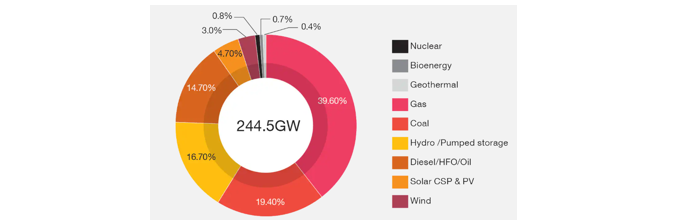
Figure 1 - Africa's power generation mix [3]
The globe has realized that the easiest and most low-cost decarbonization solution (in terms of levelized cost of electricity (LCOE)) for the electricity sector emanates from solar photovoltaic (PV) and wind technologies. This is visible in the current global developments as well as the future expansions proposed. IRENA predicts that renewables will cater for a 25% reduction in GHG emissions. This is followed by energy efficiency interventions catering for 25%, electrification of other sectors – 20%, bioenergy with carbon capture and storage (BECCS) – 14%, hydrogen – 10% and lastly, carbon capture and storage (CCS) – 6% [4]. This is in line with the future South African energy landscape which is envisaged to take the form in Figure 2 below. This can be extended to the African energy landscape as many synergies do exist.
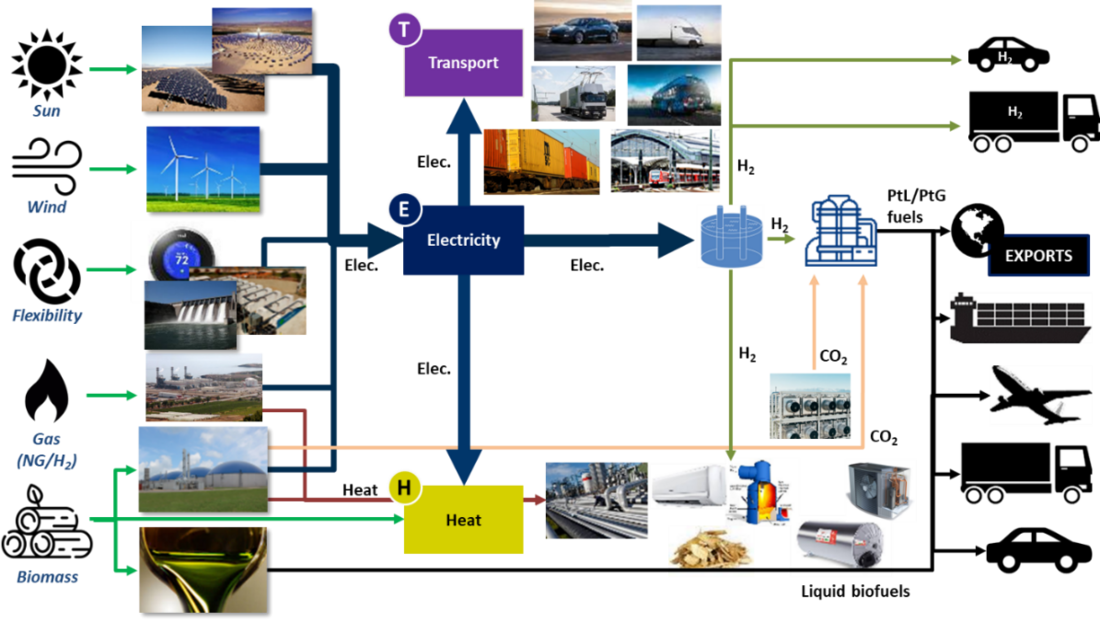
Figure 2 - CSIR Analysis on future South African energy landscape 1 (CSIR, flaticon.com)
1 Full sector modelling still to be completed for South African energy sector decarbonization pathway/s
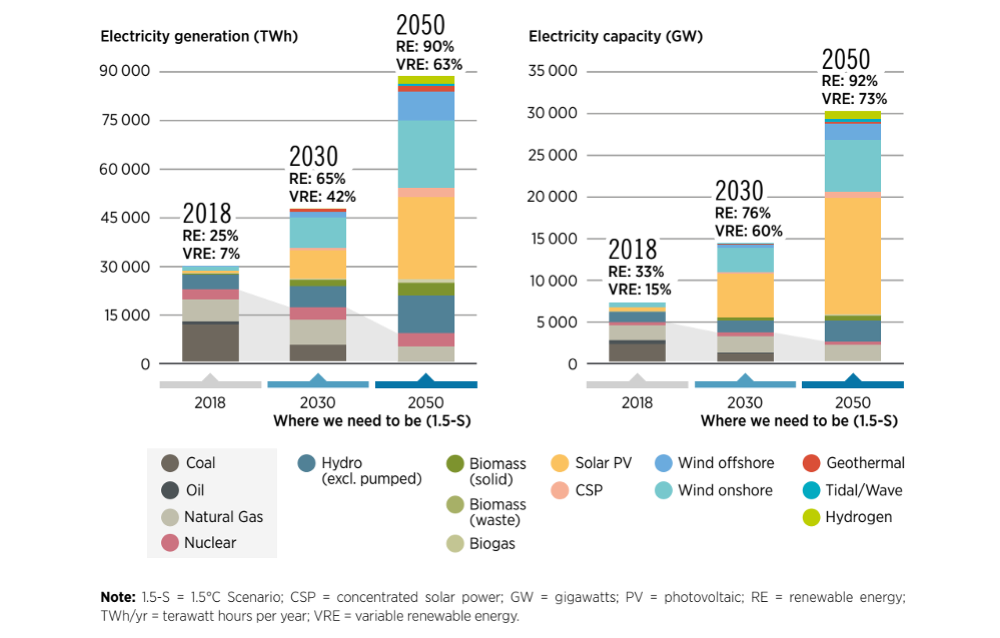
Figure 3 - Global Electricity decarbonisation pathway for 1.5⁰ C scenario [4]
High level analysis of the key energy future technologies to be considered is provided in the subsections below.
Renewable Energy technologies
These technologies consist of solar PV (rooftop and ground mounted), wind (offshore and onshore), hydro, concentrated solar and bioenergy.
Solar PV technology consists of solar PV modules which generate DC power from the energy radiated by the sun. This power is generally transmitted to an inverter, which converts DC to AC, and is then transmitted to the power grid. This can be rooftop mounted or ground mounted installations which can also be behind-the-meter or directly connected to LV, MV or very rarely (HV) grid depending on the installed capacity. Africa is leading the globe in solar resource potential and this coupled with the abundant land availability, provides significant advantages for deployment.
Wind technologies consists of wind turbines which generate electricity using the wind and are either installed onshore (i.e. on land) or offshore (i.e. in the sea). The turbines are connected to a generator which is then connected to a converter then to the internal reticulation system and transformer and this is then connected to the grid. Most plants are onshore since offshore is still nascent in the market with higher LCOE. However, where land is becoming a hinderance, offshore solutions are being encouraged.
Hydropower consists of turbines immersed in water which turn with moving water and is connected to a generator that generates electricity. This concept can be coupled with dams that have an elevation difference to allow for storing of electricity – generally referred to as pumped storage. Since water is a scarce resource and most parts of Africa is dry, hydro is generally not feasible. Furthermore, there is a long lead time and intensive CAPEX and OPEX to be considered. However, the Nile River is being considered for hydropower use at the moment.
Concentrated solar power (CSP) technology differs from solar PV technology in that it uses mirrors to concentrate solar energy to a single source and produce heat that can be converted into electricity. It also has thermal energy storage which is considered advantageous over other renewables. However, the LCOE of this technology is still high and is not considered for deployment.
Bioenergy involves the combustion of various feedstocks including organic waste residue, wood residues, and crop residues to generate electricity instead of the combustion of coal. This technology is considered advantageous when considering the repurposing of coal fired power stations as much of the existing equipment and skills can be conserved. However, the source of feedstock is concerning as it may lead to deforestation and thus increase in GHG emissions. Nevertheless, it can be coupled with carbon capture technologies for this purpose. This will further aid in the value chains for decarbonizing hard-to-abate sectors with green hydrogen.
Energy storage
With the increase of variable renewable energy in the grid, energy storage is becoming more important to maintain grid stability, provide ancillary services, provide energy arbitrage and avoid system blackout. This coupled with renewables can also electrify customers that are located far away from a grid point of connection. Microgrids using this concept is becoming popular for this purpose. However, where grid expansion can be done, the feasibility of microgrids is incomparable. Currently, pumped hydro and Lithium Ion based battery storage is leading in the globe. Second life batteries from electric vehicles are also becoming popular in behind the meter solar PV and storage solutions.
Conclusion
This article reflects on key energy technologies that are to be considered for the just energy transition in Africa. Aspects relating to social and economic imperatives for such technologies must be considered when selecting pathways for the transition to be just. There are many regulatory barriers that were not touched on which should be considered. Furthermore, other developments such as establishment of energy markets, system operators, aggregators and wheeling of electricity should be considered. It is also envisaged that the development of green hydrogen solutions for decarbonization of hard-to-abate local and export markets is going to become a gamechanger in the African continent.
Banner & Thumbnail credit: nattrass on iStock
Suggested content