HVDC Technology for Renewable Energy Dominated Power Systems
For more than a century, AC power transmission has played a dominating role in power systems and DC technology has mainly been used for high voltage (HVDC) bulk power transmission from one point to another in an AC power system due to lower cost.

by Mohamed Rashwan, Mojtaba Mohaddes, Chandana Karawita, and Hiranya Suriyaarachchi, TransGrid Solutions, Winnipeg, Canada
Today, two major variants of HVDC are available, which differ in the AC to DC conversion technology. Line Commutated Converter (LCC) HVDC is based on thyristor technology. In early schemes, the power generated from large-scale hydropower generating stations was transferred via HVDC systems using LCC-HVDC technology. Nelson River HVDC system (Canada), HVDC Itaipu (Brazil), and Cahora-Bassa HVDC system (Mozambique-South Africa) are a few examples of LCC-HVDC systems.
The second variant is Voltage Source Converter (VSC) technology which was introduced early 21st century. VSC converters utilize Insulated Gate Bipolar Transistors (IGBT) as the switching device, and they are arranged in a modular format. These converters are also known as modular multi-level (MMC) VSC converters. Unlike thyristors, which can be turned on through a gate pulse but not turned off, an IGBT can be turned on and turned off, thereby providing VSC technology with superior controllability compared to LCC technology. A VSC converter is shown in Figure 1.
VSC technology offers many features that are suitable for the integration of renewable energy generation such as Wind and Solar, and, with their small footprint, the VSC is very attractive for the integration of offshore wind. With the rapid development of VSC technology and offshore wind generation technology, HVDC systems are being widely used to interconnect offshore wind generation into AC networks. After the completion of the first HVDC system connecting offshore wind power plant “BorWin1” in 2012, numerous schemes have been put in service and many are under development or being planned. All the offshore HVDC projects that are already in service are symmetrical monopole systems with most of them rated at 320 kV and 900 MW.
Since the offshore HVDC converters are being entirely fed by wind generation, the offshore converters are operated in “islanded mode,” and they control the frequency and AC voltage at the point of connection. Since the offshore converter is operated in islanded mode, the onshore converter needs to be operated in DC voltage control. Most of these VSC HVDC systems can provide services such as frequency support, emergency power control, dynamic voltage/reactive power support, etc. Another important aspect is the self start-up of the system known as “black start.” The existing offshore systems cannot be black started from the offshore side since the wind farms are not capable of black starting themselves. Therefore, the onshore HVDC converter is first energized from the onshore AC grid that is already energized, and then, the offshore AC terminal is energized by the offshore HVDC converter. Finally, the wind turbines are connected one by one to the HVDC terminal.
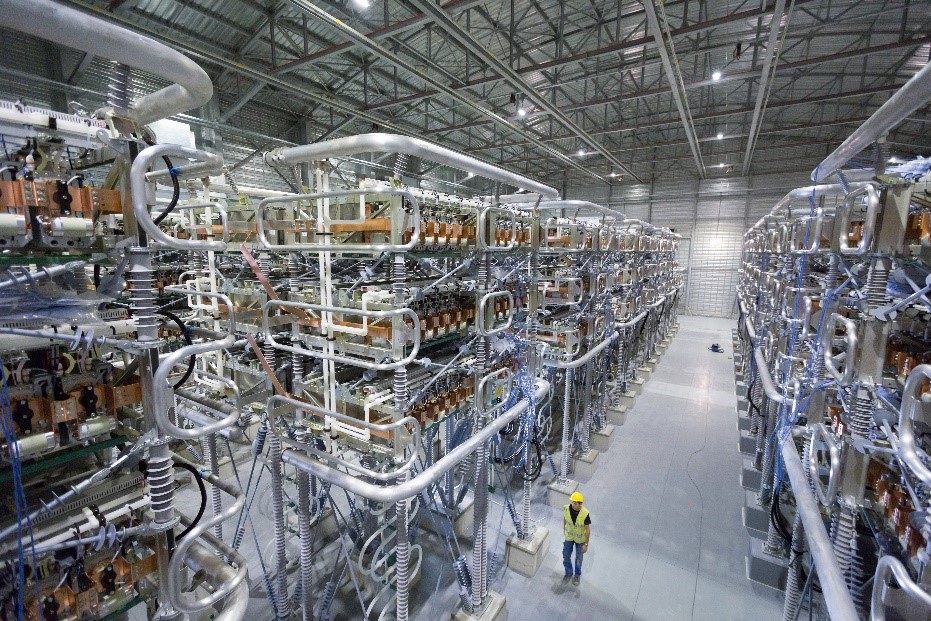
Figure 1 - MMC VSC converter - courtesy of Siemens
At present, to facilitate the energy transition initiatives, many projects integrating offshore wind are being developed based on a standard building block consisting of a +/- 525 kV 2GW bipole system. Although these are bipole systems, at present they are being developed to operate decoupled in the offshore AC connections. i.e., the two offshore DC poles are operated in islanded mode connected to a dedicated wind power plant. This is mainly because the control and protection are simple in islanded mode compared to the grid forming control mode.
In addition to being developed to transfer offshore wind generation, at present there are several HVDC projects being developed to transfer the power generated from onshore wind and solar power plants. These HVDC systems are mainly operated in heavily inverter-based generation-dominated weak AC systems. The SunZia project [1] in the USA, the Ariadne Interconnection [2] in Greece and the Euro-Asia project [3] connecting Greece, Cypress, and Israel are a few examples of such projects. HVDC systems operating in a very weak AC networks need to be operated in “grid forming control” mode, which is similar to a synchronous generator with the capabilities of frequency and voltage control and active and reactive power sharing based on the droop characteristics. Compared to the HVDC systems connected to offshore wind farms, some of these HVDC systems (e.g., Ariadne Interconnector) are required to be operated in parallel with AC connections.
Today, VSC HVDC systems are more popular than LCC HVDC systems because of their superior capabilities. However, due to unique requirements, such as long distances and high power transfer, LCC-HVDC systems are also being considered for some projects. The HVDC project Kimal-Lo Aguirre in Chile is one such example.
Many offshore wind farms are being developed in Europe and North America. To provide higher transmission flexibility and reliability, many of the new wind farms will be connected to the onshore networks through offshore energy hubs or “energy islands.” The electric power produced by several wind farms is brought to an energy island, which is connected to multiple onshore energy markets via HVDC or AC connections. Some of the examples are “VindØ” – wind island [4] connected to Denmark, “North Sea Wind Power Hub” project [5] connected to Germany, Netherlands, and Denmark, “MOG2-Nautilus-Triton project” [6] connected to Belgium, UK, and Denmark, and “Bornholm Energy Island” [7] connected to Denmark and Germany. As described in the North Sea Wind Power Hub project website, by 2050 the North Sea energy islands will interconnect many countries as shown in Figure 2. And in the USA, there is more than 16 GW of wind capacity planned for the Atlantic Coast.
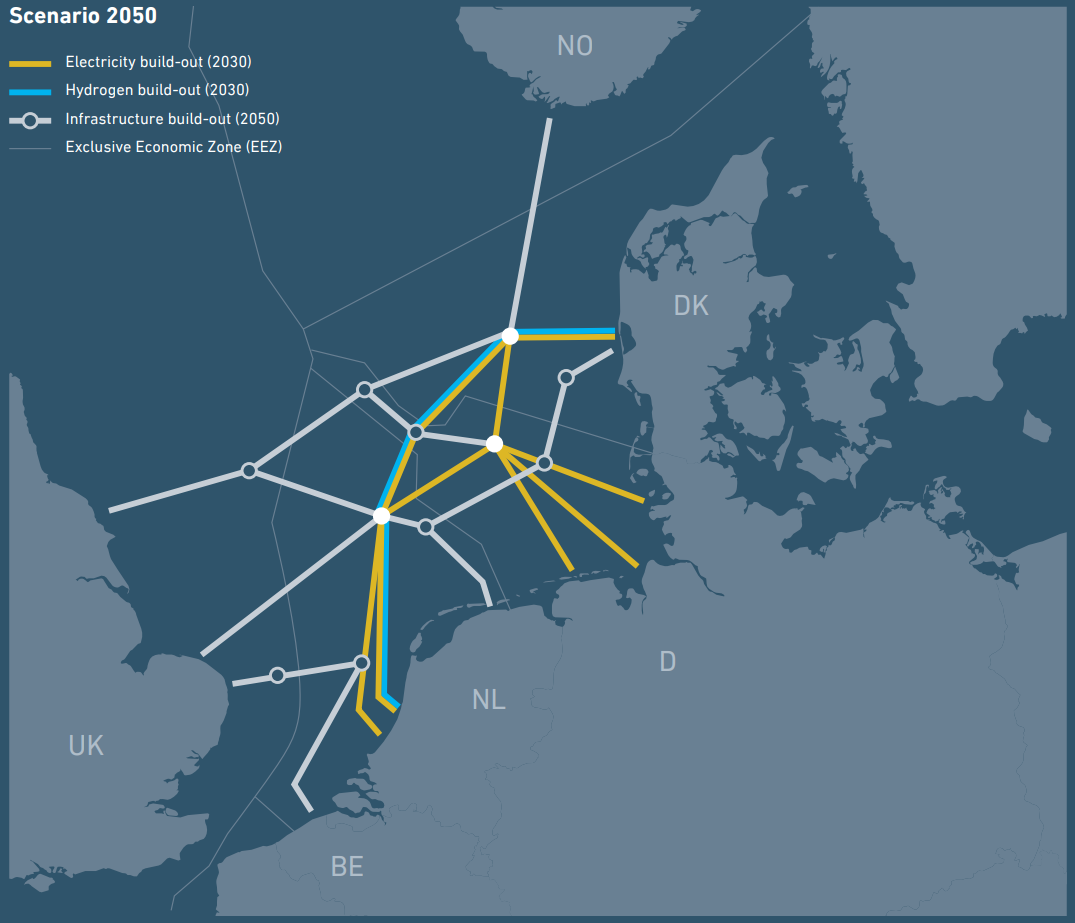
Figure 2 - 2050 scenario of North Sea Energy Islands (Source: North Sea Wind Power Hub Project [5])
Multi-terminal VSC HVDC systems with many onshore and offshore converters will be utilized in these projects. The offshore HVDC converters will be operated in islanded or grid forming control modes. At the offshore terminals, multiple grid forming converters may be tightly connected (zero or very low impedance between them) and the grid forming control techniques need to be carefully designed to avoid interactions among them and to properly share the active and reactive power among the converters. Similar to synchronous generators, frequency droop characteristics can be used to share the active power and AC voltage control with a reactive power droop can be used to share the reactive power without interactions. Compared to the synchronous generators which transiently can supply large short circuit currents, VSC HVDC converters have limited short circuit current handling capability, mainly due to the IGBT current limits. Therefore, the converter current during transients needs to be controlled to remain within the maximum current limit. At the same time, proper recovery after a system fault (AC or DC) needs to be achieved. Therefore, the fault-ride-through design of offshore HVDC converters needs special attention.
Furthermore, the controllers of the wind farms need to be coordinated with the HVDC controllers to achieve the required performance. In these projects, a close collaboration between the HVDC manufacturers and wind farm manufacturers is necessary to ensure these requirements are met. Onshore HVDC converters are required to maintain the DC voltage of the multi-terminal DC system, while maintaining required power injections to the onshore grids. Therefore, a flexible system using a DC voltage droop control would be the proper choice as many converters are contributing to regulate the DC voltage. The power injection at each terminal may deviate from the setpoints due to the power mismatches and contingencies in the system. After a contingency such as a converter outage or a wind farm outage, it is necessary to readjust the setpoints to achieve the required power flow. This can be achieved by having a high-level master controller overlooking the entire multi-terminal system.
If the HVDC systems are connected from the DC side, it is necessary to have fast DC breakers to isolate the faulty sections during a DC fault while keeping the rest of the system running. Several fast-acting DC breakers have been introduced to the market. As part of the PROMOTioN project [8], which evaluated the feasibility of the offshore energy islands, some of the DC breakers have been already tested. However, more work still needs to be done to increase the fault current interruption capability.
Another major concern is temporary load rejections such as onshore AC faults. The power generated by the wind farms needs to be absorbed by some means to keep the offshore converters running during the fault. In the existing offshore HVDC systems, a “DC chopper” connected in parallel with the onshore converter is used. It is fundamentally a resistive load connected through a fast-acting switch, typically an MMC VSC valve. The energy delivered to the onshore converter is diverted and absorbed by the resistor until the fault is cleared. Some of the HVDC projects being planned are considering an “AC chopper” connected at the offshore AC terminal to get the same support. This is a relatively cheaper solution, mainly because it utilizes thyristor valves instead of IGBT valves. Furthermore, the AC chopper may be utilized to keep the system running during a DC line fault as well. In a multi-terminal system, this would be an added advantage, as fewer wind farms would need to be tripped during a DC line fault. The main constraint in offshore applications is the space availability on the offshore platforms for the installation of the AC chopper. Innovative solutions are necessary to solve such limitations.
In the future, many VSC HVDC systems will bring the power generated from isolated renewable energy sources (onshore/offshore wind/solar) to the AC grids. As the amount of renewable generation increases, the conventional fossil-fuel based generation will be retired.
Therefore, these HVDC converters will be connected to weak AC grids with low synchronous generation. Since the rectifiers connected to the renewable generation are already operating in grid forming control, the inverters connected to the weak AC grids need to be operated in grid following control to regulate the DC voltage. If the AC system is very weak, it may be necessary to consider additional supporting devices at the HVDC terminal. Synchronous condensers can be used to provide increased short circuit strength, inertia, and voltage support. This is a well-known technology already used in many LCC-HVDC systems connected to weak AC grids. There are high efficiency, high inertia synchronous condensers now available for these purposes. Battery storage can also be used to get some inertia and frequency support. If it is necessary to keep the HVDC converter current capacity for active power transfer, the reactive power support can be obtained from other devices such as STATCOMs. It is necessary to perform detailed planning studies using suitable models and considering expected critical operating conditions to determine the most suitable and cost-effective solutions. The TSOs, manufacturers and consultants need to collaborate to achieve the future targets of 100% renewable energy-based power systems.
- [1] patternenergy.com/projects/sunzia-transmission
- [2] www.ariadne-interconnection.gr/en
- [3] euroasia-interconnector.com
- [4] www.windisland.dk
- [5] northseawindpowerhub.eu/explore-the-future-energy-highways
- [6] www.elia.be/-/media/project/elia/elia-site/users-group/ug/workshop/2022/20221014/workshop_mog_2_grid_design_14102022_velia.pdf
- [7] ens.dk/en/our-responsibilities/wind-power/ongoing-offshore-wind-tenders/energy-island-bornholm-owf
- [8] www.promotion-offshore.net/about_promotion/the_project/
Suggested content