Business Requirements for Asset Performance Management
The purpose of this WG was to provide guidelines for utilities on having a consistent set of requirements for Asset Performance Management (APM) platforms. This will facilitate the vendor selection processes in deciding which of the offered APM solutions provides the most suitable platform.
Members
Convenor
(CA)
Y. TSIMBERG
Secretary
(NL)
C. OREMUS
R. CHEUNG (CH), H. HUANG (US), J. LEVINE (CA), B. JOROWSKI (CA), S. PARUPALLI (US), J. DI GIROLAMO (US), S. MARWITZ (DE), M. ARAUJO (BR), T. GUERRERO (CA), R. TOMAZIC (SL), M. ELLENBOGEN (IS), L. ZHAO (DE), L. MANLI (AU), F. LIRIOS (AU), E. HILL (US), T. MOKWANA (SA), K. ZELLERS (US), H. HASAN KAZMI (DE)
To better understand the current challenges utilities are facing in selecting-, and using an APM platform, the WG examined available publications. Section 3 of the TB, describes some of these challenges and sites examples of systems being used within utilities.
The WG developed a set of requirements using the expertise of its members which included mostly utility industry experts. At the same time, the WG incorporated the perspective of utilities outside the WG. For this purpose a survey was conducted, which included responses from 33 utilities across the world. Section 4 of the TB presents the results of the survey using spider charts for mean values and highlights regional differences.
At the project outset, the WG established a need to identify Asset Performance Management decision areas referred to as “Asset Sustainment Strategies”, covering maintenance- and replacement decisions.
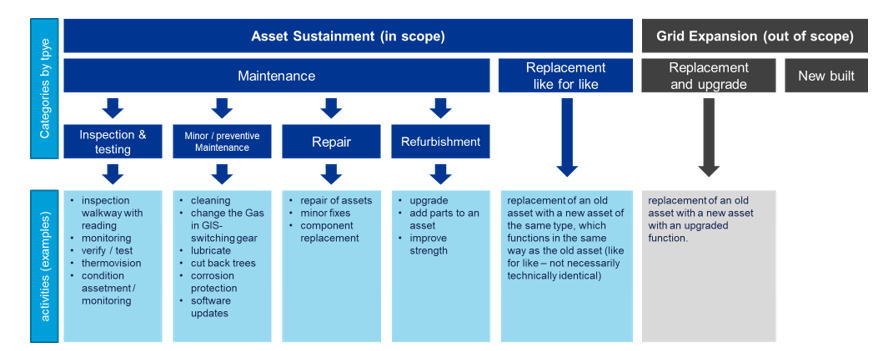
Figure 1 - Sustainment in Asset Life cycle Management
Ten (10) strategies were defined and described in detail. For each of these, the following information is provided in Section 5 of the TB:
- Introduction describing the Asset Sustainment Strategy and associated challenges
- Information requirements
- Data types used in generating required information
- Software requirements.
| Number | Asset Sustainment Strategy |
| 1 | Define (initial) optimal asset maintenance strategy |
| 2 | Time Based Maintenance |
| 3 | Condition Based Maintenance |
| 4 | Risk Based Maintenance |
| 5 | End of useful life scenario |
| 6 | Select replacement strategies |
| 7 | Time based Replacement |
| 8 | Condition Based Replacements |
| 9 | Risk Based Replacement |
| 10 | Optimize life cycle value |
The data and information requirements increase with the complexity of selected Asset Sustainment Strategy. For a very simple run-to-failure strategy, little information and data is required. For more complex time based, especially condition based, and risk-based Asset Sustainment Strategies, more data and information is required. Specifically, it is important to qualify both the probability of failure, based on condition and use of assets, and the consequences of failure. This is applicable to both maintenance and replacement strategies for asset (sub)-populations and/or individual assets.
To ensure consistency in describing information requirements, data types and software requirements are defined in generic tables, which include references linking each item with relevant Asset Sustainment Strategies.
In Section 6, an assessment of selected APM vendors is performed, based on the publicly available information, input from the utilities survey conducted by the WG and experience of WG members themselves. The list of assessed vendors is based on Gartner’s 2018 and 2019 reports. It is important to note that their capabilities were assessed based on publicly available information only and do not necessarily present the current or complete list of their capabilities.
Finally, observations and recommendations regarding future steps for improving Asset Management processes are provided in Section 7. These include the following:
- Each utility has its unique set of challenges and requirements; therefore the material in this Technical Brochure should be treated as a general guide.
- Although a majority of utilities surveyed indicated that they do have an APM platform, the platform met only about 50% of their needs which indicated that more “homework” needs to be done before selecting the APM platform
- None of the vendors assessed had the capabilities needed to address all the identified requirements while all the vendors combined did
- Using an APM system is expected to improve data collection, improve the risk-based decision-making process, and facilitate development of Asset Management Plans to satisfy ISO55000x standards requirements
- The 10 identified Asset Sustainment Strategies should be used as a starting point in developing utility-specific ones
- Typical interfaces between APM platforms and utility enterprise systems were included in the survey and used in the vendor assessments. However, it is possible that some utilities have other tools not mentioned in the TB
- Having an APM platform will enable utilities to incorporate “near real time” inputs to complement typical “static” inputs. This is expected to improve investment decisions and the timing of required actions regarding not only capital spending, but also maintenance aspects of sustaining the existing asset base.
- Using utility specific Asset Sustainment Strategies combined with informed decisions and timely actions to address discovered issues/problems is expected to improve reliability performance of assets both at the end of life and throughout their life cycle.
This TB provides a starting point for utilities in developing their own Asset Sustainment Strategies and their corresponding unique set of requirements for an APM system. It is recommended to focus future efforts in the following areas:
- Facilitate integration of sustainment (addressing needs of existing asset base) and development (addressing need for expanding the existing asset base) decisions
- Standardize asset categories and asset components to the extent possible, including developing a default naming convention
- Link data quality and availability with confidence in the decisions made
- Define Machine Learning and Artificial Intelligence requirements
- Develop a methodology for linking utilization of Asset Sustainment Strategies with resultant reliability at both individual asset and system levels.
Other Technical Brochures