Guidelines for Subsynchronous Oscillation Studies in Power Electronics Dominated Power Systems
Subsynchronous oscillations (SSO) have been identified as a major concern in modern power systems. Especially, the introduction of power electronic devices such as HVDC, FACTs and renewable generation has escalated SSO related issues. Considering the need of the industry, this technical brochure has been developed to provide a general guideline for understanding the relevant SSO phenomenon, study methodology, mitigation/prevention techniques and protection mechanisms.
Members
Convenor
(CA)
C. KARAWITA
Secretary
(CA)
U.D. ANNAKKAGE
D. NESTEROV (BE), F. PETIT (BE), T. DOBBIN (BR), J. ZHOU (CA), A. DISSANAYAKA (CA), D. WEERAKOON (CA), X. XIE (CN), T. RAUHALA (FI), O. JANHUNEN (FI), V. COSTAN (FR), A. ATALLAH (DE), D. VIERHEILIG (DE), A.S. TREVISAN (DE), R. DIMITROVSKI (DE), M. HUMER (DE), T. GERAERDS (NL), V. SEWDIEN (NL), M. CHEAH (ES), J. RENEDO (ES), E. LAVOPA (GB), A. PASHAEI (GB), O. AGAMALOV (UA), E. PRATICO (US), D. HOWARD (US), Y. CHENG (US)
Corresponding Members
B. BADRZADEH (AU), W. WINTER (DE), K. MA (CA), K. VENNEMANN (DE), S. MURRAY (IE), E. AHLUND (IE), J. JOO YONG (KR), D. RAMASUBRAMANIAN (US), H. CHOU (US), S. KYNEV (US)
Classification of SSO
First, a historical review of subsynchronous oscillation events is presented (Chapter 2). Methods of analysis and metrics that indicate the likelihood of an SSO event occurring have been developed in the past with the phenomena observed at that time. The subsynchronous oscillation landscape has significantly changed since then mainly due to the introduction of renewable generation and power electronic devices at grid level.
The presence of power electronic converters and their controllers has recently introduced subsynchronous oscillation issues to the grid. Recognizing this, IEEE proposed a revised classification of stability of power systems where two new categories related to these developments were proposed. Having reviewed the recent SSO events and keeping in line with the new classification proposed by IEEE, a detailed classification of subsynchronous oscillations is proposed in the technical brochure (Chapter 2). The proposed classification is shown in Figure 1.
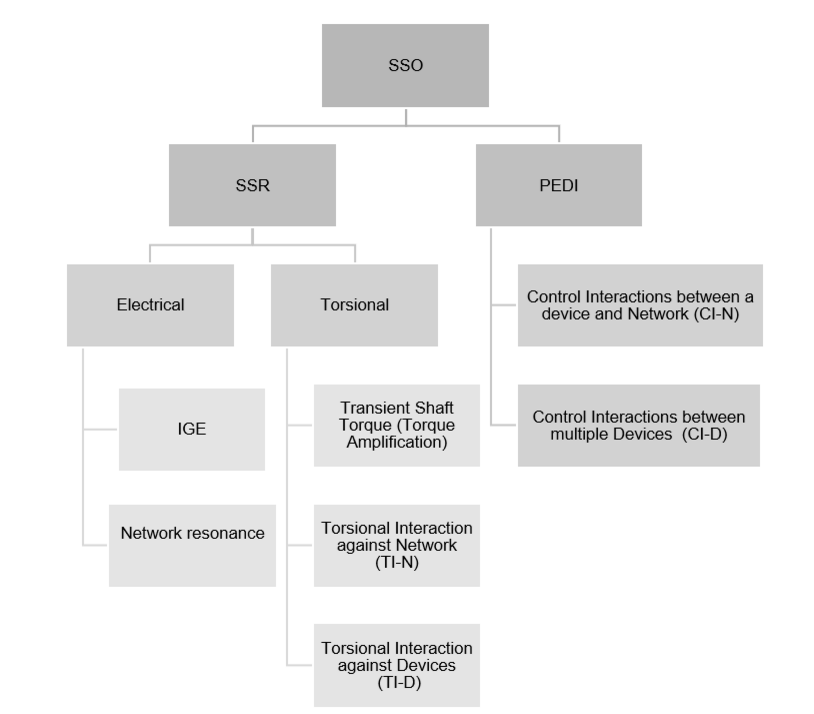
Figure 1 - Proposed classification of SSO
SSO is divided into two main categories: Subsynchronous Resonance (SSR) and Power Electronic Device Interactions (PEDI). The SSR is further divided into Electrical and Torsional. This is to differentiate between the SSR that is purely electrical, where the torsional systems are not involved and those where a torsional system is involved. The Electrical type SSR could be due to the resonance in the network when there are series compensation devices in the network, or it could be due to the negative resistance offered by a generator at a network resonance frequency. In both these cases shaft systems are not involved. The Torsional type SSR is divided into three types: Shaft Torque Amplification, Torsional Interactions with the Network (TI-N) and Torsional Interactions with another device (TI-D). The new category of SSO introduced in this chapter is the Power Electronic Device Interactions (PEDI). These are control interactions of two types: Control Interactions with the Network (CI-N) and Control Interactions with another Device (CI-D). All these types of SSO discussed in the chapter have been experienced by power utilities and are well documented.
Industry Practices, Challenges and Experiences Related to SSO Issues
The Technical Brochure also reviewed the industry practices for SSO evaluation and the reported SSO issues (Chapter 3). An SSO study process varies depending on the project's stage at which the study is performed. Also, due to the absence of a standard procedure, there are different industry practices. In this chapter these differences are discussed along with examples of many practices used in the industry. The SSO events reported from the industry and the mitigation measures applied are summarized in this chapter.
This Technical Brochure proposed a systematic approach to study and resolve the SSO issues in power systems. The proposed SSO study procedure has been divided into four sections: screening studies, detailed studies, mitigation measures, and monitoring and protective measures.
Screening of Potential SSO Risk
When a new project is planned or an existing SSO issue is analyzed, the first step is to perform the screening studies. At this stage, the possible SSO phenomenon is not clearly identified; contributing devices to the SSO are unknown; a large number of operating scenarios and contingencies need to be considered; and detailed simulation models may not be available. Therefore, the main objective of the screening studies is to evaluate the SSO risk while allowing false alarms and avoiding false dismissals. Chapter 4 presents an overview of the different methods available for screening the potential risk of various SSO types. The methodology and theoretical background of each method is briefly explained along with the limitations, assumptions, modeling requirements and the evaluation criteria. Analytical (static) and dynamic simulation based (dynamic) frequency scanning techniques, Unit Interaction Factor (UIF) calculations, and Radiality Factor calculations are identified as screening techniques. A summary of screening techniques is given in the following table. As guided in this technical brochure, the most suitable screening procedure needs to be selected based on the nature of the SSO issue and the types of devices involved. This chapter also provides the reader with practical advice regarding the use of each screening method together with guidelines for the interpretation of results. Additionally, examples are provided for each method to facilitate their practical application and understanding.
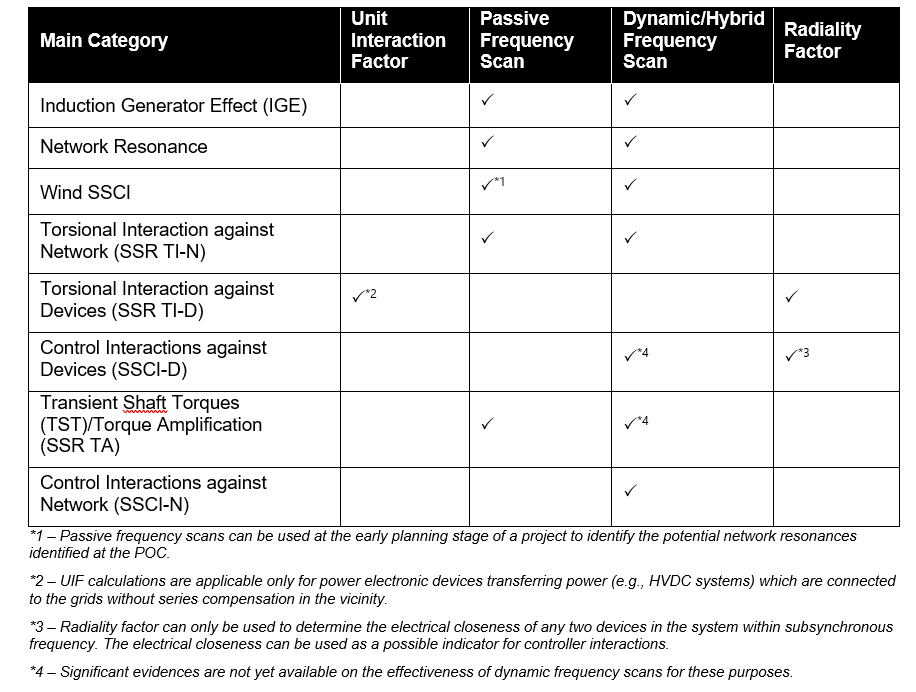
Table 1 - Available Screening Methods per SSO Type
Detailed Evaluation of SSO
The detailed study procedures include electromagnetic transient (EMT) simulations and small signal stability analysis (Eigen analysis) which are presented in Chapter 5. EMT simulation is the most popular study procedure due to its flexibility, such as the use of black-boxed device models. However, the root cause of SSO phenomenon needs to be carefully evaluated using time-domain simulation plots of various events and operating scenarios. In contrast, the eigen analysis (frequency domain) gives more insight into the SSO phenomenon. The oscillations and the damping in the entire study case can be identified from the eigen values and the devices contributing to the oscillations can be evaluated using eigen properties such as participation factors and mode shapes. However, this is a linear analysis technique and therefore, multiple scenarios need to be considered to cover the possible conditions. Furthermore, the models need to be linearized around each operating point and, therefore, the black-boxed type models are difficult to be developed. The modelling requirements, assumptions and limitations and the evaluation procedures are discussed in Chapter 5.
SSO Mitigation and Prevention
Once the detailed studies confirm the risk of SSO, suitable mitigation measures need to be implemented. Chapter 6 presents operational restrictions, control adjustments, subsynchronous damping controllers (SSDCs), adjustments to series capacitors, adjustments to power plants and the introduction of shunt compensation (SVCs and STATCOMs) with SSO damping controllers as available mitigation measures. Some mitigation measures can be used as short-term temporary measures until a permanent solution is implemented. For example, bypassing a series capacitor at a particular operating condition with a risk of SSO can be used as a temporary measure. It is important to carefully evaluate possible mitigation measures and the most suitable solution needs to be selected based on the performance and the cost. It is necessary to evaluate the system performance with and without the solution for all the critical conditions identified from the detailed studies. It is also important to evaluate the impact of the solution on the dynamic performance of the system.
Monitoring and Protection Mechanisms for SSO
In addition to the mitigation measures, suitable back up protection mechanisms need to be implemented to ultimately avoid damage to the devices. Furthermore, power systems are rapidly evolving, and their dynamic behavior may change unknowingly. This means that great attention must be paid to the behavior of all the devices involved. Therefore, sophisticated condition monitoring of the devices involved is needed. The available monitoring and protective measures are discussed in Chapter 7.
Summary
In summary, this Technical Brochure provides a general guideline for SSO studies in power electronic dominated power systems. It is recommended to adapt the proposed study procedure as required and the evaluation should be based on an engineering judgement as there are no solidly defined criteria.

Other Technical Brochures